

Follow our live coverage here.
TEHRAN – Pakistani mediators traveled to Tehran on Wednesday to try to salvage peace talks between Iran and the United States, as a standoff over access to the Strait of Hormuz threatened a tenuous week-old ceasefire.
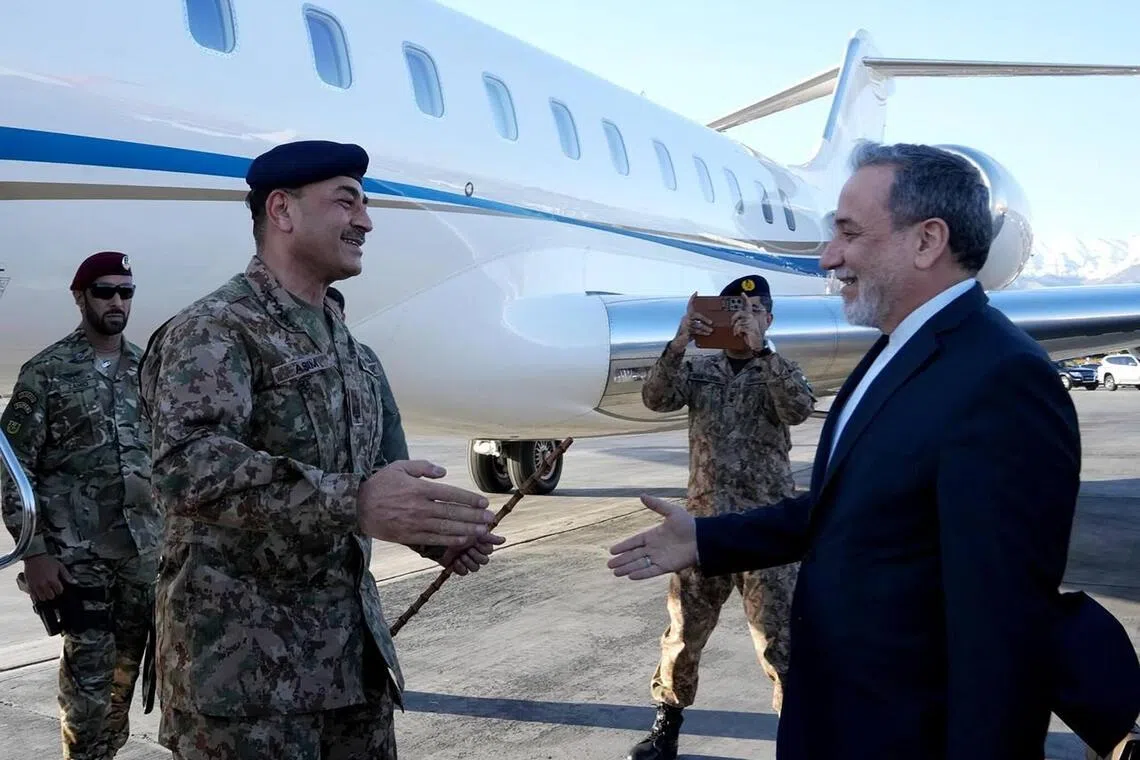
Iranian state media and Pakistan’s military said the head of the Pakistani army, Field Marshal Syed Asim Munir, landed in Tehran “carrying a new message from the United States”, without elaborating.
A spokesperson for Iran’s foreign ministry, Esmail Baghaei, said there was still no timetable for setting a second round of negotiations with the United States, which President Donald Trump said on April 14 might take place in the coming days.
Ms Karoline Leavitt, the White House press secretary, did not confirm when talks with Iran would resume, but said they would continue to take place in Pakistan. “We feel good about the prospects of a deal,” she told reporters.
The first round of peace talks, over the weekend, ended with an impasse over Iran’s nuclear program, access to the Strait of Hormuz and the fighting between Israel and the Iran-backed militia Hezbollah in Lebanon.
Israeli officials said on April 15 that Israel is considering a short-term ceasefire in Lebanon that would pause the fighting against Hezbollah.
The Israeli government has not yet signed off on the truce, the officials said. Officials from Israel and Lebanon met for rare direct talks in Washington on April 14 that ended with a decision to “launch direct negotiations at a mutually agreed time and venue”, according to the US State Department.
The efforts at diplomacy came as Iran threatened to halt all trade in the region in response to the US naval blockade of Iranian ports in the Persian Gulf.
“Iran’s powerful armed forces will not allow any exports or imports to continue in the Persian Gulf, the Sea of Oman and the Red Sea,” said Maj. Gen. Ali Abdollahi, who leads the military joint command that oversees Iran’s army and Revolutionary Guard.
It is unclear how much control Iran can exert over regional shipping. Iran’s allies in Yemen, the Houthi militia, have proved capable of attacking ships in the Red Sea, shutting down that route. Iran’s armed forces, while battered, still have the ability to harass ships in the Strait of Hormuz at the mouth of the Persian Gulf with mines, missiles and fast boats.
The US military says more than 10,000 US soldiers, as well as dozens of planes and warships, are enforcing the American blockade ordered by Mr Trump on April 12 as a way to pressure Iran in its negotiations with Washington.
US Central Command on April 15 posted a recording of a warning it was sending out to Iranian-linked ships seeking to evade the blockade.
“If you do not comply with this blockade we will use force,” the voice on the recording says.
Since the blockade, which only applies to Iranian-linked ships, began on April 13, nine vessels had “complied with direction from US forces” to turn around and return toward an Iranian port or coastal area, Central Command said.
In March, in the midst of the intense US and Israeli bombing of Iran, the United States temporarily lifted sanctions on Iranian oil sales in an effort to ease the oil shock caused by the war. Shipping to and from Iranian ports in the Gulf remained relatively steady through the war.
But the US blockade has halted those oil sales, and in the long term the blockade could suffocate an Iranian economy heavily reliant on oil revenue.
US Treasury Secretary Scott Bessent said at a White House briefing on April 15 that the US government would not be renewing the sanctions exemptions for Iranian and Russian oil.
Mr Bessent also said that the United States had sent letters to two Chinese banks threatening secondary sanctions connected to transactions with Iran. The US blockade of the Strait of Hormuz had caused a “pause of Chinese buying” of Iranian oil, he said.
But despite the US military presence in the area, traffic around the strait remains at a fraction of its usual levels, a further blow to countries that rely on the oil, gas, fertilizer and other key industrial supplies that transited before the war. Since the blockade came into effect, traffic has slowed further, with shipping companies unwilling to risk the crossing.
Mr Nils Haupt, a spokesperson for the German shipping company Hapag-Lloyd, which has six vessels and 150 seafarers stranded in the Persian Gulf, said the situation was still too uncertain to make plans for the company’s ships to exit the gulf.
The company was concerned about the risk of sea mines, Mr Haupt said. Hapag-Lloyd was also still waiting for assurances that Iran would not target its ships and for answers from US authorities on the order in which stranded ships were supposed to exit the strait.
“We would need security guarantees for the crew, the vessel and the cargo transported,” he said in an e-mail on April 15. NYTIMES