

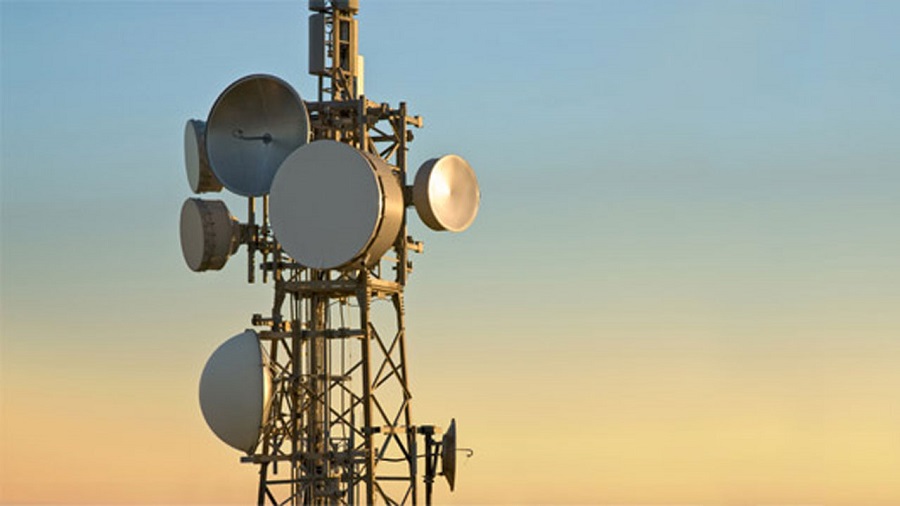
Nigeria’s telecom operators are intensifying investments in network expansion as rising smartphone use, streaming, digital payments, and remote work are increasing pressure on mobile infrastructure.
At the centre of the latest expansion cycle is Airtel Nigeria, which says it has significantly grown its footprint over the past year, while rivals MTN Nigeria Communications Plc, Globacom Limited, and 9mobile, now rebranded T2, are also pushing new network strategies to compete in a data-driven market.
The trend signals a broader shift in Nigeria’s telecom sector where the contest is no longer only about subscriber numbers, but about speed, capacity, reliability, and coverage.
According to Airtel’s records, the operator expanded its network footprint by more than 10% over the past year, adding 1,561 new sites and taking its total to nearly 17,200 nationwide.
Three years ago, the network stood at just above 13,000 sites, meaning the company has added more than 4,000 sites in that period to improve capacity and reach.
Responding to questions on the company’s expansion strategy, Airtel Nigeria Chief Executive Officer, Dinesh Balsingh, said the objective is to stay ahead of national demand.
He added that every additional site is designed to absorb traffic in dense urban zones, reduce congestion, stabilise latency and improve signal quality.
According to the latest data from the Nigerian Communications Commission, Nigeria had 145,141 base stations as of December 2025.
This figure represents individual layers of 2G, 3G, 4G and 5G equipment mounted across cell sites nationwide, allowing operators to increase bandwidth on existing tower infrastructure.
Out of the total, Airtel accounted for 46,918 base stations, highlighting its substantial share of the country’s radio access network.
Airtel says it upgraded more than 5,000 sites in the past year, improving radio capacity in some of Nigeria’s busiest traffic corridors.
The company said the upgrades are aimed at delivering faster speeds and better stability during peak usage periods.
It also expanded its fibre backbone by about 25%, improving the transport layer that carries traffic between towers and data centres.
According to the company, about 99% of Airtel’s sites are now 4G enabled, with fewer than 20 locations left outside the upgrade pipeline.
Each site now plays a critical role in supporting millions of Nigerian internet users, many of whom rely primarily on mobile broadband for work, entertainment, education and financial services.
With a fast-growing digital economy, telecom operators in Nigeria continue to see a surge data consumption as more Nigerians plug into the digital economy.
With Nigerians’ increasing appetite for data, the telecom operators have no choice but expand their network capacity, a turf where Airtel is now playing big.
The expansion drive is not limited to Airtel as MTN, the largest network operator by subscriber number in Nigeria has also continued aggressive investment in network modernisation and expansion.
In 2025, MTN Nigeria said it invested N1 trillion to expand fibre infrastructure, roll out additional base stations and strengthen network capacity nationwide. The capital expenditure more than double the prior year’s spending.
The company has focused heavily on extending 4G coverage, deploying additional 5G infrastructure and increasing capacity in major commercial centres where data traffic is highest.
Globacom has pursued a more targeted strategy, upgrading clusters of sites to improve indoor penetration and urban service quality.
Glo invested in an additional spectrum in 2025, leading to spectrum expansion in the 1800 Mghz frequency band. With the additional spectrum investment, the company succeeded in expanding its frequency spectrum, 1800 MHz, and 2600 MHz across the nation.
As part of efforts to improve connectivity in the country, the NCC recently unveiled a new spectrum roadmap aimed at expanding the country’s broadband capacity amid the surge in data consumption by Nigerians.
The initiative is designed to attract investment and prepare Nigeria’s telecoms infrastructure for rapidly growing data demand.
According to the Commission, GSMA Intelligence data projected average mobile data usage per connection in Nigeria to increase from 5.8 gigabytes per month in 2025 to 12.0 gigabytes by 2030.
Over the same period, active mobile subscriptions are projected to grow from 171 million to about 220 million.
The growth is expected to push total national mobile data traffic from 11.9 exabytes in 2025 to 31.7 exabytes by 2030, equivalent to about 2,640 petabytes per month.