

WASHINGTON — The Trump administration is hosting a second round of ambassador-level talks between Israel and Lebanon on Thursday, days before the expiration of a ceasefire between the two countries and amid broader efforts to reach a deal with Iran.
Lebanon has said its ambassador to the United States, Nada Hamadeh, will push for a one-month extension of the US-brokered ceasefire in the meeting with her Israeli counterpart, Yechiel Leiter.
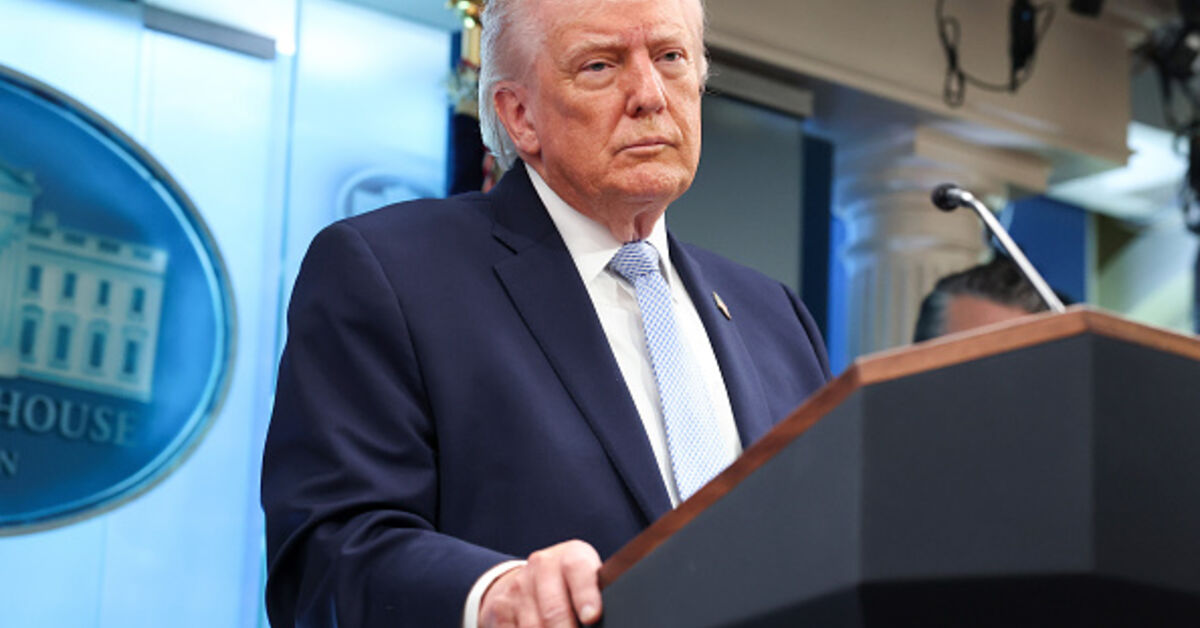
Their direct talks held at the State Department last week marked the first of their kind in decades between the two countries that lack formal diplomatic relations and remain in an official state of war. The talks on Thursday were moved to the White House, in a sign of President Donald Trump’s personal interest in securing a legacy-defining agreement. A slate of senior US officials attended, including Secretary of State Marco Rubio, US Ambassador to Lebanon Michel Issa, US Ambassador to Israel Mike Huckabee and State Department counselor Michael Needham.
The renewed diplomacy follows a weekslong war between Israel and Hezbollah, the Shiite militant group that’s also a powerful political actor in Lebanon. Hezbollah fired missiles into Israel on March 2 in solidarity with its patron Iran, dragging Lebanon into another conflict with its southern neighbor.
Israel responded with extensive airstrikes and a ground operation in southern Lebanon that has so far killed more than 2,290 people and displaced more than 1 million others, according to Lebanese authorities. Israeli officials say at least 13 Israeli soldiers have been killed in the fighting, along with two civilians.
Both sides have violated the 10-day ceasefire that took effect April 16. On Thursday, Hezbollah fired an anti-tank guided missile at Israeli troops in southern Lebanon, according to the Israeli military.
Israel has also kept up its bombing campaign, saying it is targeting the militant group’s positions in self-defense. Thursday’s direct talks come a day after Israel drew widespread condemnation for a strike that killed a Lebanese journalist in the town of Tayri.
In light of the repeated violations, if the White House meeting “can shore up the ceasefire, extend it, give some more breathing space to the parties, I think that would be an important accomplishment,” said Mona Yacoubian, director and senior adviser of the Middle East Program at the Center for Strategic and International Studies.
The continued Israeli strikes complicate Lebanon’s domestic position, as Hezbollah — which opposes the direct talks — claims any negotiations “under fire” lack legitimacy and has mobilized protests against them. After the first round of talks, Hezbollah leader Naim Qassem said the country’s leaders were subjecting Lebanon to “humiliations by negotiating directly with the Israeli enemy and listening to its dictates.”
Yacoubian said Lebanon’s leaders, and President Joseph Aoun in particular, “have sought to portray negotiations with Israel not as a concession but actually as an important step forward to actually bringing stability to the country.”
Last week’s meeting did not produce a commitment from Israel to withdraw from the country, as Beirut had hoped. Israel’s military currently holds a buffer zone extending up to 10 kilometers (6 miles) inside southern Lebanon, which it says is necessary to protect northern Israel from the threat of short-range Hezbollah rockets and anti-tank missiles.
At best, the US mediation effort will result in a de-escalation of Israeli operations in Lebanon, said David Schenker, a former assistant secretary of state for Near Eastern affairs in the first Trump administration.
“I don’t see any time soon an end to the Israeli occupation of south Lebanon or the residents being allowed to return home while northern Israel is still threatened,” Schenker said.
As part of the talks, Israel wants Lebanon to show it is serious about disarming Hezbollah. The Lebanese army has made some progress confiscating weapons in the country’s south since a 2024 ceasefire agreement brokered by the United States, but the militant group continues to resist broader disarmament efforts, including in Beirut.
“Any process is going to be incremental and is obviously highly sensitive,” said Schenker. He pointed to Hezbollah’s past threats of “civil war” — “a code word for perpetrating violence against the government if it takes any steps north of the Litani River to establish a state monopoly on weapons.”
The Israeli strikes and evacuation orders have swelled Beirut’s population with mostly Shiite displaced families who represent Hezbollah’s core base. The dynamic is heightening sectarian tensions with Sunnis, Christians and Druze in a nation scarred by its 1975-1990 civil war that killed over 100,000 Lebanese.
A resolution to war with Iran could, in theory, ease these pressures by reining in Hezbollah’s primary backer. Trump on Tuesday announced he would be extending the ceasefire with Tehran indefinitely until the Iranians submitted their response to US demands for a deal.
Speaking to reporters Thursday, Trump declined to set a deadline for Iran, whose leadership he described as fractured by the six-week-long US and Israeli bombing campaign.
“We thought we’d give them a little chance to get some of their turmoil resolved,” he said. “I don’t want to rush it. I want to take my time.”