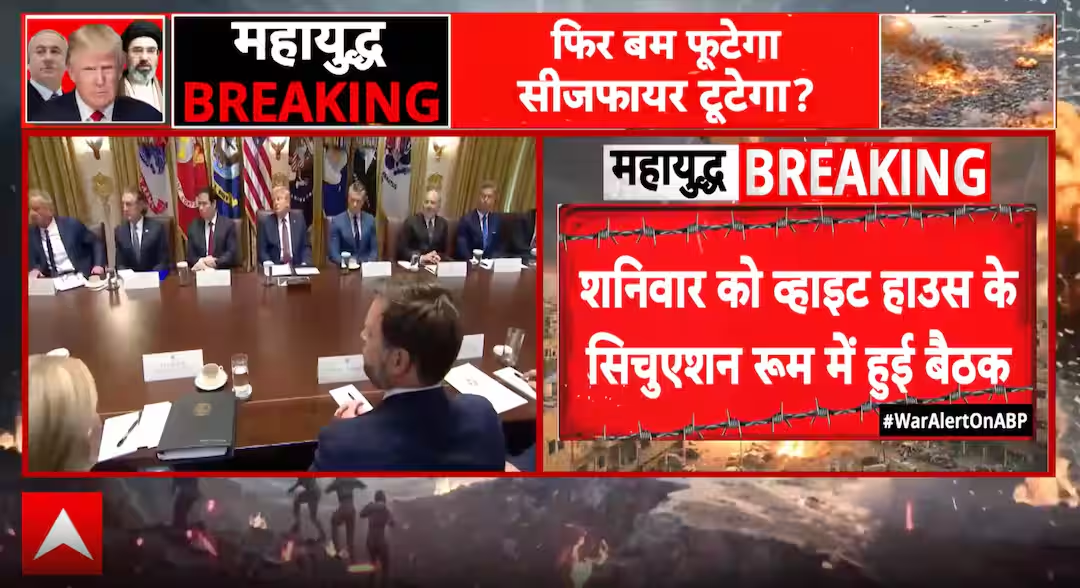
As the ceasefire deadline approaches between the United States and Iran, high-level diplomatic and security activity has intensified in Washington. U.S. President Donald Trump convened an urgent meeting at the White House Situation Room on Saturday to review the escalating crisis linked to the Strait of Hormuz and ongoing negotiations with Tehran. The Situation Room, located in the basement of the White House, is a secure, 24/7 intelligence and command center where senior leaders respond to major international crises. The meeting reportedly included Vice President JD Vance, Secretary of State Marco Rubio, Defense Secretary Pete Hegseth, CIA Director John Ratcliffe, and other top national security officials. Following the session, Trump stated that the United States remains in contact with Iran and that it will soon become clear whether a final agreement can be reached. He indicated that Washington is preparing for all possible outcomes as tensions remain high. Meanwhile, diplomatic developments are also shifting toward South Asia. Reports suggest that a potential second round of US-Iran talks could be hosted in Islamabad or Rawalpindi, where authorities have declared a high-security alert. In anticipation, Pakistan has tightened security measures, deploying additional forces and temporarily closing educational institutions until April 26. With uncertainty over negotiations and rising regional tensions, global attention remains fixed on whether diplomacy can prevent further escalation or whether the situation will move toward renewed confrontation.