

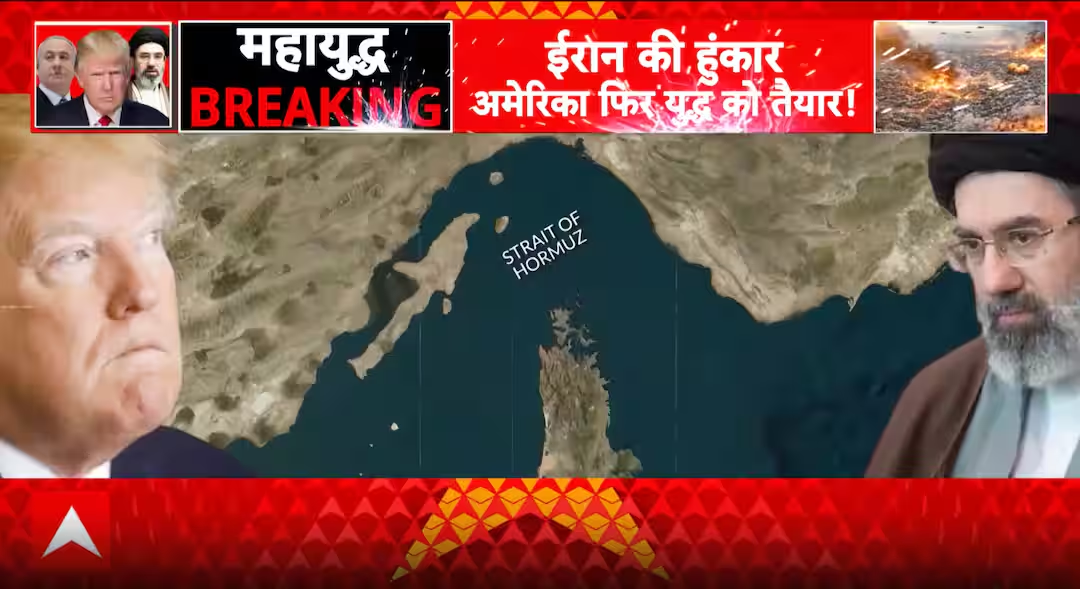
Tensions between the United States and Iran have escalated sharply as both sides remain firmly entrenched in their positions, raising fears that the fragile ceasefire could collapse within days. The dispute is centered on the strategically vital Strait of Hormuz, where maritime access, nuclear conditions, and diplomatic negotiations have all turned into major flashpoints. Iran has once again reimposed restrictions on the strait, insisting that it will remain closed until the U.S. lifts its naval and economic pressure. Iranian Parliament Speaker Mohammad Bagher Ghalibaf stated that Iran maintains full control over Hormuz and warned that any attempt to alter the situation without Tehran’s consent would violate international law and ceasefire terms. On the other hand, U.S. President Donald Trump has rejected Iran’s actions, calling them “blackmail” and warning of strong consequences if Tehran refuses to comply with American conditions. Washington has also maintained that Iran must halt uranium enrichment activities and adhere to strict verification measures, a demand Tehran continues to reject. The standoff has reached a critical point with both nations refusing to compromise on three key issues: control over Hormuz, uranium enrichment, and the terms of ongoing diplomatic negotiations. The United States has warned that failure to reach an agreement could lead to renewed military action, while Iran has declared it will not bow to external pressure. With only a short window remaining before the ceasefire expires, global markets and diplomatic observers fear that the situation could rapidly escalate, potentially turning the region into another major conflict zone if no breakthrough is achieved.