

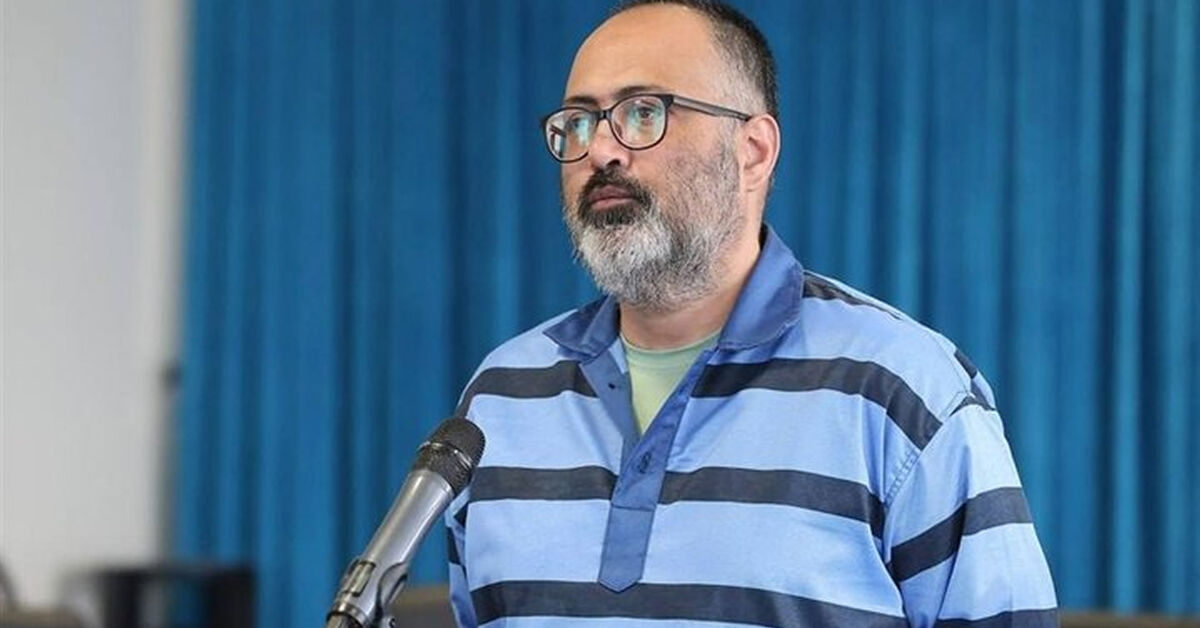
Iran executed a man on Wednesday who the regime accused of spying for Israel’s Mossad intelligence agency, as the Islamic Republic’s crackdown in the country deepens following anti-regime protests earlier this year and the recent war with the United States and Israel.
What happened: Mahdi Farid, 55, who was accused by authorities of providing sensitive national information to the Mossad, was hanged at dawn on Wednesday after his sentence was upheld by the Supreme Court, the Iranian judiciary’s Mizan news agency reported.
He was found guilty of “intelligence cooperation and espionage for the Zionist regime” on the vague charge of “corruption on earth,” though no evidence was provided.
What we know: Mizan claimed that Farid served as the head of a civil defense unit within a sensitive organization in Iran, which it did not name, and used his position to collect and transmit information to the Mossad. According to the judiciary, he confessed during the proceedings to having come into contact with a Mossad officer, who asked him to provide sensitive information such as organizational charts, internal building layouts, security conditions and details of defense-related facilities.
Farid, who was from Arak in northwestern Iran, was arrested in May 2023 and had been working at the Atomic Energy Organization of Iran prior to his arrest, according to the Norway-based Iran Human Rights group. He was initially sentenced to 10 years in prison but was given a death sentence in July 2025 on charges of cooperating with Israel.
The judiciary did not specify where the execution took place. However, the US-based Human Rights Activists News Agency reported last November that Farid had been transferred from Evin Prison in Tehran to Ghezel Hesar Prison in Karaj.
Mehdi Farid, a former employee of Iran’s Atomic Energy Organization, was executed on espionage charges after being convicted of “corruption on earth” for alleged cooperation with Israel.
Read more in HRANA’s report:https://t.co/4tQ9BAzFAU pic.twitter.com/WIrzsXBLCI— HRANA English (@HRANA_English) April 22, 2026
Why it matters: The UK-based IranWire news outlet cited a source close to the family last November as saying that Farid denied knowingly cooperating with a foreign agent and had referred the matter to “relevant authorities,” though it did not provide further details.
Rights groups have repeatedly accused Iranian authorities of issuing death sentences following unfair trials and confessions extracted under torture, a trend that has only worsened amid mass protests earlier this year and the recent war.
Iran is the world’s second-largest executioner after China, according to Amnesty International. In 2025, at least 1,639 people were executed in Iran, the highest number recorded since 1989, according to an annual report released earlier this month by Iran Human Rights and the Paris-based Together Against the Death Penalty.
Iranian authorities have intensified their crackdown on individuals accused of cooperating with the United States and Israel since the war began, arresting more than 3,646 people, including at least 767 detained after a 45-day ceasefire was announced on April 8. This comes amid a nationwide internet blackout, now in its 54th day, which rights groups warn is being used to conceal human rights violations, according to the report.
The report states that executions resumed on March 19 following an unspecified pause that came after threats by US President Donald Trump against Iranian leaders during the protests that began in December 2025.
Amid a wave of arrests, concerns are mounting that the already high number of executions could rise further. On Tuesday, Iran’s judiciary chief, Gholamhossein Mohseni Ejei, warned that “punishments will be carried out swiftly and without administrative red tape.” He had previously urged authorities to expedite trials for individuals suspected of collaborating with Israel.
Meanwhile, Trump on Tuesday urged Iran to release eight female detainees who are reportedly facing execution. The eight women were arrested as part of the crackdown on anti-regime protests that erupted in January.
“To the Iranian leaders, who will soon be in negotiations with my representatives: I would greatly appreciate the release of these women,” Trump said in a post on Truth Social.
Mizan, however, denied that the women were at risk of execution, dismissing Trump’s claim as “fake news.” In a report published Tuesday, the judiciary-affiliated outlet said some of the individuals he mentioned had already been released, while others face charges that could lead to prison sentences.
“To the Iranian leaders, who will soon be in negotiations with my representatives: I would greatly appreciate the release of these women. I am sure that they will respect the fact that you did so. Please do them no harm! Would be a great start to our negotiations!!!” – President… pic.twitter.com/pxU8xZFvAh
— The White House (@WhiteHouse) April 21, 2026
Know more: Even before the war, Iranian authorities regularly arrested individuals suspected of spying for Israel, often without publicly presenting evidence.
As many as 21,000 suspects were arrested during Iran’s 12-day war last June, during which several nuclear facilities were targeted in Israeli strikes, according to Iranian police.
Farid’s execution is the latest case linked to Iran’s nuclear sector.