

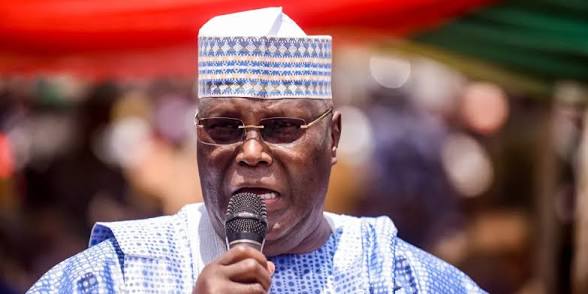

The declaration by former Vice-President Atiku Abubakar that contesting the 2027 presidential election will be his final attempt at Nigeria’s highest office did not come as a surprise. Atiku, a seventh time presidential candidate on various political party platforms, should be weary by now.
In fact, political analysts had since predicted that Atiku would throw in the towel before the 2027 electoral cycle, a prediction he debunked, insisting that as long as he remains healthy he would continue to contest for the presidency.
Speaking during a television interview last Wednesday, where he reflected on his decades-long political journey and long-time ambition to lead Nigeria, Atiku said the stakes were significantly higher as he prepares for what would be his eighth run for the presidency.
When asked about his age against the backdrop of his eighth attempt and whether the 2027 race would be his final shot at the presidency or not, Atiku said: “Certainly yes. Because the stakes are higher, because I believe that will be my last outing. So, that’s incontrovertible.”
In a swift reaction, however, the presidency advised the former vice-president to jettison any idea to contest the 2027 presidential poll. It insisted that it is the turn of the South under Nigeria’s established power rotation arrangement to still produce the president next year.
Presidential spokesperson, Bayo Onanuga, gave the advice in a post on his verified X handle, where he criticised Atiku’s renewed presidential ambition as a “self-serving” move that violates the North-South zoning principle.
According to him, Atiku’s position undermines a political convention that has helped stabilise Nigeria’s democracy since 1999.
“This Atiku will never learn,” accusing him of attempting to “disrupt Nigeria’s power rotation arrangement”, Onanuga wrote.
He recalled that during the 2023 election cycle, Atiku, then a candidate of the Peoples Democratic Party (PDP), ignored the party’s zoning tradition by contesting to succeed a fellow northerner who had completed two terms in office.
That decision, the presidential spokesperson said, led to internal divisions within the PDP, culminating in Atiku’s defeat at the polls.
“His ambition fractured the PDP, leading to his resounding defeat at the polls,” Onanuga said, adding that the former vice-president appears set to “repeat history” in 2027.
He further faulted Atiku’s argument that he is not bound by zoning because, in his view, the South has held power longer than the North since 1999.
Describing the claim as “dubious political arithmetic,” Onanuga argued that the imbalance cited by Atiku was the result of extraordinary circumstances, particularly the death of former President Umaru Musa Yar’Adua in office, which led to the succession of then Vice-President Goodluck Jonathan.
He maintained that such an occurrence does not invalidate the informal but widely observed power-sharing arrangement between the two regions.
Onanuga stressed that following the completion of eight years in office by former President Muhammadu Buhari, it is only equitable for President Bola Tinubu, a southerner, to complete his own tenure.
“Since Buhari completed his eight years, Tinubu too must complete his own,” he said.
It is instructive that Atiku Abubakar has paid his dues to the socio-political and economic development of his fatherland. He was an eight-year vice-president under President Olusegun Obasanjo from 1999 – 2007 and has made multiple attempts to become Nigeria’s president since returning to partisan politics in 2003.
He first contested the presidency in 1993 under the Social Democratic Party (SDP) primaries before stepping down for the late Moshood Abiola.
He later ran in 2007 under the Action Congress of Nigeria (ACN), losing to the late President Yar’Adua.
Atiku also contested in 2011 under the ACN, losing to former President Goodluck Jonathan.
He returned to the PDP and contested the 2019 presidential election, where he lost to the late President Buhari.
In 2023, he again emerged PDP candidate but lost to President Bola Ahmed Tinubu of the All Progressives Congress (APC).
The former vice-president has consistently positioned himself as a long-time advocate of restructuring, economic liberalisation and private sector-driven growth.
With the 2027 election cycle already shaping early political alignments, Atiku’s latest comment adds to growing speculation over the next phase of Nigeria’s presidential contest.
Against this backdrop, Blueprint commends Atiku Abubakar’s resolve to terminate his presidential ambition after the 2027 general elections, particularly in a continent largely ruled by octogenarians.
Notwithstanding, it is our view that having taken seven unsuccessful shots at the presidency, the former VP should have taken the honourable path of retiring to play the kingmaker role.
Although the argument that Atiku should respect the North-South zoning principle by jettisoning his 2027 presidential ambition is germane, considering Nigeria’s fragile geopolitical structure, it falls on all fours in the face of constitutional requirements.
The North-South zoning principle is a gentleman’s agreement, which is neither recognised by the Constitution of the Federal Republic of Nigeria 1999 (as amended) nor legally binding.
Thus, it is within the constitutional right of the former vice-president to keep running for any office of his choice, including that of the president of Nigeria.