

WASHINGTON – Ms Katie Jennings was scrolling on her phone in April 2025 when a headline stopped her cold. A second unvaccinated child had died of measles in her home state of Texas.
It was a tipping point for the 40-year-old stay-at-home mom who had grown up in a staunchly anti-vaccine, fundamentalist Christian community. “What are we doing? Why are we doing this?” she remembers thinking. “I wanted to protect my kids.”
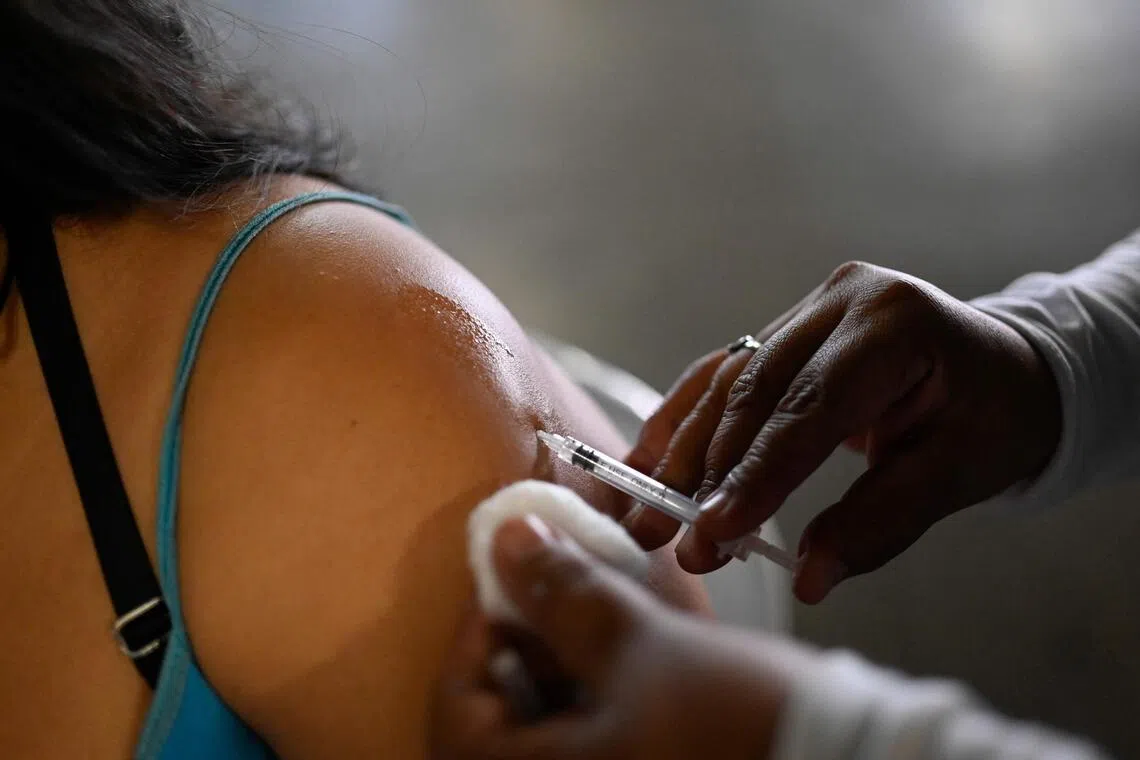
She took all six of them to get the measles, mumps and rubella shot.
Then she posted an emotional TikTok aimed at the anti-vax crowd she used to be a part of: “You can change your mind,” she said in the video that’s been watched more than 422,000 times.
Measles has been spreading in the US, reaching infection levels not seen in decades and threatening the country’s elimination status.
In 2026, the Centers for Disease Control and Prevention recorded 1,748 infections as of April 17 – a rate that is far outpacing 2025’s total – though public health experts say the national numbers are likely a gross undercount.
For some vaccine-hesitant parents like Ms Jennings, who have been goaded by Health and Human Services Secretary Robert F. Kennedy Jr., watching an outbreak rip through their state has made the deadly realities of the disease more concrete.
They are starting to question their own deeply held beliefs and the conspiracy theories that fuelled them.
And in several measles hotspots, enough of them are quietly changing their minds on the MMR shot that it is slowing down the outbreaks.
The health department in South Carolina saw a nearly 170 per cent increase in MMR immunisations at free clinics in January from the year prior and is close to declaring its outbreak over.
MMR vaccines jumped 15 per cent in Texas in 2025 before the state declared its outbreak over in August.
Utah’s health department also has recorded a bump in immunisations since summer 2025, a hopeful sign for the country’s most active current outbreak.
Any momentum behind anti-vaxxers having a change of heart is notable as this community largely rallied around Mr Kennedy, who is seeded his “Make America Healthy Again” agenda with vaccine misinformation.
A growing number of MAHA supporters embracing shots when measles comes to town calls into question the strength and sustainability of his movement.
In recent weeks, Mr Kennedy himself has gone quiet on the hot-button issue ahead of the midterm elections, having been instructed by the Trump administration to stick to talking points with wider appeal.
Mr Stuart Simko, a pediatrician in Greer, South Carolina – bordering Spartanburg County, the epicenter of the state’s outbreak – said he is been fielding multiple calls a week from hesitant parents.
They usually open with some version of: “‘Hey, so I know that I’ve been against vaccines, but this measles is in our backyard. What do you think?’” he said. Mr Simko and his team try to build trust with no pressure or judgment.
“For whatever reason, they have different information,” he said. Working through what they’ve been reading and hearing, and easing their particular concerns is part of the process.
So is giving them the crucial assurance that their choice is deeply personal and private. “You don’t have to tell anybody you gave your child any sort of vaccine,” he said.
The backslide in childhood immunisation rates accelerated during the Covid-19 pandemic, helping to create the conditions for measles to come raging back.
Some people simply skipped vaccinations for their kids because the lockdowns halted routine pediatrician visits.
But rates also dropped as anti-vax influencers peddling distrust of science and misinformation linking the MMR to autism swayed more parents to opt out of the shots.
Ms Heather Simpson, 35, used to be one of those influencers. She turned against immunisations after she started “absorbing the wrong things” online, including interviews withvMr Kennedy.
Later, she struggled to get doctors to diagnose her daughter’s sleep apnea, solidifying her anti-medical establishment views.
Ms Simpson, a Dallas resident, said her trust in the health system was “completely blown”.
The influencer part happened by accident in 2019 when she decided to post her own takes on vaccines in a Facebook group of like-minded moms.
Almost instantly, thousands of followers offered her community, which she said was lacking in her life.
They also amplified her posts, including one of her dressed as the measles for Halloween that made national news.
Her opinions started to diverge during the pandemic, however, when she found it tough to rail against what she considered common-sense measures to protect others, such as masking.
She started to second-guess the authority of anti-vax leaders on other health issues, too. As she began opening up online in 2021 about her changing perspective, her support system crumbled.
“We lost real life friends,” Ms Simpson said.
She suffered from panic attacks, worried that maybe her old community was right on vaccines. Doctors who patiently walked her through concerns – instead of throwing data at her – helped affirm her decision to start catching up on immunisations for her daughter.
Her experience led her to help create Back to the Vax, a small online support group for anti-vaxxers who are slowly unlearning what many of them have been told their whole lives.
It is far from a straightforward process.
For Ms Jennings, it involved not only questioning the rationale of skipping shots but also confronting an entire worldview that once governed all of her decision making.
In her former religious community, members distrusted doctors and held up her pastor as the ultimate authority figure.
Deconstructing those views in public on TikTok helped her connect with people outside of her bubble.
“It’s been cathartic for me and helped me to process,” said Ms Jennings, whose children have now received all of the standard childhood immunisations, plus Covid and flu shots.
Her vaccine-related TikToks often garner an outpouring of support from commenters who identify as health workers. “You’ve done a very brave thing!” said one.
Doctors on the front lines of the measles outbreaks play an important role as they are educating a populace that has no collective memory of the disease, said Dr Paul Offit, director of the Vaccine Education Center at the Children’s Hospital of Philadelphia.
When measles was eliminated in 2000, so too was the fear of getting sick.
Dr Lisa Carroll, a physician in South Carolina and professor at the Edward Via College of Osteopathic Medicine, helps run a weekly outreach programme at a local food pantry where she has increasingly encountered more families asking about the MMR.
Many of them are not explicitly anti-vaccine, they just do not know much about the shot or where to get it, she said. It was just easier for some of them to sign an exemption form.
In these cases, education on the true risk and safety of the MMR has led to that change of mindset, Dr Carroll said.
For those who are more scared of the vaccine than the virus, simply telling them what to do does not work.
Mr Simko, who had never seen a measles case before the South Carolina outbreak started in October, said he often explains the lesser-known but more common ramifications of contracting it, such as immune amnesia.
The virus can cause the body to lose its natural immune response to other diseases and make a person immunocompromised for years. That can be convincing for some people.
Ultimately though, hesitant parents have to do their own soul-searching – and that takes as long as it takes.
Despite her staunchly pro-vax views now, Ms Simpson stalled for years in getting her daughter, who is now eight, the MMR shot.
Even as she watched the measles circulate in her hometown of Lubbock in 2025, she hesitated due to her lingering anxiety.
As the Texas numbers started to subside, she no longer felt a sense of urgency.
But now, she’s seeing headlines of infection counts creeping up in Utah and Florida. It is time to get the MMR, she said.
“I totally understand every single fear behind it,” Ms Simpson said. “I’m doing it anyway and that’s why it’s the best decision.” BLOOMBERG