

Follow our live coverage here.
WASHINGTON – Over the past year, US airstrikes have crippled Iran’s nuclear program. Several Iranian nuclear facilities lie in ruins. And Iran’s stockpile of highly enriched uranium – “nuclear dust”, as President Donald Trump calls it – is thought to be deeply buried under rubble.
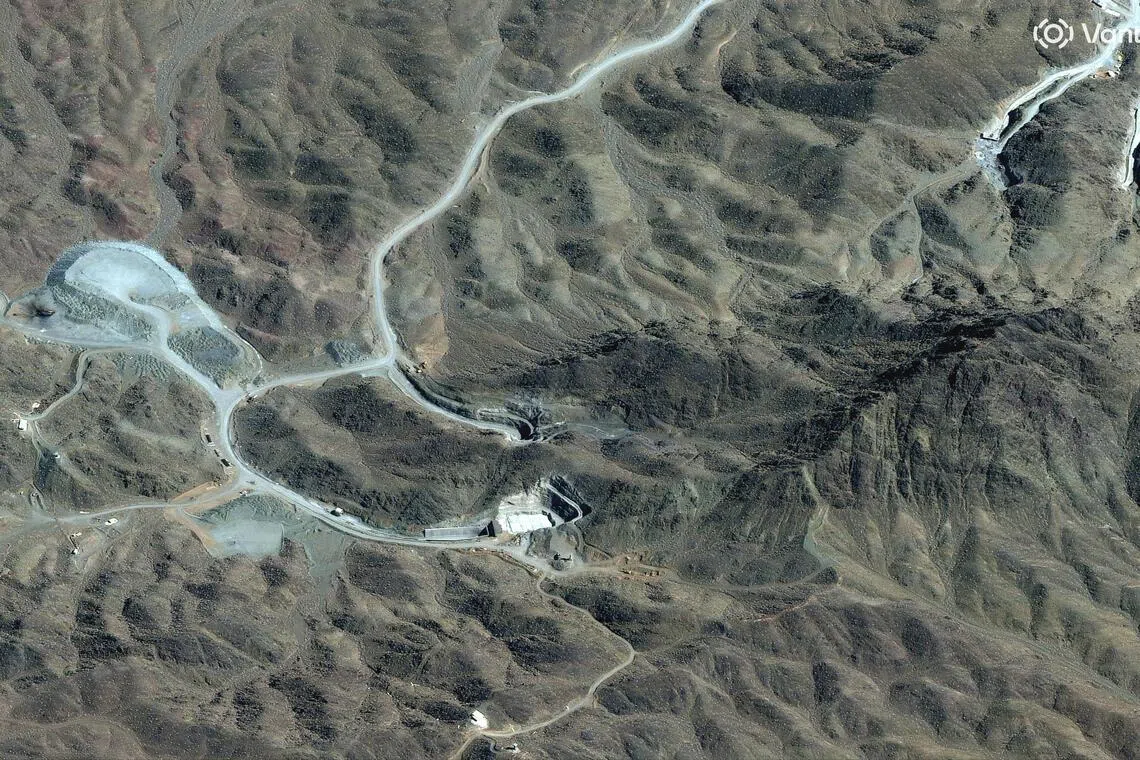
But even after a US bombing raid in June 2025 and more than five weeks of attacks on Iran since February, one suspected nuclear site remains untouched. Experts say the underground facility, known as Pickaxe Mountain, is buried so deep that it may lie beyond the reach of America’s most powerful bunker-buster bombs.
Experts do not believe the facility is yet complete. But they fear that in the future, Pickaxe Mountain could provide Iran a venue for producing nuclear weapons that is impervious to aerial attack.
As Mr Trump bombed the country in recent weeks, some Iran hawks pressed him to consider sending Special Forces on a risky ground mission to destroy the facility with planted high explosives. One White House ally recently proposed injecting its halls with chemical contaminants.
Other experts who favor dialogue over conflict call those ideas far-fetched and say that Pickaxe Mountain illustrates the impossibility of relying on force alone to prevent Iran from acquiring a nuclear bomb.
Now that Mr Trump is pursuing negotiations with Iran, both camps agree that any deal must include a provision ensuring that Pickaxe Mountain is permanently shut down.
Little is known about Pickaxe Mountain, referred to locally as Kuh-e Kolang Gaz La. But in the fall 2025, satellite images revealed that Iran had advanced construction at the site soon after US forces disabled the country’s three main nuclear facilities in June.
Mr Trump cited that activity in an April address as a reason for launching war with Iran. After the three sites were hit, he said, Iran’s leaders “sought to rebuild their nuclear program at a totally different location, making clear they had no intention of abandoning their pursuit of nuclear weapons”.
Analysts said Mr Trump was clearly referring to Pickaxe Mountain.
One of the sites targeted by Operation Midnight Hammer in June was Iran’s mountainside uranium enrichment facility at Fordo, which the United States struck with 30,000-pound bombs known as Massive Ordnance Penetrators designed specifically for that mission.
But even those fearsome bombs might not be able to reach Pickaxe Mountain’s interior chambers, which are buried about 610m deeper under granite than Fordo, according to the Institute for Science and International Security.
“Pickaxe Mountain is deeper and bigger and more fortified than Fordo,” said Mr Blaise Misztal, the vice-president for policy at the Jewish Institute for National Security of America, or JINSA, a Washington research organisation. “That may be a place where they are planning to sprint to weapons-grade enrichment.”
When construction began in 2020, Iran’s government said the site would house a plant to build centrifuges, which spin uranium at high speeds to greater levels of purity, to replace one destroyed by presumed Israeli sabotage. But Iran has not granted the International Atomic Energy Agency access to the facility, affirming suspicion among experts that Iran may actually intend to use it for the more advanced step of enriching uranium to military-grade purity suitable for nuclear bombs.
“In any negotiated settlement with Iran that ends the conflict, the Trump administration should insist on the full, verified and permanent dismantlement of all enrichment plants,” said Ms Andrea Stricker, a research fellow at the Foundation for Defense of Democracies, which has supported Mr Trump’s war with Iran.
“We don’t want them recovering and matching highly enriched uranium with a potential enrichment facility beyond the reach of bunker busters.”
Some experts fear that Iran may already have stashed some of its stockpile of 440kg of highly enriched uranium at Pickaxe Mountain.
Dr Rafael Grossi, who leads the International Atomic Energy Agency, has said he believes about half of Iran’s highly enriched uranium is buried at the Isfahan nuclear facility, one of the three sites bombed in June. He has not specified where the rest might be. The material would require only a few weeks of processing to be usable for a nuclear weapon.
“If there isn’t some full cleansing of Iran’s nuclear program – I mean no enriched uranium, no facilities – I think it would be seen as a huge missed opportunity,” said Mr Michael Makovsky, the president and CEO of JINSA. Officials in the Trump administration, he added, are “very aware of this issue and they know it has to be addressed”.
But even some nuclear experts opposed to Mr Trump’s policies call Pickaxe Mountain a worry.
“The concern is real,” said Mr Joseph Cirincione, a longtime arms control expert who is highly critical of Mr Trump’s policies. “The problem is doing anything about it.”
The only realistic way to halt Iran’s nuclear program, including the disabling of Pickaxe Mountain, is by winning Tehran’s cooperation through diplomacy, Mr Cirincione added. “We can’t do it ourselves.”
The facility is in the heart of Iran, about 1.6km south of the devastated uranium enrichment facility at Natanz and 321.8km south of Tehran. Any US assault would expose slow-moving aircraft like helicopters and transport planes to ground fire as they flew deep into the country.
Once on the ground, US troops and engineers would be vulnerable to Iranian drone and missile attacks as they surveyed the site and attempted its demolition or other tactics.
Iran has voluntarily disabled a nuclear asset before: Under its 2015 nuclear deal with the Obama administration and several other nations, Tehran removed the core of its plutonium-producing Arak nuclear reactor and filled it with cement.
In a recent podcast interview, the chief executive of the Foundation for Defense of Democracies, Mr Mark Dubowitz, questioned whether even planted high explosives would be sufficient to disable the facility.
He said the task could require employing an unspecified chemical substance to make the site “inaccessible to human beings for the next hundred years.”
Asked before the April 7 ceasefire whether Mr Trump might consider a ground operation to disable the site, Ms Anna Kelly, a White House spokesperson, said that “President Trump never tells the media what military actions he will or will not direct”.
“However,” she added, “he has been clear that Iran can never possess a nuclear weapon. All options are always on the table.” NYTIMES