

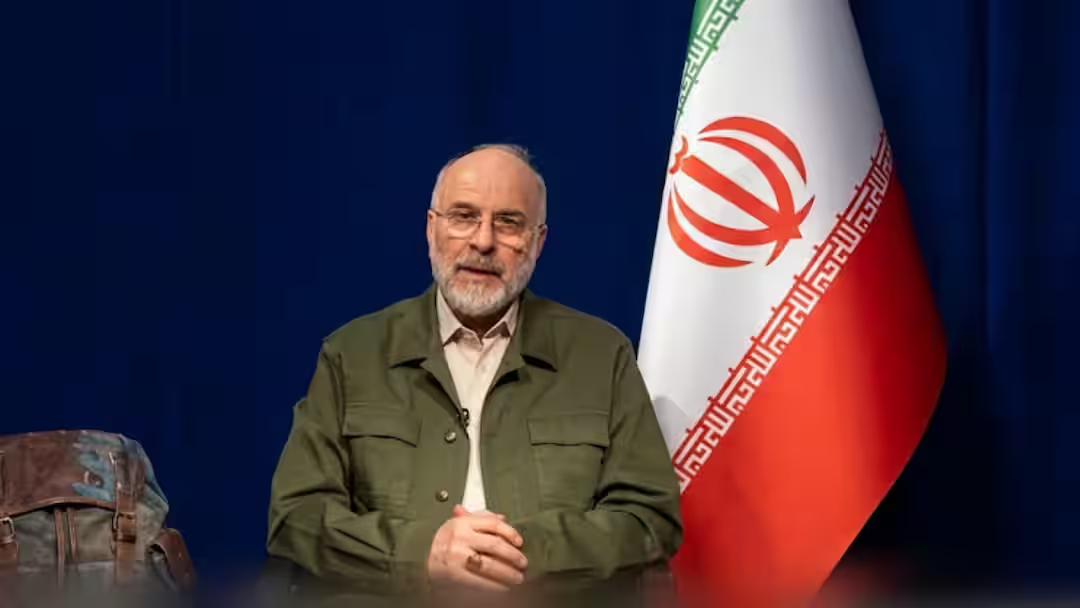
- Iran rejects negotiations under threats from Donald Trump.
- Ceasefire talks are strained before April 22 deadline.
- Disputes over nuclear program and Strait of Hormuz persist.
Iran Rejects Talks Under Threat: Tensions between Mohammad Baqer Ghalibaf and Donald Trump have escalated sharply, casting a shadow over fragile diplomatic efforts tied to an impending ceasefire deadline. Accusing Washington of undermining negotiations, Ghalibaf said Tehran would refuse to engage under pressure or threats.
Iran Rejects Talks Under Threat
Posting on X, Ghalibaf alleged that the United States was attempting to convert dialogue into a “surrender table.” He warned that Iran could unveil “new options on the battlefield” if tensions spiral further, signaling a readiness to escalate if provoked.
Ghalibaf said, “Trump, by imposing a siege and violating the ceasefire, seeks to turn this negotiating table— in his own imagination— into a table of surrender or to justify renewed warmongering. We do not accept negotiations under the shadow of threats, and in the past two weeks, we have prepared to reveal new cards on the battlefield.”
ترامپ با اعمال محاصره و نقض آتشبس میخواهد تا به خیال خود این میز مذاکره را به میز تسلیم تبدیل کند یا جنگافروزی مجدد را موجّه سازد.
مذاکره زیر سایهٔ تهدید را نمیپذیریم و در دو هفتهٔ اخیر برای رو کردن کارتهای جدید در میدان نبرد آماده شدهایم.— محمدباقر قالیباف | MB Ghalibaf (@mb_ghalibaf) April 20, 2026
Ceasefire Talks Under Strain
The exchange comes just days before the April 22 ceasefire deadline, with planned discussions in Islamabad seen as a crucial opportunity to de-escalate. However, uncertainty surrounds Iran’s participation. Trump acknowledged that while both sides had initially agreed to attend, Tehran’s final decision remains unclear.
In remarks to PBS News, Trump underscored the stakes, warning that without tangible progress, “lots of bombs start going off.” The statement highlighted Washington’s dual-track approach—pushing for diplomacy while signaling preparedness for military escalation if talks fail.
Nuclear Disputes and Strategic Flashpoints
At the core of the standoff are long-standing disagreements over Iran’s nuclear ambitions and recent disruptions in the Strait of Hormuz, a critical artery for global energy supplies. Although a temporary ceasefire has halted direct confrontations, mutual distrust continues to dominate the narrative.
Iranian state media has hinted at a possible boycott of the Islamabad talks, citing what it describes as excessive U.S. demands and shifting negotiating positions. The rhetoric underscores the fragile nature of the truce and the challenges in sustaining diplomatic momentum.
Tehran’s Diplomatic Pushback
Iran’s Foreign Minister Abbas Araghchi has also stepped up criticism of Washington’s actions. In discussions with Ishaq Dar, he pointed to “provocative actions and repeated ceasefire violations” as key barriers to progress.
Araghchi conveyed similar concerns to Sergey Lavrov, arguing that U.S. conduct contradicts its stated commitment to diplomacy. He maintained that Iran would take all necessary steps to protect its national interests if tensions escalate further.
Meanwhile, President Masoud Pezeshkian reiterated Tehran’s long-standing distrust of Washington, stating that “Iranians do not submit to force.” His comments followed Trump’s warning that Iran would “be hit very hard” if no agreement is reached before the ceasefire expires.
Strait Of Hormuz: A Volatile Theatre
Compounding tensions, the United States Navy has imposed restrictions on Iranian vessels in the Strait of Hormuz. Tehran has condemned the move as unlawful and warned of retaliation if military pressure intensifies.
The developments reflect a precarious balance between diplomacy and confrontation.