

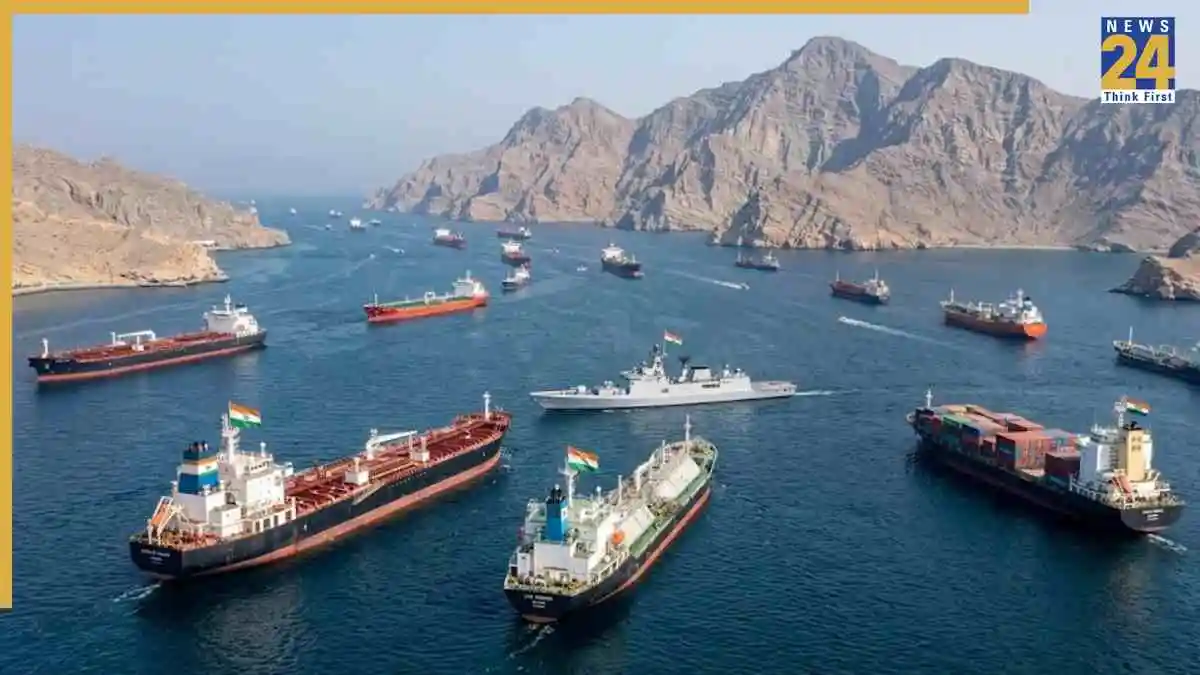
As tensions continue to escalate in the Middle East, the safety of vessels transiting the Strait of Hormuz has gained renewed attention. One of the key factors in maritime regulation, security, and state protection is flag flying on a ship.
What does flagging a vessel mean?
Flagging a vessel means that it is registered in a country and adheres to maritime rules and laws in that country. Additionally, it allows the flag state powers to launch a probe and penalise violations of domestic and international laws. Regulations may vary across countries. This encourages vessel owners to select the best-suited operational and commercial needs, ET reported
ALSO READ: US seizes Iranian ship near Strait of Hormuz, Tehran vows to retaliate: ‘Will soon respond and…’
What does an Indian-flagged vessel mean?
An Indian-flagged vessel is a commercial ship that is registered with the Directorate General of Shipping. It is authorised to fly the national flag of the country. Such ships are administered under the Merchant Shipping Act and operate as sovereign entities on the high seas within India’s jurisdiction. Vessels subject to Indian authorities must comply with Indian maritime safety, labour, and environmental rules.
How do vessels qualify for Indian flagging?
To qualify as Indian-flagged ships, vessels must enter the domestic waters for registration. Furthermore, the owning company must be incorporated in India.
ALSO READ: Louisiana mass shooting: 8 children between ages of 1 and 14 killed, shooter dead after…; here’s what happened in Shreveport
FoC jurisdiction offers cost benefits for Indian-flagged ships
Indian-flagged ships receive strategic support as the country protects their interests via fleet-related diplomatic intervention as and when required. Experts say this creates a greater compliance burden in India than in countries with “Flag of Convenience” status, such as Panama and St Kitts.
According to Rajeev Kumar Yadav, director at Vertex Marine Services, FoC permits ships to be registered under any flag state within “3-4 days”. Domestic-flagged vessels calling at Indian ports can also receive advantages from lower port levies and tax liabilities. They are given priority in government cargo freight and public sector charter contracts.
ALSO READ: ‘No more Mr nice guy…’: Trump threatens to end Iran’s ‘killing machine’, announces Islamabad talks 2.0 on Monday
How have Indian-flagged ships been affected by the Iran crisis?
During the US-Iran war, over two dozen Indian ships were struck west of the Strait of Hormuz. The Indian Navy successfully escorted multiple tankers to safety. Some ships, however, remain in the Persian Gulf. There have been no reports of direct attacks on Indian-flagged vessels so far. But being Indian-flagged does not grant the government decision-making authority over freight rates or commercial destinations.
Growth projections
The Indian-flagged vessel fleet touched 14.2 million Gross Tonnage (GT) during March. In FY26, 92 vessels of 1.5 million GT were added. The Maritime Amrit Kaal Vision 2047 seeks to increase utilisation of Indian-flagged ships from the current 7% to 30-40% by 2047.
ALSO READ: Iran rejects second round of talks with US in Pakistan, blames Washington’s unrealistic expectations and…; will peace push collapse?