
South Africa once had 6 nuclear bombs: Why did it give up its arsenal and become a nuclear-weapon-free nation?

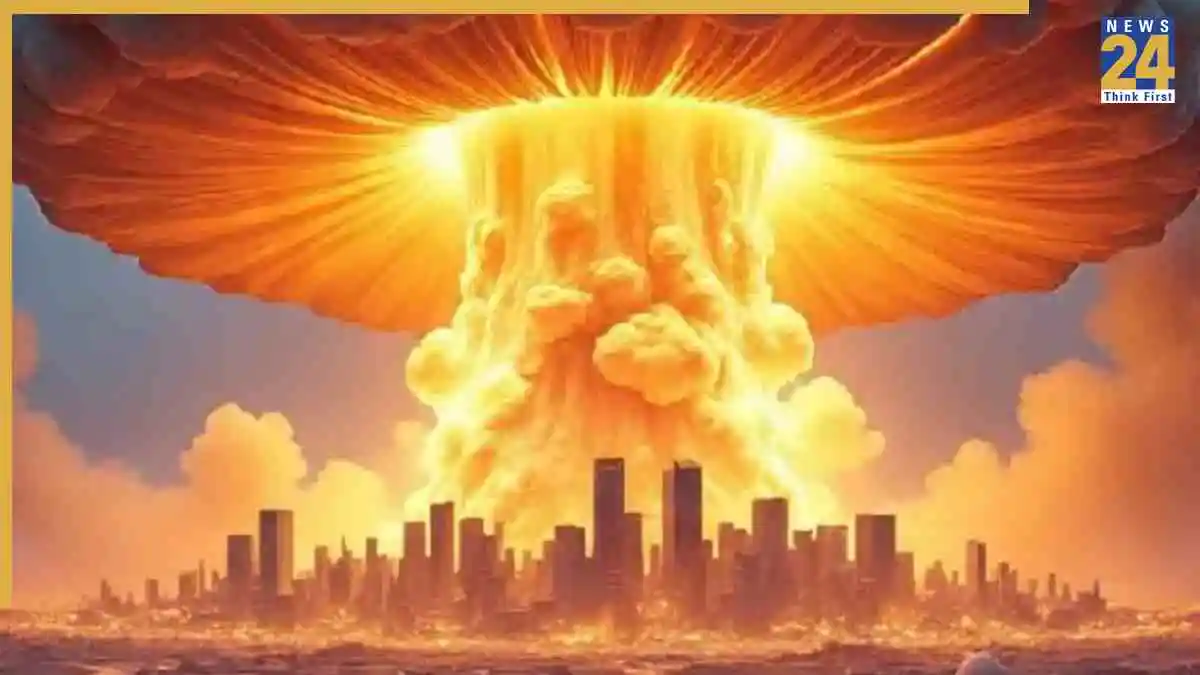
The circumstances in South Africa in 1989 enabled the successful denuclearization. At Pelinda, a highly secure and clandestine military facility, unfolded an unimaginable chapter. Arrayed there were six deadly nuclear weapons, capable enough to reduce any city to a heap of ash in the blink of an eye. However, it was then that the country’s President F.W. de Klerk ordered the end of the nuclear weapons program and oversaw its nuclear disarmament process.
The move left defense experts across the globe utterly stunned as South African forces dismantled their own greatest defensive shield. This was a “political maneuver” that caught the entire world off guard. But why did South Africa take such a step? Did it lack faith in its own incoming government led by Nelson Mandela, or did the White House orchestrate it? The journey from being a nuclear power country to a nuclear-weapon-free nation is no less than a thriller movie
ALSO READ: ‘National sovereignty, rule-based order and…’: What is Chinese President Xi Jinping’s 4-point proposal for ending US-Iran war after Islamabad talks collapsed?
Why did South Africa initiate its nuclear program?
South Africa reportedly initiated its nuclear program in the 1970s. There were mainly three reasons behind this endeavor:
- Firstly, South Africa feared isolation at the time when the policy of apartheid was in force, leading the majority of the global countries to boycott the nation.
- Secondly, due to the threat of communism, Soviet-backed Cuban troops were deployed in Angola. South Africans feared that they were being encircled from all sides.
- The third reason was the guarantee of security: The then South African government believed that if the country were to face a crisis ahead, the possession of nuclear weapons would force the US and other Western nations to come to its aid.
ALSO READ: India’s ally UAE makes Pakistan beggar, demands Rs 279173700000 back, Shehbaz Sharif, Asim Munir to beg for money from three places, what are they?
How were the Nuclear weapons built?
South Africa, a country with vast reserves of uranium, leveraged technical cooperation with Israel and its own aerodynamic nozzle technology to enrich it. In a highly clandestine mission at Pelindaba, located near Pretoria, six nuclear bombs were developed, and a seventh was under construction.
Historic decision to give up nuclear weapons
In 1989, when Klerk was the President, he ordered to dismantle the nuclear program due to the following reasons:
- By 1989, the Berlin Wall had collapsed, and the Cold War was nearing its end. Cuban troops had started withdrawing from the neighbouring country of Angola, thereby eliminating the external threat that loomed over South Africa.
- One of the most significant aspects was the fear of a transfer of power. President Klerk knew that the era of apartheid was drawing to a close and that the power would be passed into the hands of Nelson Mandela and his African National Congress (ANC) soon. The white African-led government did not want a black African-led government to possess such a nuclear weapon.
- South Africa sought to revitalize its economy. Destroying the nuclear weapons served as a means to demonstrate globally that it was now firmly on the path of democracy and peace.
ALSO READ: Who is Hui Ka Yan? Chinese billionaire pleads guilty in ‘history’s biggest scam’ worth Rs…, was once Asia’s richest man with net worth of…
How did South Africa lose such a major arsenal?
- In 1990, just before Nelson Mandela’s release, President de Klerk ordered the destruction of the country’s nuclear arsenal.
- South Africa signed the Nuclear Non-Proliferation Treaty (NPT) in 1991. Subsequently, inspectors from the IAEA were invited to verify compliance.
- By 1993, South Africa had dismantled all six of its bombs and their blueprints.
South Africa’s action is considered the most important example of nuclear disarmament in history. Today, when North Korea and Iran are sparing no effort to become nuclear powers, South Africa has prioritized democracy and diplomacy over nuclear weapons.
ALSO READ: US-Iran war ending? Trump drops big statement, says war is…; Vice President JD Vance signals breakthrough