

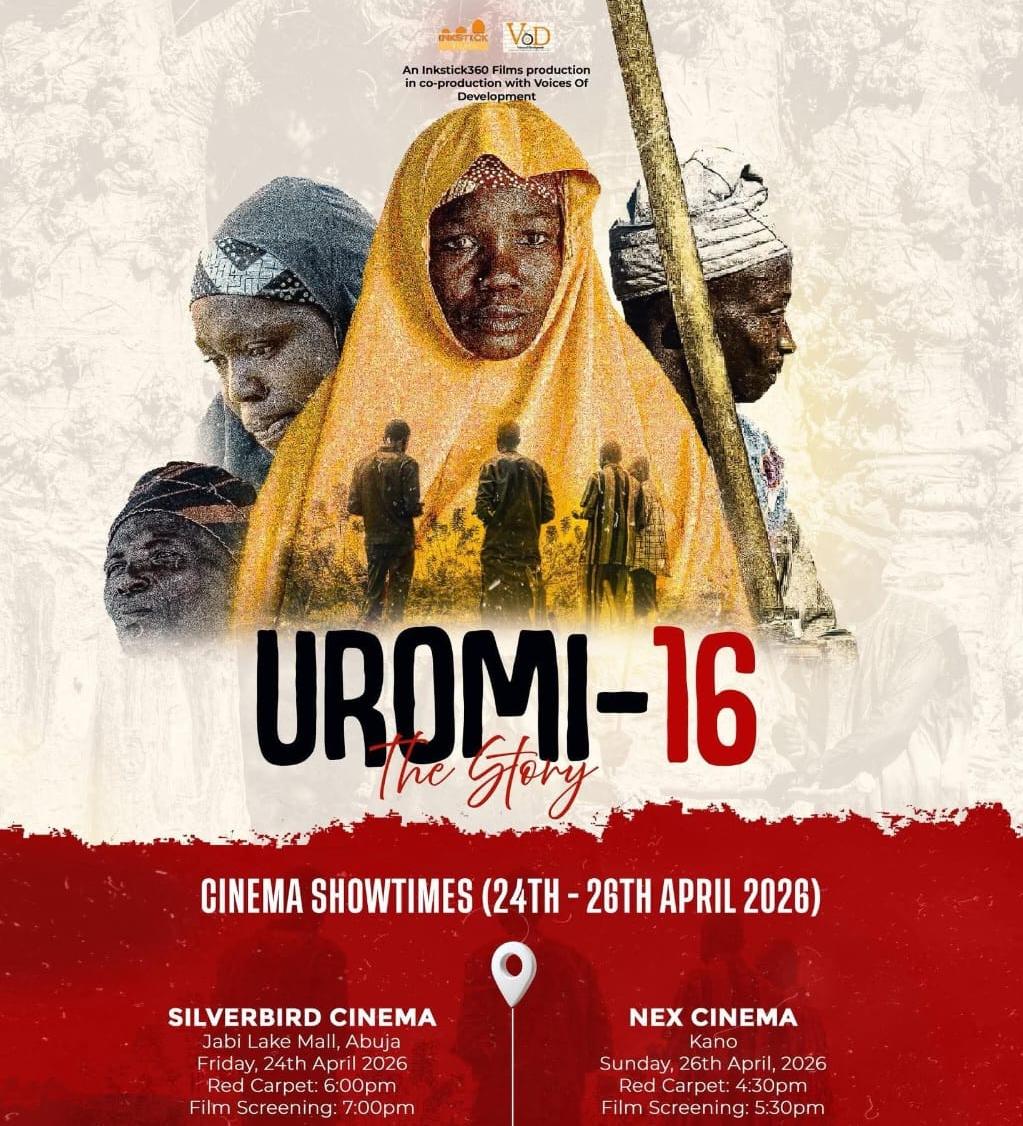
Security Alerts Stall Screening of UROMI-16 Documentary in Abuja, Kaduna and Kano
The scheduled screenings of the documentary “UROMI-16: The Story” in Abuja, Kaduna, and Kano have been temporarily postponed following what organisers described as credible security concerns.
The screenings were originally slated to hold between April 24 and 26, 2026.
The development was disclosed in a statement issued by Barrister Adam Bashir of A. A. Mustapha & Co., legal representatives to the documentary producer, Sa’id Sa’ad Abubakar.
Decision Driven by Safety Concerns
According to the statement, the postponement was taken in the interest of public safety and should not be interpreted as a cancellation of the project.
“The safety of all stakeholders, particularly viewers, remains paramount. This temporary postponement is a measured and responsible step taken in the interest of public safety and the preservation of human life,” the statement read.
The documentary, described as a fact-based and human-interest account, aims to correct misinformation and present verified narratives surrounding the Uromi-16 jungle justice incident in Edo State.
The legal team emphasised that the producers remain committed to telling the story responsibly while preserving the dignity of victims and pursuing justice through lawful means.
“The story of Uromi-16 is not one that can be silenced. It must be told responsibly, received thoughtfully, and acted upon justly,” Bashir stated.
Organisers confirmed that refunds for already purchased tickets would commence immediately through verified email channels, with completion expected within three weeks.
They also assured the public that new dates or alternative release platforms would be announced after consultations with relevant authorities.
The producers urged members of the public to remain calm and law-abiding, noting that ongoing engagements with stakeholders are aimed at ensuring safety, protecting rights, and promoting accountability.
The postponement highlights growing concerns over security considerations in public engagements, even as stakeholders continue to navigate sensitive narratives around justice and public perception.
By TimesNG