

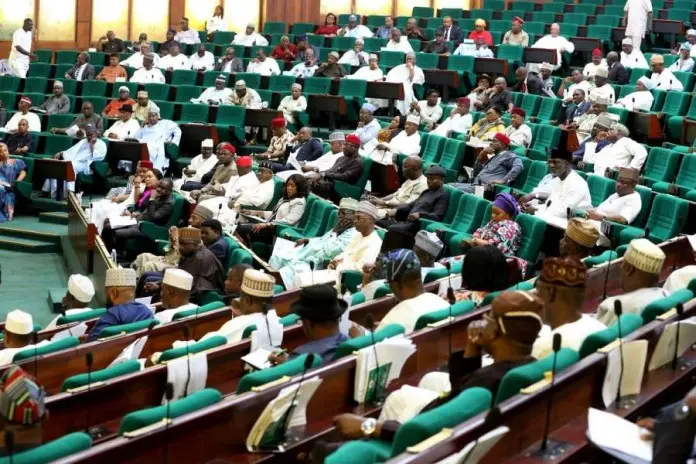
The House of Representatives has approved President Bola Tinubu’s request to secure a $516.3 million syndicated loan from Deutsche Bank AG to fund key sections of the Sokoto–Badagry Super Highway.
The approval followed the presentation of a report by the Deputy Chairman of the House Committee on Aids, Loans and Debt Management, Abdullahi Rasheed, during plenary on Tuesday in Abuja.
The facility will finance Sections 1, 1A and 1B of the project, covering approximately 120 kilometres of the proposed highway, which forms part of the administration’s broader infrastructure drive under its Renewed Hope Agenda.
In his request to lawmakers, Tinubu said the loan, structured under a syndicated financing arrangement, is critical to accelerating construction on the multi-billion-dollar project designed to improve national connectivity and ease the movement of goods across major economic corridors.
The 1,000-kilometre Sokoto–Badagry Super Highway is expected to link several states, including Sokoto, Kebbi, Niger, Kwara, Oyo, Ogun and Lagos, ultimately connecting Illela in the North-West to Badagry on the Atlantic coast.
According to the President, the financing package will be supported by a partial risk guarantee from the Islamic Corporation for the Insurance of Investment and Export Credit, aimed at reducing exposure for lenders and improving the bankability of the project.
He added that the Federal Government will provide counterpart funding exceeding ₦265 billion to cover land acquisition, compensation and related infrastructure costs.
Details of the loan indicate a tenure of nine years, including a three-year grace period, with interest pegged at the Chicago Mercantile Exchange Secured Overnight Financing Rate (SOFR) plus 5.3 per cent per annum.
The Federal Executive Council had earlier approved the financing plan before its submission to the National Assembly.
The highway project is considered one of the flagship initiatives of the Tinubu administration, with expectations that it will significantly reduce travel time, boost interstate trade and support economic integration across key regions of the country.