

Follow our live coverage here.
CHICAGO – US airlines are seeing their best passenger numbers ever, cramming more people onto their planes and boosting revenues. Yet, in a cruel paradox, a war thousands of kilometres away is torching profits through a crushing fuel cost burden.
United Airlines cut its full-year profit forecast by roughly a third this week. Alaska Air withdrew its outlook entirely.
Delta Air Lines scrapped planned growth for the quarter, while Southwest Airlines declined to update its full-year outlook, saying it “would not be productive at this time”.
In each case, fuel costs are rising faster than airlines can raise fares.
The disruption marks the first clear instance of the Iran conflict forcing major American companies to cut operations, lower forecasts and pass costs to consumers, with no certainty about when it ends.
United flew more passengers in the first three months of in 2026 than in any January-to-March period in its history.
The Chicago-based carrier also took in more revenue than ever before in any first quarter, with ticket prices rising across its network. It still slashed its profit forecast.
That is the bind facing the industry: Demand is strong, but costs are rising faster.
Jet fuel prices have roughly doubled since the United States and Israel attacked Iran in late February, pushing up costs so quickly that fare increases are lagging.
Southwest said it expects second-quarter fuel prices of about US$4.10 (S$5.20) to US$4.15 per gallon, up from US$2.73 in the first quarter.
Delta expects to recover only 40 to 50 US cents of every extra dollar it spends on fuel this quarter, with United seeing a similar gap before improving later in 2026.
Alaska is recovering only about a third of the increase, a shortfall large enough to force it to withdraw its forecast and warn of a loss this quarter.
United cut its full-year earnings outlook range to US$7 to US$11 per share from US$12 to US$14 just two months ago, with the unusually wide range reflecting uncertainty over fuel. Alaska did not publish a range at all.
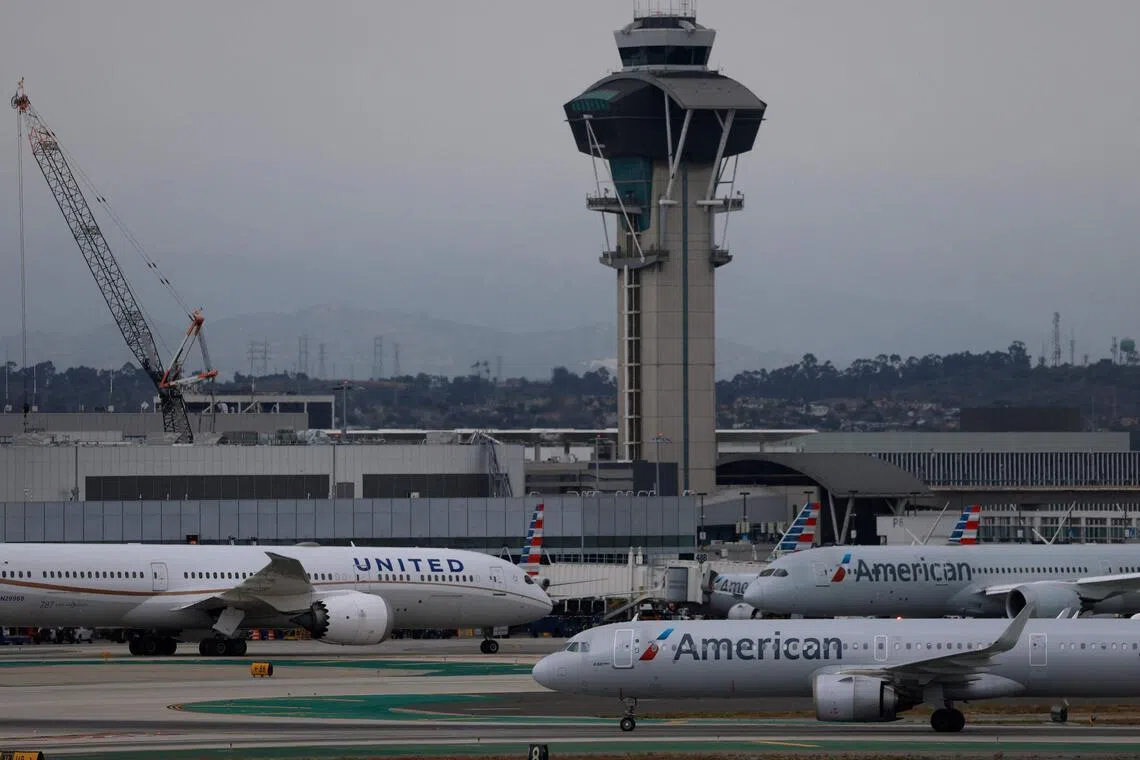
Lufthansa is set to scrub 20,000 uneconomic short-haul flights from its European summer schedule to save on jet fuel, which has doubled in price since the start of the Iran war.
PHOTO: REUTERS
Airlines are already cutting flights, even as planes remain full, because some routes no longer make sense at current fuel prices.
“It simply doesn’t make sense to fly marginal flights that will lose cash in a higher fuel price environment,” United CEO Scott Kirby said.
Delta is removing all planned growth for the quarter, cutting capacity by more than 3.5 percentage points from earlier targets. United has cut about 5 percentage points of planned flying.
Alaska has pulled back in Mexico and trimmed late-night departures, while Southwest has cut weaker routes and suspended operations at Chicago O’Hare and Washington Dulles.
The reductions are focused on lower-margin flying: overnight trips, midweek travel and thinner leisure routes where higher fuel quickly erodes profitability.
“The best type of fuel recapture is not to purchase the fuel in the first place,” Delta chief executive Ed Bastian said.
Delta’s revenue rose nearly 10 per cent in the first quarter, and bookings have continued to grow into the current period.
United has implemented multiple fare increases and higher baggage fees, with prices rising about 12 per cent in early March and climbing further later in April. Alaska said fares in its core markets have risen more than 20 per cent in recent weeks without weakening demand.
“The rapidity with which fares have gone up, and the stability of bookings over the last several weeks, suggest people really want to travel,” Alaska finance chief Shane Tackett said.
But fare increases take time to feed through. Many passengers flying today booked before fuel prices spiked, limiting how quickly airlines can recover higher costs. Even when the industry moves together, pricing lags.
Alaska said it would have been profitable this quarter but for fuel.
The impact is no longer confined to airlines.
GE Aerospace, which makes engines for most US commercial jets, said it has built a more cautious second half into its outlook, reflecting the risk that airlines could delay maintenance work, engine overhauls and spending if high fuel prices persist.
Chief executive Larry Culp told Reuters the company held its outlook despite strong results, citing uncertainty from the conflict.
“We are at war, and that creates some uncertainty,” Mr Culp said. REUTERS