
PHOTOS: TimesNG Trains MAAUN Students on Investigative Journalism, Fact-Checking, OSINT, SOJO

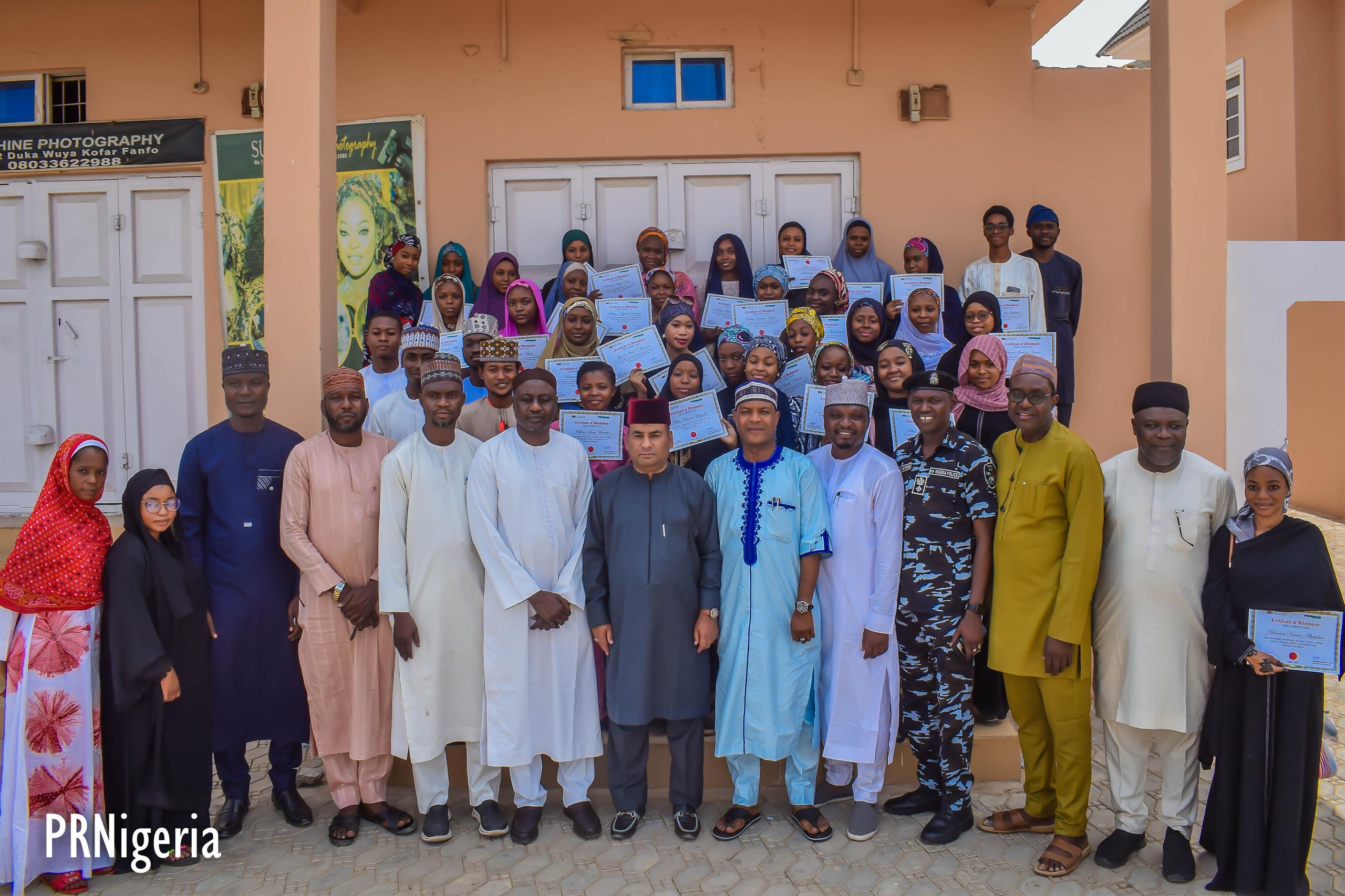
PHOTOS: TimesNG Trains MAAUN Students on Investigative Journalism, Fact-Checking, OSINT, SOJO

The TimesNG Centre for Research and Development has trained Mass Communication students of Maryam Abacha American University of Nigeria (MAAUN) on investigative journalism, fact-checking, crisis reporting, Open Source Intelligence (OSINT), and Solutions Journalism (SOJO).
The two-day workshop, held at TimesNG Centre Kano from Thursday, April 23 to Friday, April 24, 2026, was themed “Investigative Journalism, Fact-Checking, OSINT & Solutions Journalism.” It aimed to bridge the gap between classroom theory and practical journalism skills in a rapidly evolving digital media landscape.

In his remarks, the Editor-in-Chief of TimesNG, Malam Yushau Shuaib, congratulated participants for leveraging the opportunity to enhance their professional competence.
He noted that the knowledge acquired would be instrumental in shaping their future careers, particularly in amplifying the voices of underserved communities.

Shuaib also commended the facilitators for their dedication, describing knowledge-sharing as critical to grooming a new generation of competent and ethical journalists.
Similarly, the Vice-Chancellor of MAAUN, Professor Dr. Mohammad Israr, expressed appreciation to TimesNG for organizing what he described as a timely and impactful training addressing contemporary challenges in journalism, especially in an era of information disorder.
 He urged students to apply the knowledge gained, while reaffirming the university’s commitment to future collaborations of similar nature.
“We need more of such training programmes. We are ready to partner to cultivate the next generation of excellent communicators and reporters,” he said.

On his part, the Kano State Police Public Relations Officer (PPRO), CSP Abdullahi Haruna Kiyawa, underscored the centrality of communication in shaping public narratives and managing perceptions.
He advised students to adhere strictly to ethical standards, warning against publishing reports capable of inciting unrest or violating the law.
 “As reporters, you must understand your professional boundaries and ensure responsible communication, especially during crises,” he said.
Kiyawa also emphasized the importance of data-driven journalism and the responsible use of artificial intelligence tools, noting that data enhances credibility in reporting.

Citing police data from 2025, he revealed that approximately 70% of crimes in Kano were linked to drug and substance abuse.
The workshop featured presentations by seasoned journalists and media professionals who shared practical insights and real-world experiences.
 Publisher of SolaceBase Online Newspaper, Mallam Abdullateef Abubakar Jos, delivered a paper on “Accountability Journalism in the Digital Age,” stressing the need for critical thinking, verification, and persistence in holding power to account.
Investigative journalist and publisher of Daily Nigerian, Jaafar Jaafar, provided an overview of investigative journalism, outlining its processes, techniques, and ethical considerations. He cautioned against publishing stories capable of escalating tension or public disorder.
 Dahiru Mohammed Lawal presented on “OSINT, Fact-Checking, Investigative & Solutions Journalism: Tools and Techniques, Pitching and Storytelling for Impact,” highlighting digital tools for detecting and debunking misinformation.
He noted that fact-checking has become indispensable in combating the rising tide of disinformation.
Mukhtar Ya’u Madobi, in his presentation on “Solution-Driven Crisis Investigative Reporting,” advocated a shift from problem-focused reporting to highlighting responses and solutions, while assessing their impact and limitations.
Dr. Musa Abdullahi Sufi spoke on “The Leadership Lens: Using Development Journalism to Influence Governance and Social Transformation,” emphasizing the role of journalists in shaping societal mindsets and supporting policy implementation.
Musa Aliyu facilitated a session on “Social Media as a Broadcast Newsroom,” discussing sourcing, verification, and publishing in the digital age, and noting the speed and accessibility of social platforms as powerful tools for information dissemination.
In the area of visual storytelling, veteran photojournalist Abdulwahab Sa’id Ahmad delivered a session on modern photojournalism, describing it as a powerful medium for capturing reality and telling human-centered stories.
He also highlighted the low participation of women in the field in Kano and offered mentorship opportunities to interested female students.
Participants expressed appreciation for the training, describing it as transformative and impactful. They pledged to apply the knowledge gained in enhancing journalistic practice.
The event concluded with the presentation of certificates to participants.
By TimesNG