

By Mike Odeh James
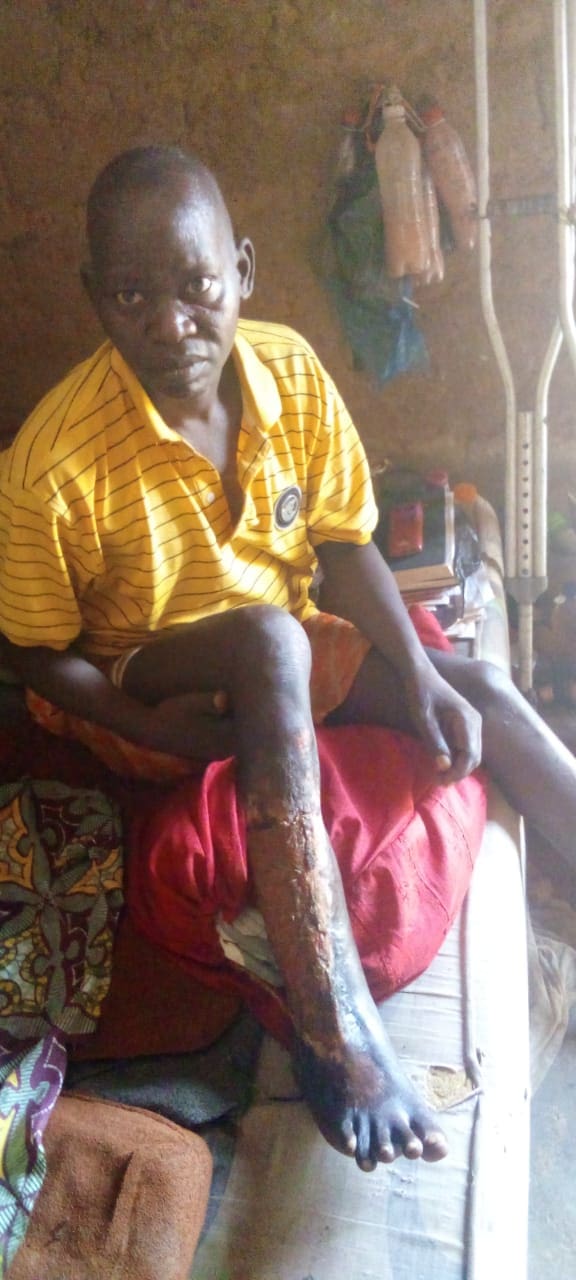
Kaduna–When Namiji Mairiga’s wife told him he would walk again, he turned to the wall of his hospital bed and wept.
A carpenter from Karamai village in Kajuru County, Mairiga had survived abduction by Fulani extremists, only to find his freedom meaningless. Released but without surgery on his leg, he faced permanent impairment and the end of his livelihood. Then an American faith-based NGO, Equipping the Persecuted (ETP), authorized $800 for the operation. “Nagode Wa Bature da Allah Ya Tura mini,” he said Thank God for sending this white man, Judd Saul, to me.
Across scattered Kaduna villages, an American humanitarian organization is reaching Fulani Terrorist kidnap survivors the state has left behind.
In Kaduna State, kidnapping has hardened into a functioning economic system — and in Kajuru County, where the state has failed to intervene, an American faith‑based NGO has become the first responder in a crisis that should never have been privatized.
In March and April 2026, that role was assumed by Equipping the Persecuted (ETP), founded by Judd Saul. Moving across scattered communities — Gefe, Kajuru Station, Buda, Ungwan Barde, Rimau, Karamai, Maro, and Idon ward’s Ikirmi the group delivered targeted aid to twenty survivors of Fulani Terrorist kidnappings: bags of rice, emergency cash, and direct payment of hospital bills.
A System, Not Isolated Attacks
Kidnapping in Southern Kaduna has evolved into a predictable extraction model: night raids, forced marches into forest camps, ransom negotiations, and release often into deeper poverty than before abduction.
Ransoms are crowd-sourced within extended families, meaning each abduction ripples across dozens of households. What ETP encountered in Kajuru was a functioning micro-economy of coercion.
March 15–19: Rapid Response
The first wave reached seven survivors on March 15. In Gefe, Dogara Sambo received a bag of rice and $30. Friday Azuru of Kajuru Station received the same. In Buda, Tijjani Adadu received the package plus an additional $20 to clear his hospital bills. In Ungwan Barde, Naomi Francis and Emmanuel — “Time Keeper” — each received a bag of rice and $30. In Rimau, Martha Obadiah received a bag of rice, $30 cash, and $30 for medical treatment. Her daughter Eunice received $30 cash and $30 for hospital bills.
The following day, ETP reached Namiji Mairiga in Maro. He received a bag of rice and $30, but his condition had deteriorated. ETP funded immediate transport for advanced care and added $30 toward his treatment. On March 19, Laraba Pius received $20 toward hospital bills. His medical expenses were just starting.
$800 And The Cost of Survival
Doctors determined Mairiga’s leg required surgery; without it, he faced permanent impairment and the end of his carpentry livelihood. Judd Saul personally authorized $800 for the procedure.
Additionally $400 was sent in to help offset his transport, feeding and to buy medicine.
In conflict zones like Kajuru, such sums are rarely available through formal systems, and when they appear, they often arrive too late.
April: Expansion into Idon Ward
By April, the intervention widened into Ikirmi. Nine beneficiaries there had been abducted in two separate raids — six taken on February 27, three more on April 7 — and released to households already depleted by ransom payments.
Suize Boniface, Jonathan Gideon, Maria Joshua, Hikima Alexander, Joseph Obed, David Livinus, Timothy Andrew, and Rahila Benjamin each received a bag of rice and $12. Cletus Benjamin received a bag of rice and $6. Their collective hospital bills, totaling $95, were settled in full by ETP.
Two further survivors were assisted separately. Pastor Abednego Nuhu, kidnapped on April 13 and released on April 17, received a bag of rice and $10 for his hospital bill. Goodluck John, of Dantoro, received a bag of rice and $10 as part payment.
A Gap Left by the State
Kajuru remains one of the most volatile areas in Southern Kaduna. The Rijana Forest hostage camp complex — a known holding site for abducted civilians — lies within striking distance of several communities ETP reached.
“The state government, the federal government, and even the local government have done virtually nothing for us,” Alipiri Ado, chairman of the Kajuru County internally displaced persons, told TruthNigeria. Since 2015, when Fulani Ethnic Militia began dislodging ethnic Christians from Kajuru, he said, this is the first intervention of its kind the county has witnessed.
Enoch Kaura, chairman of the Kajuru chapter of the Christian Association of Nigeria (CAN), said: “We are thanking Equipping the Persecuted for this wonderful work. God bless Mr. Judd.” Simon Magida, village head of Mararaban Kajuru West, added: “We are indeed happy.”
Beyond Kanuru: Limits Of Response
What is unfolding in Kajuru reflects a wider trend across Nigeria and the Sahel: decentralized, low-cost insurgent financing models built around kidnapping. These systems are increasingly met not by states, but by micro-scale humanitarian responders like ETP.
For the twenty survivors reached so far, the intervention has provided a buffer between trauma and collapse. But the underlying conditions remain unchanged. Attacks continue. Ransom demands persist. ETP maintains an active presence, yet the scale of need continues to outpace available resources as NGOs are limited by gifts from Christians.
In Kajuru, survival is negotiated day-by-day — between those who inflict violence, and those who arrive to contain its consequences. The system that produces the victims remains intact.
Mike Odeh James is a conflict reporter for Truthnigeria.