

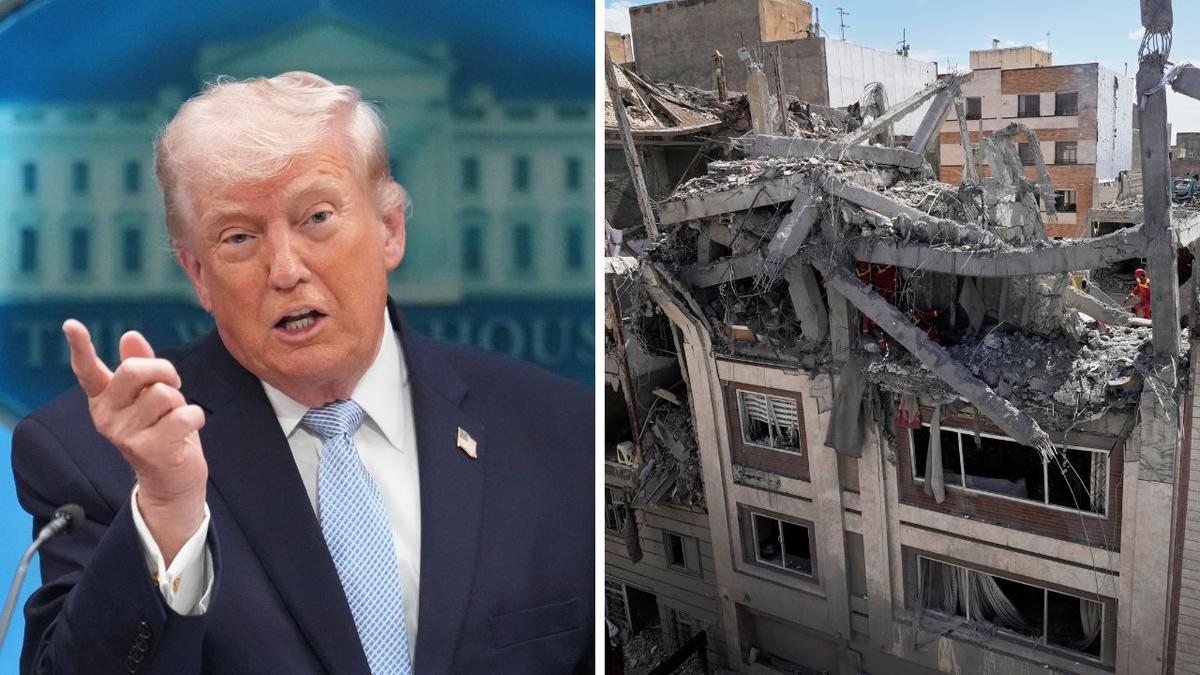
There’s a good chance neither the US nor Iran will stick to a two-week ceasefire agreement because “there’s no cause for trust”, a war studies expert says.
US President Donald Trump has agreed to “suspend the bombing and attack of Iran for a period of two weeks” while Iran will allow for the safe passage of vessels through the vital passage during this time.
WATCH THE VIDEO ABOVE: Trump suspends attacks on Iran for two weeks
Know the news with the 7NEWS app: Download today
The agreement between the two countries — and Israel — was reached just hours after Trump declared a “whole civilisation will die” if Iran did not reopen the Strait of Hormuz.
The ceasefire also includes attacks on Lebanon.
Despite the agreement it remains to be seen whether Iran or the US will hold true to their word.
Former Australian military officer and senior lecturer in warfare at UNSW Andy Maher told 7NEWS.com.au there was good reason to believe they would not.
Maher said there was “no cause for trust” between the two nations, a problem that has been bubbling away for many years.
“For example, Trump backing out of (the Iran nuclear deal in 2018) …. unilaterally would give, I think, Iranian diplomats and policy makers a level of pause as to whether he’ll hold true to his word,” he said.
On the other hand, Maher said Iran had been active over the past month engaging with criminal networks in Europe to create “a level of angst”.
“I think it serves the Iranian regime value to maintain a certain level of tempo for those types of activities in order to threaten the United States that it can re-escalate at a time and place of its own choosing,” he said.
Prior to the agreement Trump had threatened to destroy Iran if it didn’t relinquish its control of the Strait of Hormuz by 10am AEST.
If Iran didn’t comply by the deadline, the president said a “whole civilisation will die tonight, never to be brought back again”.
Maher said Trump’s threat was just a negotiation tactic and that there is very little evidence, based on past actions and empty threats, that he was ever going to follow through.
“My take for a while now has actually been I completely disregard what he has to say,” he said.
“What I’m interested in is what he does.
“This is just another round of bluster as part of his negotiating strategy to get what he wants.”

White House press secretary Karoline Leavitt said discussions were being held about in-person talks between US and Iran however nothing had been finalised.
“President Trump’s words speak for themselves: this is a workable basis to negotiate, and those negotiations will continue,” she said in a statement reported by NBC.
Later Leavitt posted on X saying the ceasefire was a “victory for the United States” and that there was now an “opening for a diplomatic solution and long-term peace”.
“Never underestimate President Trump’s ability to successfully advance America’s interests and broker peace,” she said.
A press conference on Operation Epic Fury will be held at 10pm Wednesday AEST by Defence Secretary Pete Hegseth and Chairman of the Joint Chiefs of Staff General Dan Caine.