

This week, Lebanon and Israel are slated to hold a a second round of direct talks in Washington under the auspices of the Trump administration.
Following the first round on 14 April, the US State Department issued a statement declaring a ten-day cessation of hostilities in order to work towards “conditions conducive to lasting peace”.
The political context of the talks and the terms of the truce, however, point to a path of capitulation rather than peace. Further negotiations along the same US-sponsored track is likely to foment internal strife and hinder liberation from Israeli occupation.
The reasons are many.
For one, the conditions outlined in the declaration amount to a surrender of Lebanese sovereignty and an affirmation of Israeli supremacy.
New MEE newsletter: Jerusalem Dispatch
Sign up to get the latest insights and analysis on
Israel-Palestine, alongside Turkey Unpacked and other MEE newsletters
This surrender of sovereignty is taking place in tandem with a discourse of statist sovereignty circulating among Lebanese officials and mainstream media that is aimed at disarming Hezbollah instead of resisting foreign occupation. The government has already criminalised the party’s military and security operations.
The provisions of the State Department communique grant Israel the “inherent right to self-defence, at any time, against planned, imminent, or ongoing attacks” with no such reference to Lebanon.
The two countries are also declared no longer at war, an absurd claim in the midst of continued fighting and a usurpation of Lebanese constitutional powers that stipulate a two-thirds majority vote by the Council of Ministers for war-related decisions.
The arrangements also call on the Lebanese government to prevent Hezbollah from attacking Israel while simultaneously making no mention of Israeli withdrawal from territories it occupied.
An insult to Lebanon
Taken together, these terms are worse than the terms reached by both parties through indirect negotiations in November 2024. Back then, Israel was granted a 60-day period to withdraw to the internationally recognised border.
Why Israel cannot defeat Hezbollah
Read More »
Tel Aviv redeployed its troops southward and kept several strategic posts under its control. Currently, Israel has reinvaded and seized more territory extending several kilometres inland across the entire border.
It is planning to set up a so-called security zone behind “a yellow line” modelled after Gaza and has commenced the detonation and razing of villages as part of its ethnic cleansing campaign.
By refusing to withdraw and reserving the right to military action across Lebanon, Israel is inviting continued armed resistance.
Hezbollah launched this latest round of fighting on 2 March as a response to 15 months of restraint in the face of over 10,000 Israeli violations.
Failure to respond to Israeli violations would question the rationale of initiating the battle and erode any restored popular trust by Hezbollah’s social base in its capacity to defend the south.
Hezbollah’s general secretary has said as much.
In a statement released on Saturday, Naim Qassem asserted that Hezbollah will never tolerate Israeli violations and will act accordingly. The party’s fighters have already responded and inflicted lethal losses on the occupying forces.
Qassem was also critical of the terms of the truce, referring to the unilateral declaration by the State Department on behalf of the Lebanese government as meaningless on the practical level and “an insult to our country and homeland”.
Qassem was open to cooperation with Lebanese authorities provided they seek to implement a five-point programme that includes: a permanent end to Israeli acts of aggression on land, sea, and sky; the withdrawal of Israeli troops behind international borders; the release of prisoners; the return of the displaced; and the reconstruction of what was destroyed with Arab and international support.
Deepening rift
Disagreement over negotiations go beyond their impact on the battlefield.
They reflect the widening rift between Hezbollah and Lebanese President Joseph Aoun regarding the best means of confronting Israel, namely armed resistance versus diplomacy, and the geopolitical alignment of the country vis a vis Iran and Gulf states.
Short of a US-Iranian deal that includes Lebanon, any side normalisation deals with Israel by the Lebanese state will either be ignored or precipitate civil strife
Unlike Qassem’s acknowledgement of Iran’s role in precipitating a truce in Lebanon, Aoun credited “the friend” Trump and Arab allies for the brief cessation of hostilities.
Rather than leverage Iran’s pro-Lebanon position, Aoun has sought, along with Prime Minister Nawwaf Salam, to decouple the two fronts, which is an Israeli demand.
In a gesture reminiscent of Anwar Sadat’s move to justify his normalisation with Israel, Aoun vowed to go anywhere for the sake of Lebanon’s national interest.
Unlike Sadat, Aoun’s diplomatic road to Tel Aviv is still far from paved. Hezbollah and its allies are strongly opposed to direct negotiations. Israel is unlikely to grant him any land concessions without demilitarisation and full normalisation.
The latter might be a hard sell.
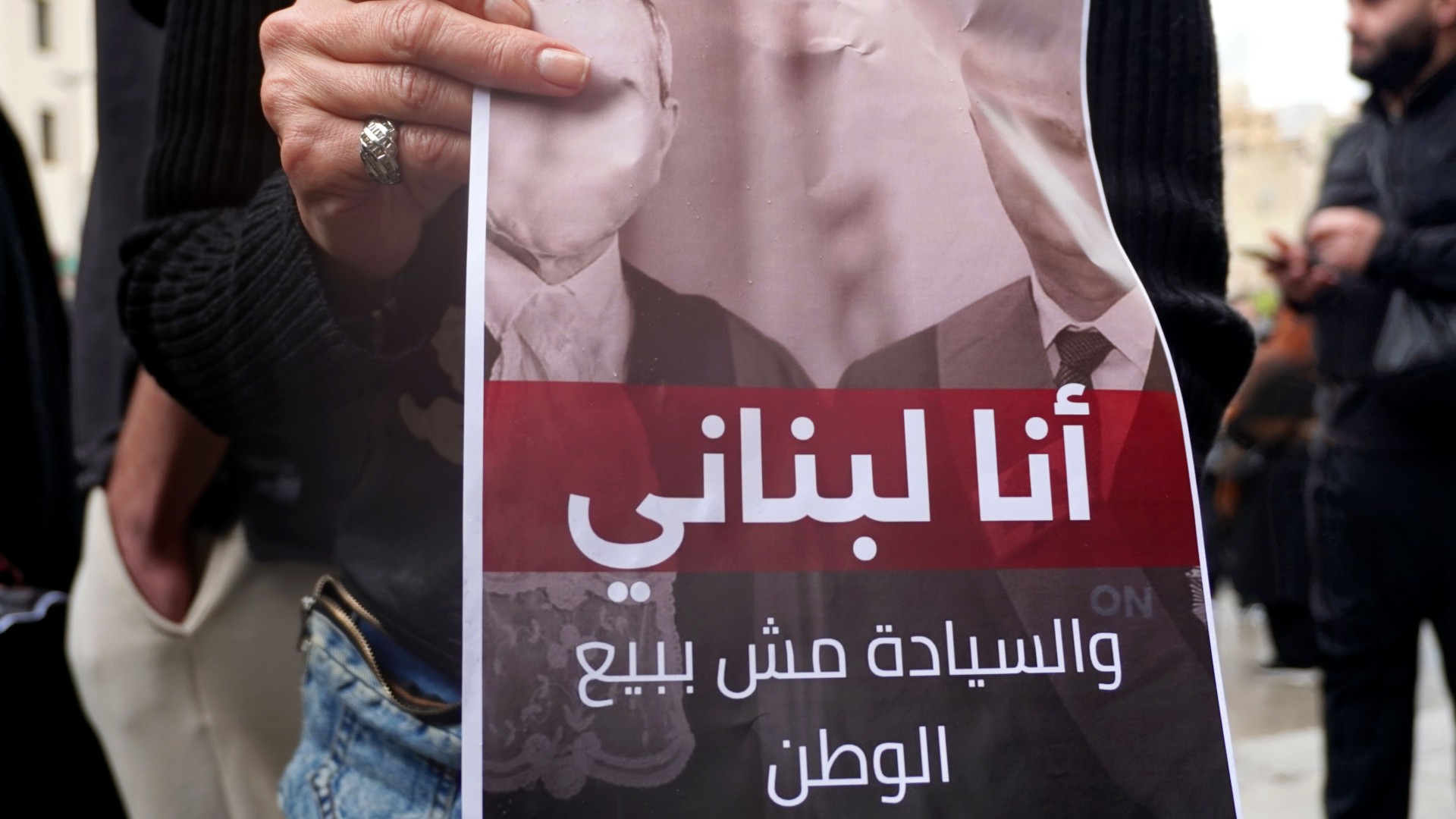
Close to 90 percent of the Lebanese population, based on recent polls, are opposed to normalisation. Street protests and popular mobilisation against the government’s overtures towards Israel have already begun.
Under such circumstances, Aoun and Salam’s insistence on pursuing US-sponsored direct negotiations with Israel without building national consensus regarding the terms, limits, and objectives of negotiation will create a crisis of confidence in the presidency and the government.
Full liberation
Lebanon is no stranger to prolonged political paralysis, but the war will bring the confrontation to a head.
Exclusive: How Hezbollah rebuilt while its enemies declared it dead
Read More »
What cannot be resolved politically will eventually be settled on the ground.
Short of a US-Iranian deal that includes Lebanon, any side normalisation deals with Israel by the Lebanese state will either be ignored or precipitate civil strife.
Meanwhile, guerilla warfare will resume against Israeli occupation forces in the south.
In the face of Israeli genocidal tactics and superior technology, this will incur high costs.
But the attachment of the people of south Lebanon to their land and the legacy of their decades-long struggle against Israeli expansionism and aggression is a guarantor that any such costs will not deter them from seeking full liberation.
The views expressed in this article belong to the author and do not necessarily reflect the editorial policy of Middle East Eye.