

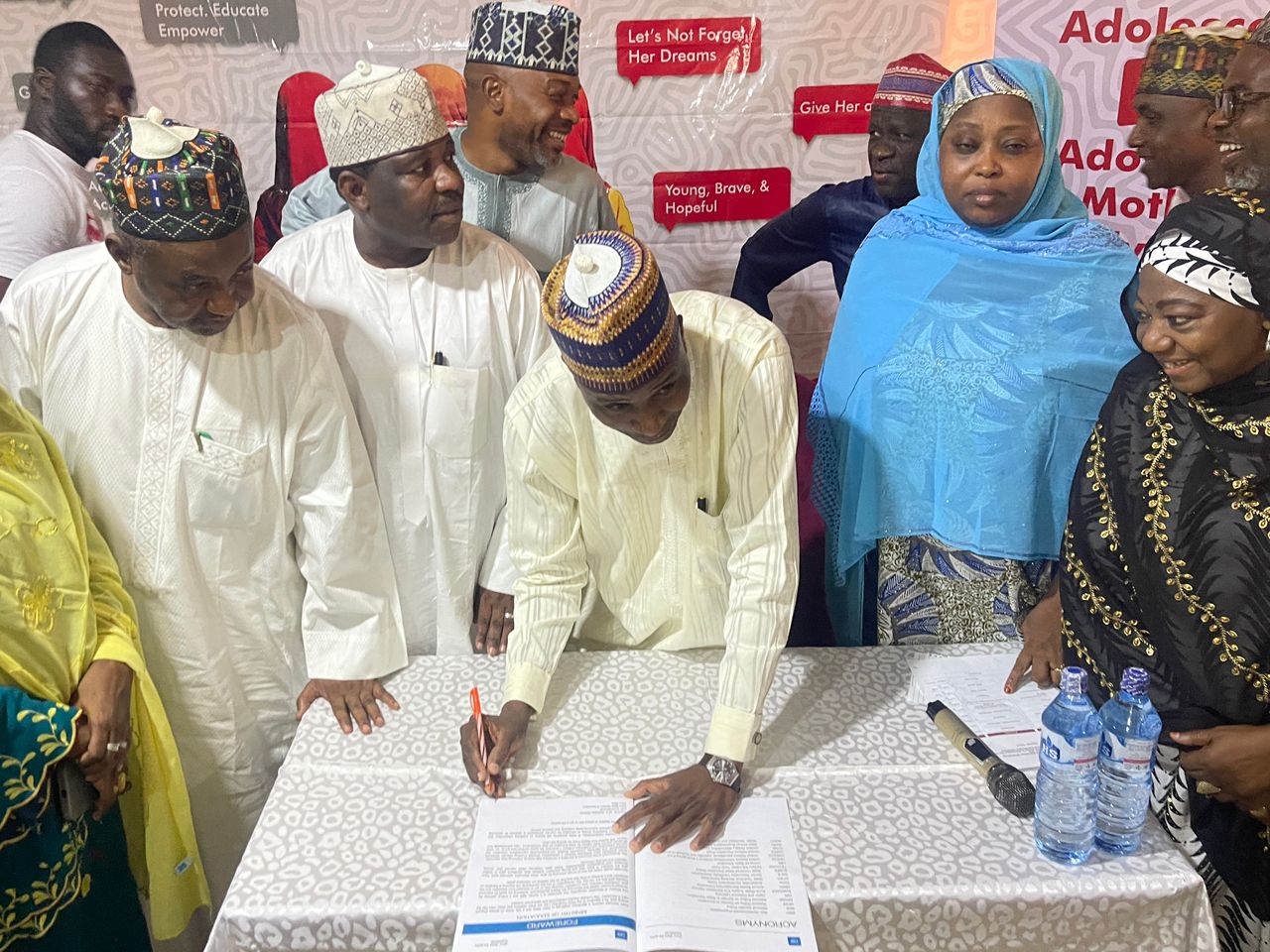

Kano State Government has adopted and domesticated the re-entry guidelines for married adolescents and adolescent mothers, a move aimed at enabling girls who are married or become pregnant to continue their education through flexible learning pathways.
The guidelines were adopted at the end of a two-day validation and stakeholders’ consultative workshop organised by ACE Charity with support from the Malala Fund.
Speaking at the event, Senior Programme Officer of ACE Charity, Dr. Hassana Shuaibu, said Kano is the first state to adopt and domesticate the framework, which was originally developed by the Federal Government a few years ago.
She said the initiative emerged from a consultative and participatory process involving married adolescents, their husbands, teachers, school heads, community leaders and government officials.
According to her, the guidelines are designed to ensure that adolescent girls, whether married or unmarried mothers, can continue their education, particularly through non-formal pathways that offer flexible learning and childcare support.
“We are here for the adoption of the Kano State Re-entry Guidelines for Married Adolescents and Adolescent Mothers.
“What this guideline means is that even if an adolescent girl gets married or becomes pregnant, she is still able to continue her education, especially through the non-formal pathways, which provide flexible education and childcare services if they have children,” she said.
Dr Shuaibu added that the initiative seeks to strengthen the non-formal education sector so that girls can continue learning up to the level of writing the West African Senior School Certificate Examination (WASSCE) and proceed to higher institutions if they choose.
She said many of the girls consulted during the process expressed aspirations to become teachers, doctors, nurses, accountants and lawyers.
According to her, expanding access to education for adolescent mothers would also help reduce crime, improve child welfare and contribute to the overall development of Kano State.
Also speaking, the Commissioner for Education, Dr. Ali Haruna Abubakar, who signed the document on behalf of the state government, described girls’ education as a matter of utmost concern.
He commended ACE Charity and other stakeholders for the validation process and assured that the state was committed to translating the document into concrete action.
“This will add more value to the system. We are fully ready, and you should expect more action with regards to girls’ education and gender issues in Kano State,” he said.
The commissioner said the state had demonstrated its commitment to education through budgetary allocations, noting that about 40 per cent of the 2026 budget had been earmarked for the education sector.
In her remarks, Secretary of the High-Level Women Advocates for Girls’ Education in Kano (HILWA), Ladidi Sani Fagge, said the programme was designed to address the educational challenges faced by adolescent girls, whether married or unmarried.
She expressed optimism that the guidelines would help return many out-of-school girls to classrooms and enable them to attain their educational, social and economic potential.
“Kano has set the pace and we hope that other states will see what Kano has done and follow suit, because northern states need this document to address the huge number of out-of-school girls,” she said.
The workshop drew key stakeholders, including government officials, education experts, women advocates and development partners.