

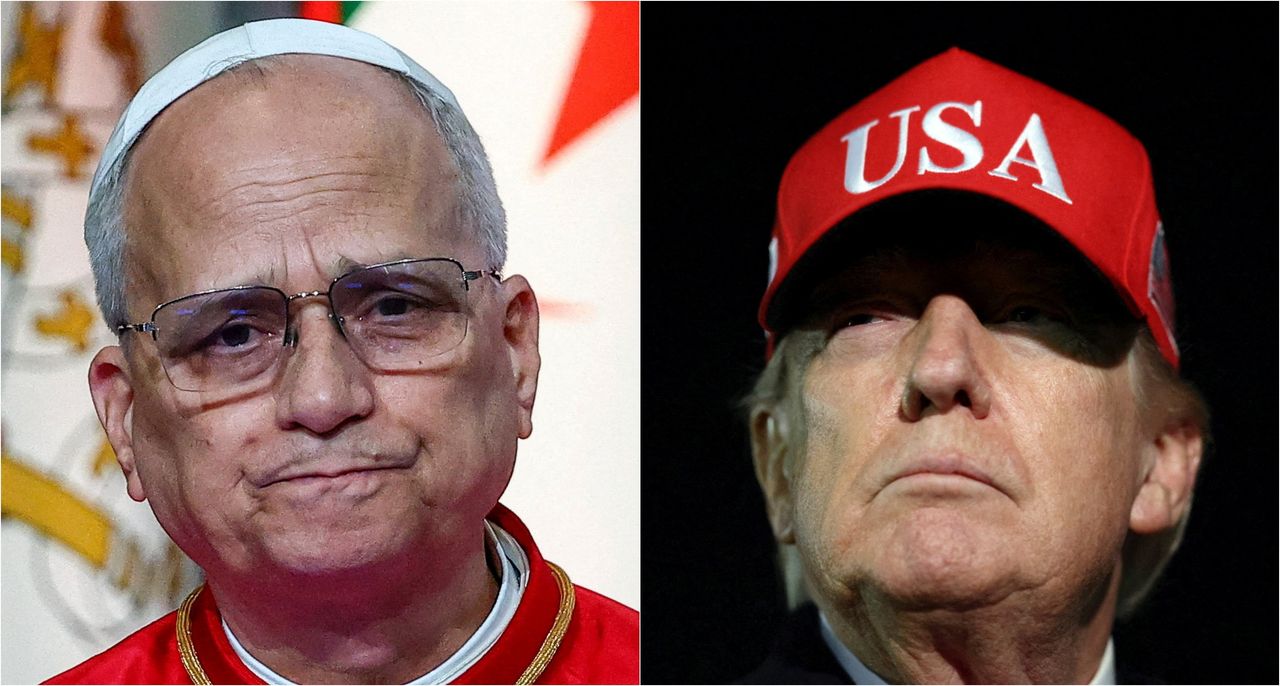
Pope Leo XIV is not an ordinary man; rather, he is the leader of the world’s oldest and most powerful church, an institution that has survived countless trials throughout history, from the persecutions of the pagan Roman Empire to the Protestant Reformation and the rise of Western secularism.
Despite Leo XIV’s immense historical standing and moral authority, which Western leaders have respected for the past 1,000 years, the current US administration’s push for a military campaign against Iran has placed Washington on a direct collision course with the Holy See.
Analysts warn that the Pope’s vocal opposition to the US-Israel war on Iran is not merely a religious disagreement, but a significant geopolitical shift.
With authority over 1.4 billion Catholics across Latin America, Africa, and Europe, Leo XIV’s stance is actively complicating Washington’s efforts to maintain international legitimacy for the conflict.
“From a geopolitical perspective, confronting the Vatican is strategically costly, as it undermines US soft power across broad sectors of the Global South, where the Holy See’s moral authority retains considerable symbolic and political weight,” Alfonso Insuasty Rodriguez, director of the GIDPAD research group at the University of San Buenaventura, told TRT World.
“Although the Vatican lacks material coercive power, its intervention significantly shapes the field of international legitimacy surrounding the conflict.
“It introduces an alternative moral narrative that complicates efforts to build normative consensus in favour of war, particularly in Latin America, Africa, and other regions of the Global South where papal symbolic authority remains influential,” Rodriguez tells TRT World.
Signalling that he has “no fear” of the administration in Washington, the Pontiff has also taken a direct stand against US war rhetoric.
“Woe to those who manipulate religion and the very name of God for their own military, economic, and political gain, dragging that which is sacred into darkness and filth,” he wrote on X last week.
Since that post, the Pope has continued to issue combative messages against the US administration’s stance, specifically urging for a peaceful resolution with Iran.
This comes during a period of “uneasy truce” between Washington and Tehran, and at a time when there are no clear signs that peace talks in Islamabad will resume.
Related
“Pope Leo XIV stands in general for Catholic values and the Holy See has a long tradition of studying and understanding history. The Vatican and the Pope’s peaceful leadership oppose armed conflicts in general, and not particularly the one from Iran,” Ecaterina Matoi, a Bucharest-based political analyst and academic, tells TRT World.
Impact on global politics
Experts argue that the widening rift between the Vatican and Washington is actively undermining the US military strategy toward Iran.
By positioning the Holy See as a moral alternative to war, Pope Leo XIV has catalysed a shift in global dynamics, leading several nations with deep Catholic roots to publicly distance themselves from Washington’s escalatory policies.
“If you have a closer look to Europe, let’s say most Catholic countries like Spain, Italy, Portugal, Belgium and Slovenia, all of them are against the war and this conflict with the Pope even brought politicians like Meloni, more to the point that he won’t support Trump in this respect,” Raoul Motika, a professor of Humanities at the University of Hamburg, tells TRT World.
Giorgia Meloni was previously considered one of the European leaders closest to the Trump administration. However, Washington’s confrontation with the Pope, whose seat in the Vatican is inextricably linked to Italian history, has alienated the right-wing Prime Minister in Rome.
“The Pope is the head of the Catholic Church, and it is right and normal for him to call for peace and to condemn every form of war,” Meloni said in a statement after the US clash with Leo XIV.
Matteo Salvini, Meloni’s coalition partner and leader of the populist League party, also said, “Attacking the Pope… doesn’t seem like a useful or intelligent thing to do.”
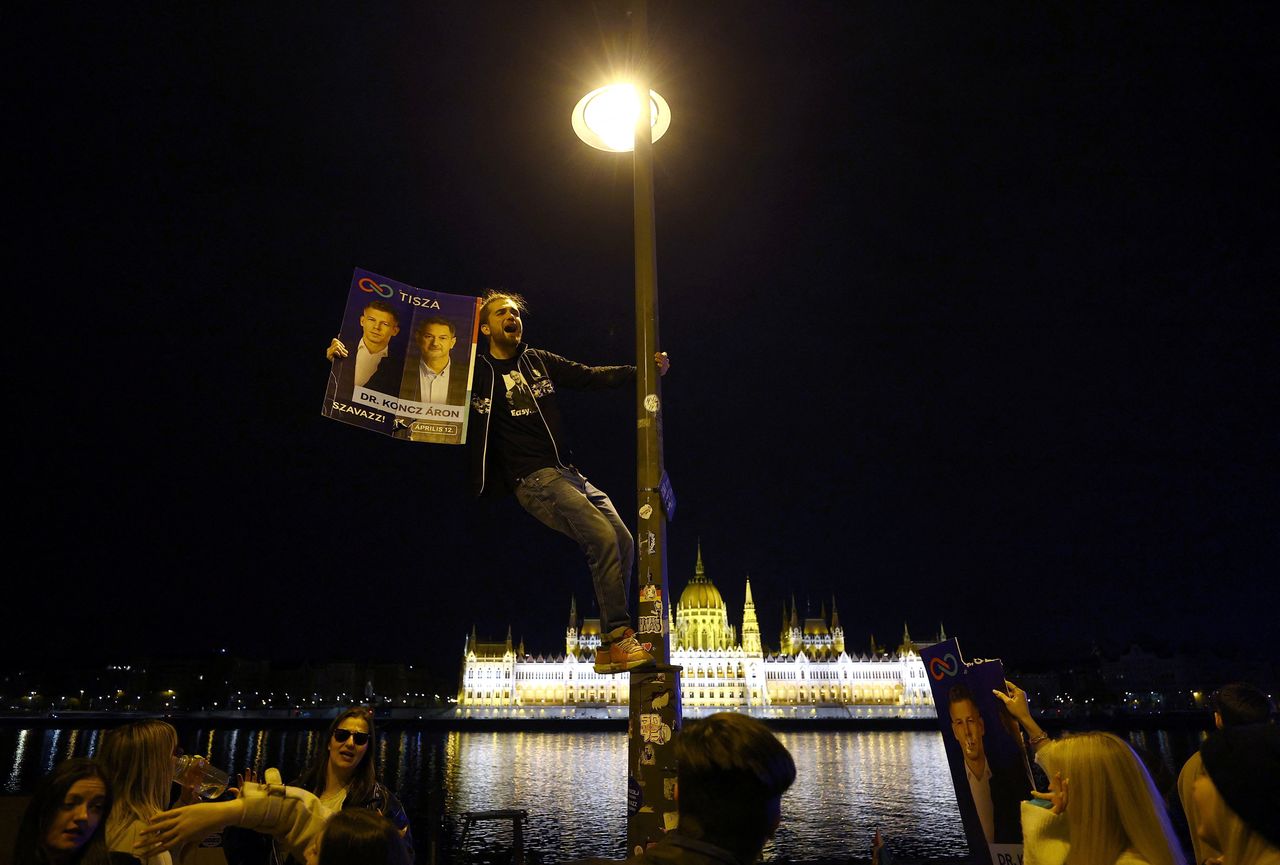
Motika also draws attention to Viktor Orban’s recent landslide election loss as Hungary’s populist Prime Minister, who has strong ties with the Trump administration.
Some observers suggest this result was influenced by Vice President JD Vance’s active participation in Orban’s re-election campaign.
“Even in Hungary, Trump, Vance, and their stance on the Iran war are very unpopular,” the German professor says, adding that the “MAGA brand” may have become a political liability in a traditionally Catholic nation like Hungary.
Related
Overall, the American administration’s public feud with the Pope has “weakened the US position in the Iranian war” on the global stage, according to Motika.
While Washington’s diplomatic standing has taken a hit, the confrontation has simultaneously boosted the Catholic leader’s image as a global moral authority standing for peace.
Many observers believe that Leo XIV is following the path of his predecessor, Pope Francis, the Argentine pontiff who closely aligned himself with a message of peace and rejected the use of religion for political ends.
“The contemporary Church explicitly rejects the subordination of the sacred to military logic,” Rodriguez says.
“His position is not merely diplomatic; it is a moral critique of the disconnect between strategic decision-making and human suffering.”
This sentiment is shared even within the United States. The US Conference of Catholic Bishops, representing the nation’s largest religious group, has condemned the war and called for peace, criticising Washington’s Iran policy.
“The whole rhetoric of Trump, particularly, his suggestion of the extinction of the Iranian civilisation, was very counterproductive. If he really wanted to get more support for his war against the Iranian regime, this rhetoric is an unacceptable wording, not only for Catholic countries, but for all states worldwide,” observes Motika, an expert on Euro-Asiatic Studies.