

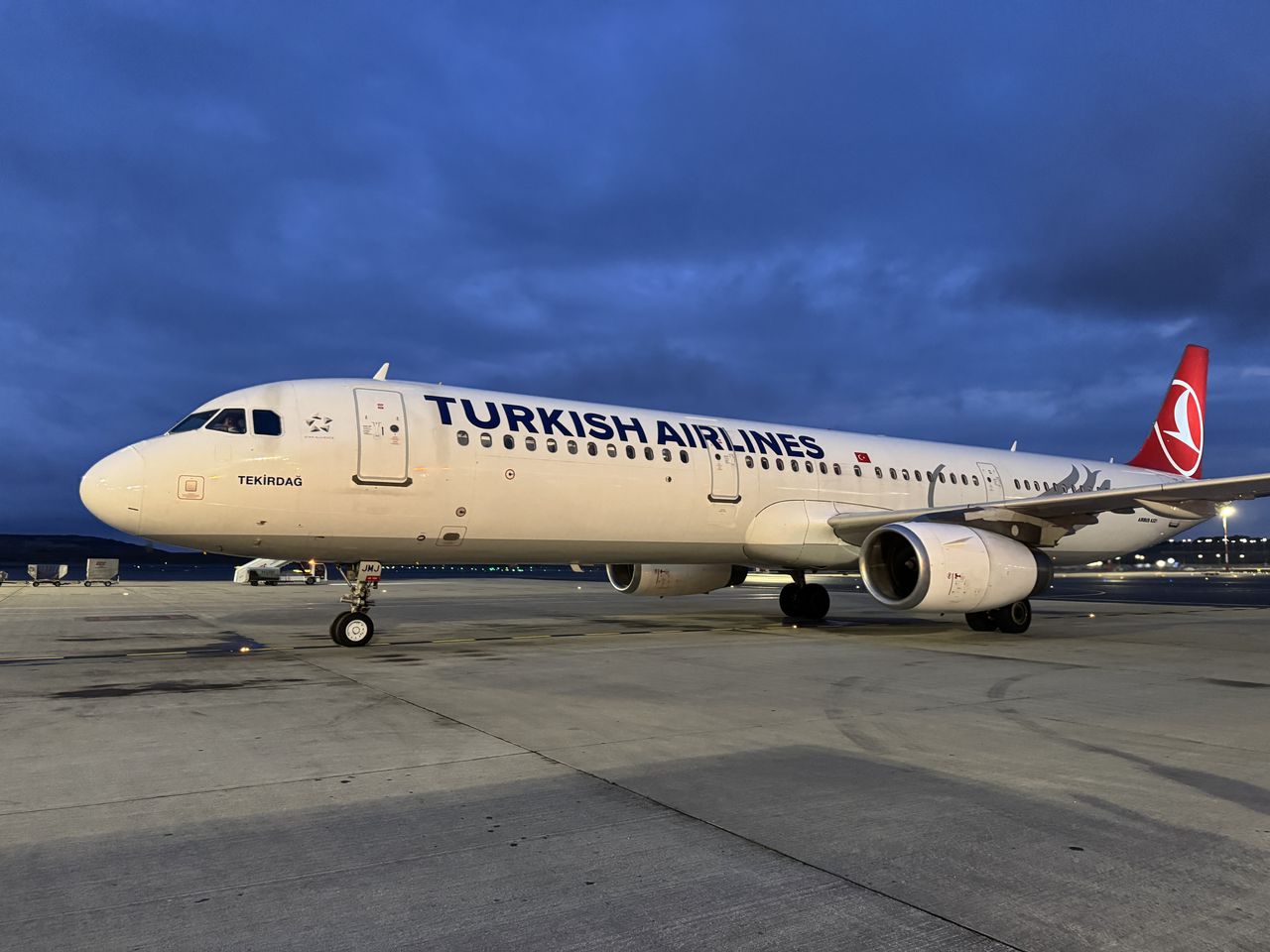
As the global aviation industry battles the fallout of rising energy prices following the US-Israeli war against Iran, Turkish Transport and Infrastructure Minister Abdulkadir Uraloglu reassured the public on April 22 that Türkiye faces “no jet fuel shortage”.
In fact, Türkiye has become a net exporter of jet fuel, a refined petroleum product used by commercial airlines, he said.
The price of jet fuel doubled worldwide amid the on-again, off-again blockade of the Strait of Hormuz, the narrow waterway through which roughly one-fifth of global oil trade passed.
Türkiye’s self-sufficiency in jet fuel puts the country in stark contrast to the turmoil engulfing much of Europe and beyond.
Major airlines, such as Germany’s Lufthansa, Scandinavian carrier SAS, and Dutch operator KLM, have cancelled thousands of flights to survive the jet fuel shortages.
At the same time, the International Energy Agency has warned of potential jet fuel shortages across Europe within weeks, as the region lost logistic access to Middle Eastern sources that met 75 percent of the continent’s aviation-sector needs.
The UK and Germany are the world’s top jet fuel importers. The war has led their airlines to raise fares ahead of the peak summer business season.
However, Türkiye has emerged largely unscathed from the ongoing jet fuel shortages.
In fact, the country has positioned itself as a regional aviation lifeline, thanks to two decades of deliberate policy choices, according to experts.
Ankara’s strategic investments in building refining capacity, supply diversification, and infrastructure have transformed the country into a self-reliant powerhouse and net exporter of jet fuel, they say.
Related
Baris Alpaslan, a professor of economics at the Social Sciences University of Ankara, tells TRT World that Ankara’s successful handling of an otherwise serious global shortage of jet fuel is because of its multifaceted approach and years-long preparation for such vulnerabilities.
“Over the past two decades, Türkiye has pursued a combination of capacity-building, diversification, and strategic planning that proved critical during recent global fuel disruptions,” he says.
Key moves by Türkiye included modernising and expanding refining capacity to process crude into higher-value products, such as jet fuel, at scale, thereby reducing dependence on imported refined goods at high prices.
Ankara also diversified crude import sources to avoid over-reliance on any single supplier, he says.
It built strategic petroleum reserves, providing a buffer equivalent to roughly 90 days of net imports, while strengthening logistics infrastructure, such as pipelines, ports, and terminals, for uninterrupted supply and distribution, he adds.
Long-term agreements further secured crude supplies during periods of high volatility, he notes.
These policies have not only met Türkiye’s domestic needs, but also enabled it to become a net exporter of a key fuel that is the lifeblood of international travel.
Alpaslan says that the country’s integrated system now controls the full value chain “from crude import to refined output”, turning potential vulnerabilities into strategic strengths.
“Many countries faced jet fuel shortages not because crude oil was unavailable, but because they lacked sufficient refining capacity to convert it into usable aviation fuel,” he says.