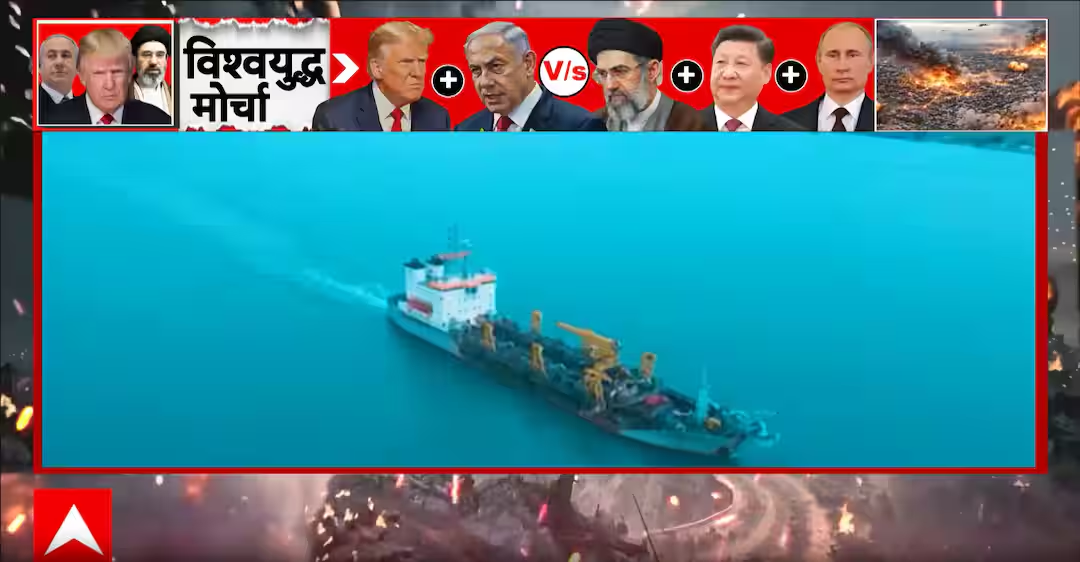
Tensions over the Strait of Hormuz continue despite claims of partial agreement between the U.S. and Iran. Iran has set four strict conditions for allowing passage: only commercial ships will be permitted, approval from the IRGC will be mandatory, military vessels are completely banned, and navigation will be restricted to designated safe routes and ports. While U.S. President Donald Trump claims consensus on several issues, Iran insists that its sovereignty over the strait remains non-negotiable. Iranian officials, including parliamentary leaders, have warned that if sanctions or blockades continue, full reopening will not happen. At the same time, limited commercial shipping has resumed after weeks of disruption, bringing temporary relief to global trade. Reports suggest a second round of U.S.-Iran talks may take place in Islamabad. However, contradictory statements from both sides, along with continued naval restrictions, keep uncertainty alive. The Strait, crucial for global energy supply, remains a major geopolitical flashpoint, with both diplomacy and confrontation shaping its uncertain future.