

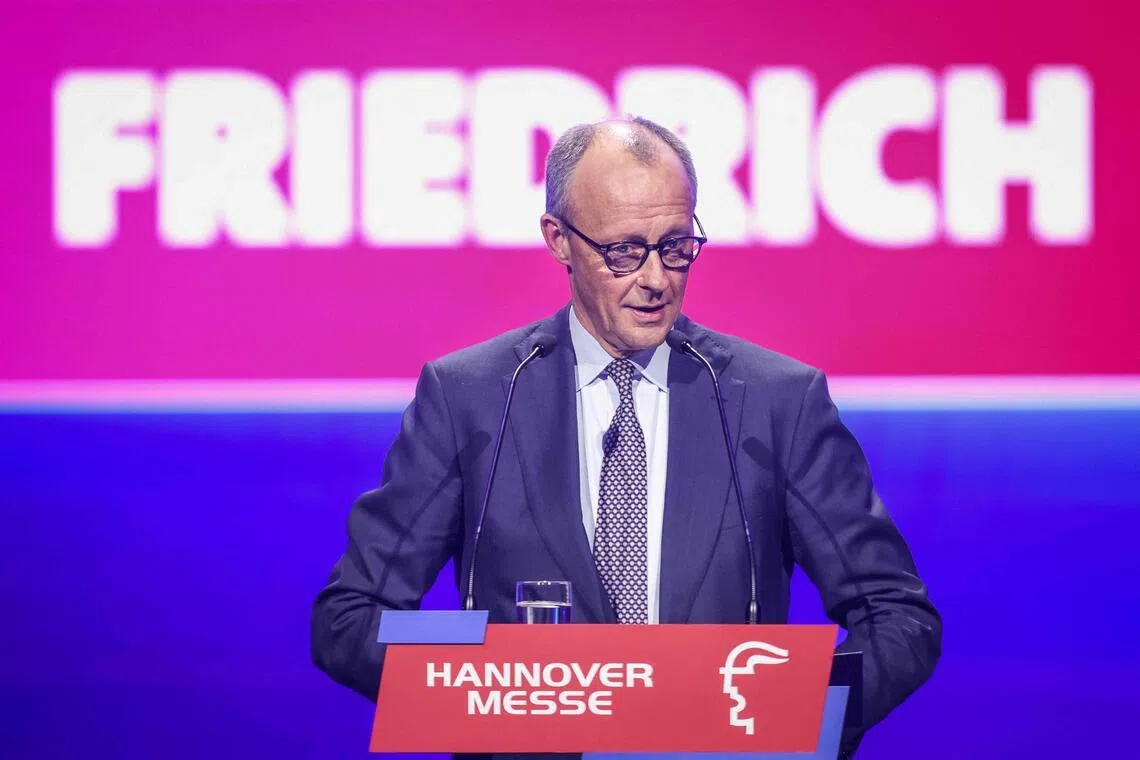
German Chancellor Friedrich Merz said he plans to convene Germany’s national security council to discuss the global energy crisis, signalling increased concern about its impact on Europe’s biggest economy.
“We will convene a meeting of the National Security Council in Berlin very shortly,” Mr Merz said in a speech at the Hannover Messe trade show on April 19, which he attended with Brazilian President Luiz Inacio Lula da Silva. The council is empowered to take immediate action to ensure Germany’s energy security if needed, Mr Merz said.
“The German economy and its citizens must be able to rely on the fact that the supply of central products such as gasoline, diesel and aviation fuel remain guaranteed,” Mr Merz said. “At the moment, the market situation is tense, but the supply in Germany is secure.”
Should the situation escalate, “we are prepared with measures”, Mr Merz added. He did not specify what action the government might take.
Deutsche Lufthansa AG, like other global airlines, has announced cuts to to its flight schedule in response to dwindling jet fuel reserves. Mr Merz’s government has decided to reduce taxes on automotive fuel for two months to provide relief to drivers in Germany, where the average price of E10 premium gasoline has risen to some €2.10 (S$3.14) per litre from about €1.73 in January.
The Handover trade show, considered the biggest industrial showcase of its kind worldwide, has been shadowed by Germany’s sluggish growth as Mr Merz’s governing coalition has fallen short on pledges to spark the economy.
Mr Lula touted Brazil as “a reliable partner in a world of instability” that could “help the European Union to lower its energy costs”. He attacked US President Donald Trump and the “madness of the war against Iran.”
Mr Merz and Mr Lula will head a meeting of their cabinets on April 20 with the goal of strengthening their countries’ strategic partnership. Both sides will adopt a series of joint projects on raw materials, defence, digital transformation and climate.
Brazil is Germany’s most important trading partner in South America with trade volume of more than €20 billion, according to government data. Brazil also plays a central role in Germany’s efforts to become less dependent on China for rare-earth minerals. BLOOMBERG