

GENEVA – The 10th United Nations secretary-general will be elected in 2026 for a five-year term starting on Jan 1, 2027.
Here are the candidates so far running to take over from outgoing UN chief Antonio Guterres:
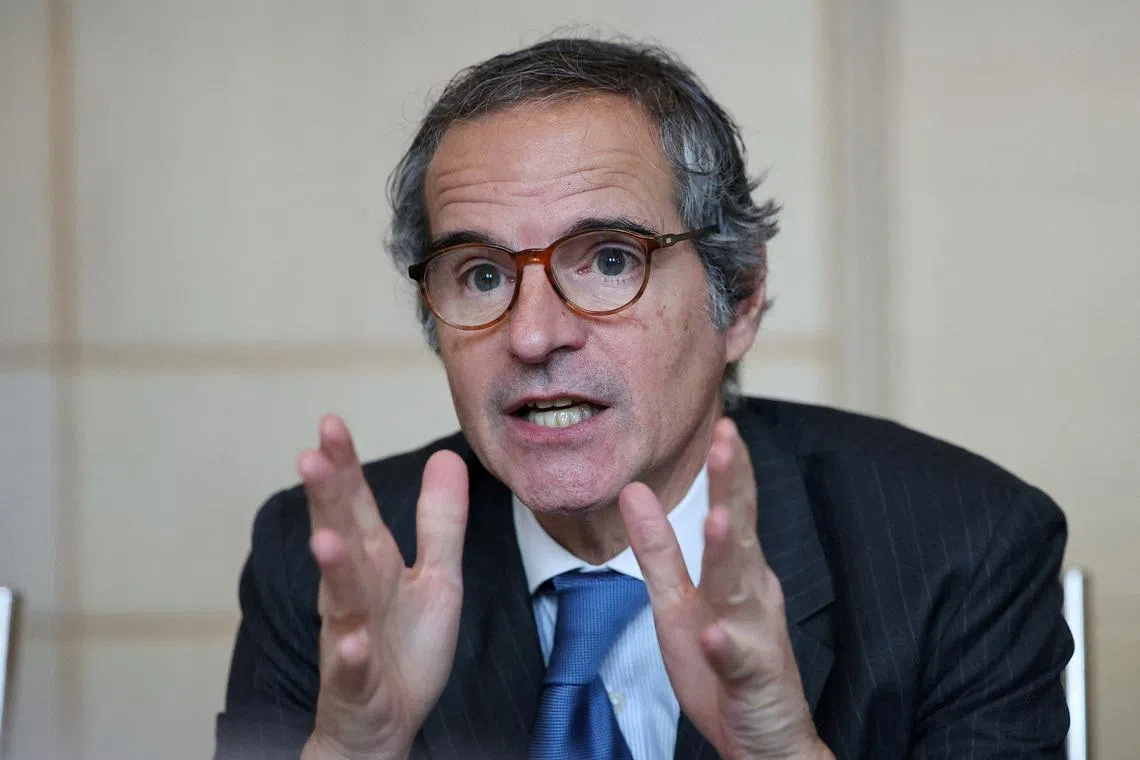
Mr Rafael Grossi, a 65-year-old career diplomat from Argentina, has been an omnipresent, hyperactive director general of the UN nuclear watchdog for the past six years.
While the International Atomic Energy Agency has long policed Iran’s nuclear programme, Mr Grossi led negotiations aimed at salvaging parts of a landmark nuclear deal between Tehran and major powers after US President Donald Trump’s decision to pull the United States out of it in 2018. Mr Grossi’s critics argue he has gone too far in trying to cut deals with Iran.
A father of eight and polyglot who speaks English, Spanish, French and Italian, Mr Grossi has raised both his and the IAEA’s profile with his shuttle diplomacy in international crises.
His clearest success was getting a small IAEA team stationed at the Russian-occupied Zaporizhzhia nuclear power plant in Ukraine after repeated trips across the front line in the Russia-Ukraine war.
He has sought to project the image of a man of action in the race, in which many diplomats see him as front‑runner after his years spent trying to keep onside the five permanent members of the UN Security Council – the US, Russia, China, Britain and France – whose backing is crucial for the top job.
“These experiences have confirmed a conviction I hold deeply: Even in times of division, multilateral institutions can deliver real, positive impact,” Mr Grossi’s vision statement for the post states.
Ms Rebecca Grynspan, 70, depicts herself as a reform‑minded multilateralist who has battled gender barriers and has had a lifelong belief in the UN and its commitment to peace, development and human rights.
A former vice-president of Costa Rica who heads the UN Conference on Trade and Development (UNCTAD), Ms Grynspan said she stepped back from duties until September to avoid conflicts of interest during the campaign. Mr Grossi, on the other hand, has continued in his role at the IAEA while campaigning.
Born to parents who fled Europe after World War Two, Ms Grynspan links her worldview directly to the origins of the UN and its role in international cooperation and preventing conflict.
If elected, Ms Grynspan would become the first woman as secretary‑general. She said while she had to make trade‑offs between family life and public service at UNCTAD, being the first woman in charge shaped her leadership.
“I am not waiting for special treatment. I want equal treatment,” she told Reuters.
An economist, Ms Grynspan describes herself as a “mature leader” who would lead a more agile UN through collaboration with other players while defending its core values.
Ms Michelle Bachelet, 74, is a two-time president of Chile and a former UN High Commissioner for Human Rights, who also served from 2010 to 2013 as executive director of UN Women, an agency promoting women’s rights.
In March, Chile withdrew its backing for Ms Bachelet after a right-wing shift in the country’s leadership, but she said she would press ahead with support from Brazil and Mexico.
Chilean President Jose Antonio Kast’s government said her campaign lacked broad political consensus at home and faced poor odds internationally.
Ms Bachelet has faced criticism from US conservatives for her pro-choice stance on abortion and in April Washington’s UN envoy, Mike Waltz, appeared to torpedo her bid by saying he shared a US senator’s concerns about her suitability.
Republican Senator Pete Ricketts charged that Ms Bachelet had pulled punches as UN human rights chief in a 2022 report by failing to label China’s actions against Uyghur Muslims a genocide, and has also promoted abortion as a fundamental human right.
Beijing has not stated its position on her candidacy.
Macky Sall, who was Senegal’s president for 12 years until 2024, emphasises his experience as head of state as a key asset for the role of secretary-general.
The 64-year-old geologist – the son of a peanut seller from a poor part of the West African country – completed major infrastructure projects during his tenure and has championed African development.
Mr Sall has stressed the need to support developing countries burdened by debt. He is calling for an overhaul of the Security Council, in a nod to demands from developing nations for permanent seats on the most powerful UN body.
“More than ever, a reinvented multilateralism remains the best way to respond to the challenges of a world in full transformation,” he said on X.
Mr Sall, who is softly spoken and more comfortable in French than English, was nominated by East African country Burundi. His candidacy has mixed backing in Africa, with his homeland and Nigeria withholding support, according to diplomatic notes reviewed by Reuters.
If chosen, he would be the third African secretary-general after Egypt’s Boutros Boutros-Ghali and Ghana’s Kofi Annan. REUTERS