

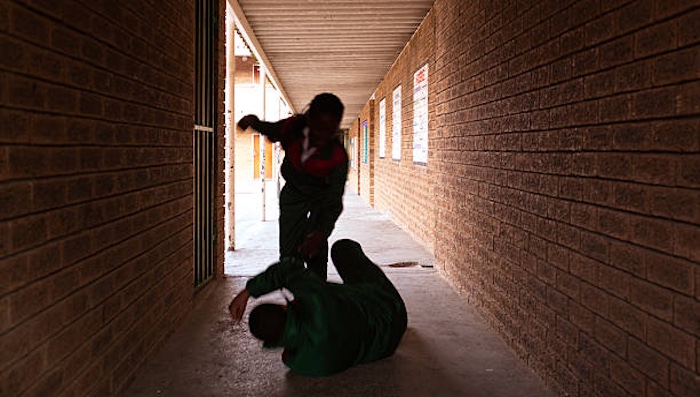
Stakeholders across government agencies, security institutions, civil society, and the education sector have called for urgent and coordinated national action to address rising cases of bullying in Nigerian schools.
The call was made in Abuja during a Stakeholder Consultative Dialogue on Anti-Bullying in Nigerian Schools convened by International Alert Nigeria, where participants warned that bullying is no longer a routine disciplinary issue but a growing social and security concern.
Chairman of the National Drug Law Enforcement Agency (NDLEA), Brig. Gen. Buba Marwa (Rtd.), cautioned that persistent bullying significantly increases the risk of substance abuse among young people. Represented by Henrietta HoldGod, he explained that victims often suffer anxiety, depression, low self-esteem, and social withdrawal, conditions that may push them toward drug use as a coping mechanism.
“Protecting children from bullying also means protecting them from pathways that may lead to drug abuse,” he said, stressing the importance of safe school environments.
The Director-General of the National Agency for the Prohibition of Trafficking in Persons (NAPTIP), Hajiya Binta Bello, described bullying as a human rights violation and called for strict enforcement of anti-bullying policies, stronger parental involvement, and safe reporting systems in schools.
Education expert, Dr. Margaret Ebubedike, noted that bullying has worsened since the COVID-19 pandemic, affecting students’ psychological wellbeing and academic performance. She cited data showing that between 27 and 50 percent of children in Sub-Saharan Africa experience bullying, with Nigeria recording even higher rates.
Similarly, the Commandant-General of the Nigerian Security and Civil Defence Corps (NSCDC), Prof. Ahmed Audi, warned that unresolved bullying cases could escalate into broader societal violence if not addressed early.
The Federal Government reaffirmed its commitment to tackling the issue through the National Policy on Anti-Bullying in Schools, with implementation guidelines already developed to ensure nationwide enforcement.
Behavioural Change Communication expert, Ayotola Ilori, revealed that 32 percent of Nigerians aged 12 to 17 have experienced bullying, while up to 85 percent are either victims, perpetrators, or both—highlighting the scale of the problem.
Country Director of International Alert Nigeria, Dr. Kingsley Udo, said the dialogue was convened to move beyond awareness toward concrete policy action, including the establishment of Youth Peace Clubs and safe reporting mechanisms in schools.
Participants agreed that a national roadmap and communiqué would be developed to guide coordinated interventions and strengthen Nigeria’s response to bullying across the education system.
By Michael Olugbode
Follow us on: