

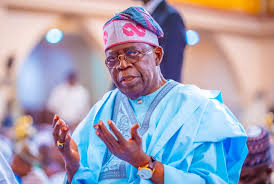
(President Bola Ahmed Tinubu. The Guardian News)
Serious nations take out loans to increase their assets. Major economies such as the United States, the United Kingdom, China, India, and others borrow money to build infrastructure, bolster their industries, increase productivity, and generate future income. They take out loans to construct engines that can pay back the debt.
However, a substantial portion of Nigeria’s recent borrowing under Bola Ahmed Tinubu seems to be driven by consumption, mostly to alleviate the hardships brought on by the elimination of subsidies, the currency crisis, inflation, and economic uncertainty.
Examine the trend: $800 million for cash transfers to roughly 15 million households, $500 million for women’s empowerment, $700 million for the education of teenage girls, $750 million for economic stabilization, $1.5 billion for reform and stabilization, and more than $3 billion for support for foreign exchange and petroleum imports via Afreximbank.
Nigerians continue to ask, “Where are the industries, power projects, railways, factories, export hubs, and infrastructure that will repay these loans?” despite the country reportedly borrowing between $6 billion and $8 billion or more in just 12 to 18 months.
Although it may temporarily ease strain, short-term respite does not create a productive economy. By spending primarily on survival, you cannot borrow your way out of poverty. Borrowing is necessary for a country to produce assets, not just to alleviate suffering.
The risk is straightforward: Nigeria is increasing its liabilities more quickly than its assets. Not to end misery, but to lessen it, we are borrowing.
The true question still stands: where are the initiatives that will boost the economy and pay off these debts?