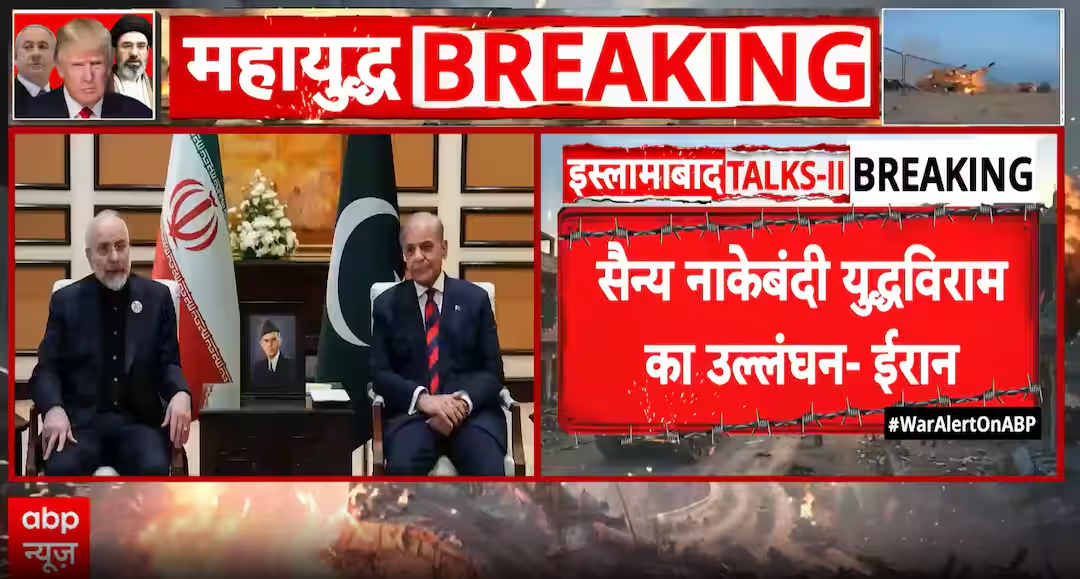
Tensions in the Middle East are escalating rapidly as uncertainty looms over the proposed second round of peace talks between the United States and Iran in Islamabad. With only two days remaining before the ceasefire deadline, Iran has firmly refused to participate in negotiations, citing the ongoing naval blockade in the Strait of Hormuz as the primary reason. According to reports from Islamic Republic News Agency, Tehran has made it clear that no talks will take place unless the United States lifts the blockade. Iranian officials argue that the move violates international law and undermines the spirit of the ongoing ceasefire. The situation has intensified diplomatic uncertainty and raised concerns about the collapse of fragile peace efforts. Meanwhile, the United States is moving ahead with preparations to send its delegation to Islamabad, where Pakistan is actively positioning itself as a mediator. High-profile envoys, including Steve Witkoff and Jared Kushner, are expected to be part of the discussions, though Iran’s absence casts serious doubt on the outcome. Adding to regional dynamics, India has also stepped up engagement, with Ajit Doval visiting Riyadh for strategic talks, signaling broader geopolitical concerns. As both Washington and Tehran remain firm on their positions, fears are growing that failure to reach an agreement before April 22 could lead to renewed conflict. The coming days are critical, with global attention fixed on whether diplomacy can prevail or tensions will spiral into further instability.