

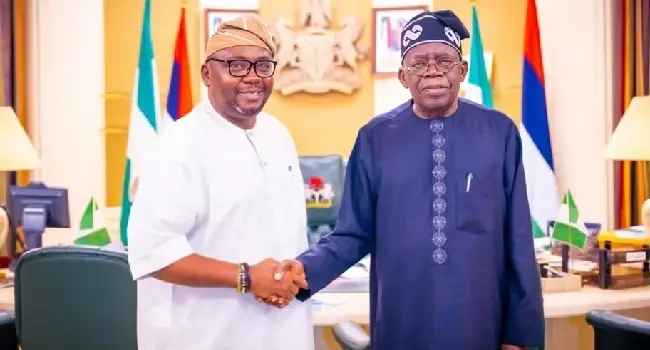
Minister of Power, Adebayo Adelabu, is set to resign from his position in the coming days following a high-level meeting with President Bola Tinubu at the Presidential Villa, Abuja.
The development was confirmed in a statement issued on Tuesday by the Minister’s Special Adviser on Strategic Communications and Media Relations, Tunji Bolaji, after the closed-door meeting held on April 21, 2026.
According to the statement, Adelabu used the meeting to present a comprehensive report on his stewardship of the power sector over the past two and a half years.
He outlined key milestones recorded during his tenure, including efforts to stabilise electricity generation, strengthen transmission infrastructure, and implement reforms aimed at improving efficiency across the power sector value chain.
A major highlight of the engagement was the presentation of the National Integrated Electricity Policy (NIEP), alongside its Strategic Implementation Plan (SIP), as well as the Medium- to Long-Term Integrated Resource Plan for the power sector.
The statement explained that the NIEP provides a long-term roadmap for achieving energy security, expanding electricity access, integrating renewable energy, and building a more resilient electricity system.
The SIP, on the other hand, serves as the operational framework detailing specific actions, timelines, and institutional responsibilities required to translate policy objectives into measurable outcomes.
“President Tinubu commended the Minister for his dedication and the progress recorded, particularly in laying a strong policy foundation for the transformation of the power sector,” the statement read.
It added that the President granted Adelabu his “consent and blessing” to pursue his governorship ambition in Oyo State ahead of the 2027 elections.
“In view of this development, Chief Adebayo Adelabu is expected to resign his position as Minister of Power in the coming days,” the statement added.
The Minister noted that the timing of his anticipated resignation reflects his commitment to addressing critical challenges in the sector and ensuring continuity in ongoing reforms before exiting office.
These include efforts to stabilise electricity supply amid recent declines in generation caused by gas supply constraints, pipeline repairs, and outstanding obligations to gas suppliers.
Adelabu also expressed appreciation to the President for his support, reaffirming his commitment to the advancement of Nigeria’s power sector and national development.
Adelabu’s planned exit follows weeks of speculation surrounding his political future and compliance with a presidential directive requiring cabinet members with political ambitions for the 2027 elections to resign.
Rumours of his resignation first gained traction around late March 2026, when a purported resignation letter circulated widely on social media. At the time, his media aide dismissed the document as false, insisting that the Minister remained focused on addressing challenges in the power sector.
Following the March 31 deadline reportedly set for political appointees, speculation intensified that Adelabu had shelved his governorship ambition, as he remained in office while some other ministers with political interests stepped down.
However, Tuesday’s meeting with the President marked a turning point, confirming that his ambition had not been abandoned but temporarily delayed to allow him to conclude key policy frameworks, particularly the NIEP.
Adelabu is expected to join the Oyo State governorship race under the All Progressives Congress (APC), where he will face stiff competition from other aspirants within the party.
His entry comes amid a politically charged environment in the state, following his previous governorship bids in 2019 and 2023.
His resignation is also seen as part of an administrative transition within the Federal Executive Council, as the government moves to ensure compliance with electoral guidelines and prepare for upcoming party primaries.
Despite highlighting achievements such as policy reforms and investment drives within the sector, his tenure has faced criticism over power supply challenges, rising tariffs, and recurring grid instability.