

Last week, Lebanese President Joseph Aoun said in a speech that he was prepared to go “wherever necessary” to end Israel’s occupation of south Lebanon.
The Lebanese government had “reclaimed Lebanon and Lebanon’s decision-making power for the first time” in nearly half a century, he added.
A day earlier, US President Donald Trump suggested he might invite Aoun and Israeli Prime Minister Benjamin Netanyahu to the White House to consolidate a 10-day ceasefire he brokered between the two countries.
The ceasefire, which paused six weeks of fighting between Israel and Hezbollah, came as the Israeli and Lebanese ambassadors to the US began direct talks in Washington, the first such meeting since 1993.
Since 2 March, Israel has carried out a large-scale air campaign in Lebanon, killing more than 2,290 people, wounding over 7,500, and displacing 1.2 million people, around 20 percent of the population.
New MEE newsletter: Jerusalem Dispatch
Sign up to get the latest insights and analysis on
Israel-Palestine, alongside Turkey Unpacked and other MEE newsletters
At the same time, the Israeli military has launched a ground invasion, announcing plans to occupy large swathes of southern Lebanon and stating that displaced residents would not be allowed to return to their homes.
Israeli forces have spent weeks demolishing entire villages, using bulldozers and rigging homes with explosives before flattening them in large-scale remote-controlled detonations.
Within hours of the ceasefire coming into effect, Israeli troops carried out demolitions, artillery shelling, and land-clearing operations in several border areas, in violation of the truce.
On Saturday, the Israeli military said it had established a “Yellow Line” roughly 10 kilometres inside southern Lebanon, similar to the line in Gaza that separates areas held by Israeli forces from those controlled by Hamas.
 Prime Minister Benjamin Netanyahu said Israeli forces “are remaining in Lebanon in a reinforced security buffer zone”.
“This is a security strip ten kilometres deep, which is much stronger, more intense, more continuous and more solid than what we had previously.
“That is where we are and we are not leaving.”
As Israeli forces remain inside Lebanon and military operations continue, Middle East Eye examines Israel’s history of invasions since its founding, alongside Beirut’s attempts to resolve the conflict through negotiations.
October 1948–March 1949: The little-known occupation
On 15 May 1948, Lebanon joined Syria, Egypt, Jordan and Iraq, in going to war with Israel, one day after the State of Israel was declared in historic Palestine.

Israeli invasion of Lebanon could be worse than 1982, warn European officials
Read More »
The pan-Arab offensive came in response to Israel’s declaration of independence and the depopulation of Palestinian towns and villages by Zionist paramilitary groups in the preceding months. During this period, around 750,000 Palestinians were displaced, with approximately 100,000 seeking refuge in Lebanon.
Lebanese forces played only a limited role in the fighting. Around midnight on 30–31 October, Israeli troops crossed into Lebanon and occupied 15 villages.
In the village of Hula, one of those occupied, Israeli forces carried out a massacre. Between 34 and 58 civilians were killed after being gathered in a building that was then blown up.
Israel later withdrew from the occupied villages under a UN-brokered armistice agreement signed with Lebanon on 23 March 1949.
Similar agreements were concluded with Jordan, Syria, and Egypt, marking the end of the first Arab–Israeli War and the defeat of the Arab armies. Iraq, however, did not sign an armistice agreement.
The Chebaa Farms
Unlike in 1948, Lebanon did not take part in the June 1967 Arab–Israeli War, during which Israel fought a coalition of Arab countries and went on to occupy East Jerusalem, the West Bank, and the Gaza Strip, as well as Egypt’s Sinai Peninsula and Syria’s Golan Heights.
In the wake of the war, Israel withdrew from the 1949 armistice agreements it had signed with Lebanon and other Arab states, and later moved to occupy the Chebaa Farms area in southern Lebanon.
The 1978 invasion
The defeat of Arab states by Israel in the 1967 war contributed to the rise of the Palestine Liberation Organisation (PLO), an umbrella group of Palestinian factions committed to armed struggle to reclaim their homeland, Palestine.
By 1971, Lebanon had become the PLO’s main base of operations, with Palestinian fighters launching intermittent attacks on Israel from south Lebanon. The PLO also forged alliances with Lebanese political parties and was a major player in Lebanon’s civil war, which broke out in April 1975.

On 14 March 1978, Israel invaded southern Lebanon in an effort to push PLO fighters north of the Litani River. The fighting killed around 1,000 Lebanese and Palestinians, most of them civilians, as well as 18 Israeli soldiers.
Israel withdrew its troops from most of the south in June in line with UN Security Council Resolution 425.
Adopted in March, the resolution established the United Nations Interim Force in Lebanon (Unifil), tasked with confirming Israel’s withdrawal and helping the Lebanese government restore its authority in the area. However, Israel transferred control of some occupied territory to a proxy militia rather than returning it to the Lebanese army.
Meanwhile, the PLO continued to maintain positions south of the Litani River.
The 1982 invasion
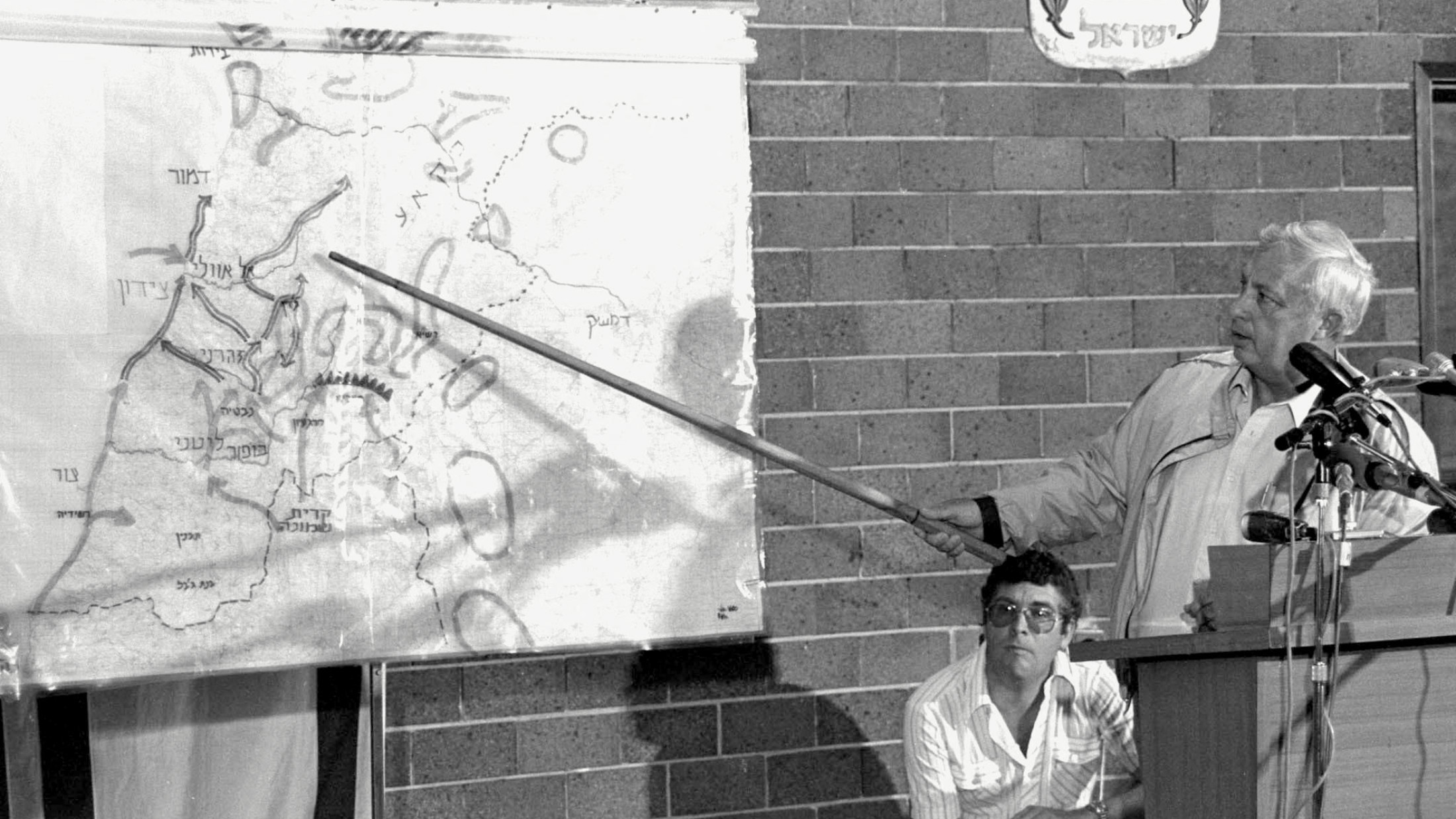
In June 1982, Israel invaded Lebanon once again, this time advancing deeper into the country and occupying Beirut by September.
Around 19,000 Lebanese and Palestinians, most of them civilians, were killed during Israel’s “Operation Peace for Galilee”. The offensive ultimately forced the PLO leadership, along with thousands of fighters, to leave Lebanon.
Israel’s lightning military advance radically altered the balance of power between Lebanese warring factions and helped secure the election of its ally, Bachir Gemayel, as president.

Elected in August, Gemayel was assassinated the following month, and his brother Amin was elected as his successor later in September.
In December, Amin Gemayel’s government began US-brokered negotiations with Israel. After 37 rounds of talks, the two sides signed an agreement on 17 May 1983, which was approved by Lebanon’s parliament and government.
Although the agreement called for ending the state of belligerency between the two countries, Lebanon stopped short of describing it as a peace treaty, emphasising instead that its primary aim was to secure Israel’s withdrawal.
The 17 May agreement faced strong opposition from several Lebanese factions, including the Shia Amal Movement and the Progressive Socialist Party (PSP), both aligned with Syria, which had troops stationed in Lebanon since 1976 and was engaged in a regional power struggle with Israel.
Opponents argued that the agreement undermined Lebanon’s sovereignty, particularly because it included security arrangements with Israel in the south.
Backed by Damascus, Amal and the PSP launched an armed rebellion against Amin Gemayel’s rule, culminating on 6 February 1984 with their takeover of predominantly Muslim West Beirut.
Bowing to military pressure, Gemayel abrogated the agreement in March and moved closer to Syria, forming a new government that included Amal leader Nabih Berri and PSP leader Walid Jumblatt among its ministers.
The failed Naqoura talks of November 1984
Although Israel withdrew from Beirut and the Chouf Mountains, it continued to occupy all of southern Lebanon. Once again, Lebanon and Israel began talks in November 1984 aimed at securing an arrangement for an Israeli withdrawal from the occupied territory.
Lebanese and Israeli military delegations held multiple rounds of negotiations between 8 November 1984 and 24 January 1985 in the border village of Naqoura, but failed to reach an agreement.

Amid stalled negotiations and mounting casualties from attacks by Lebanese factions in the south, the Israeli government approved a plan in January 1985 for a unilateral, partial withdrawal.
By the end of April, Israeli forces had pulled out of Saida, Nabatieh, Sour, and surrounding areas, but continued to occupy a strip of territory closer to the border, which it termed the “security zone”.
Madrid peace talks
After the end of Lebanon’s civil war in 1990, Syria emerged as a dominant power in the country, and Beirut began closely coordinating its position on the Israeli occupation with Damascus.
Lebanese officials adopted what became known as the “unity of tracks” approach with Syria. Under this framework, Lebanon called for a comprehensive agreement that would include a simultaneous Israeli withdrawal from southern Lebanon and from Syria’s Golan Heights, which Israel had occupied since 1967.
On this basis, Lebanon and Syria took part in the Madrid Peace Conference in October 1991, sponsored by the United States and the Soviet Union to address the Arab–Israeli conflict. Bilateral talks between Lebanon and Israel followed in Washington in 1993, but produced no tangible outcome.
In south Lebanon, Hezbollah – formed in 1982 in response to Israel’s invasion – intensified its guerrilla campaign throughout the 1990s, targeting Israeli positions and those of its allied militia, the South Lebanon Army (SLA).
In June 1999, the SLA withdrew from 36 mountainous villages in the Jezzine region.
Withdrawal from south Lebanon
The Israeli army withdrew from southern Lebanon in May 2000, bringing more than 18 years of occupation to an end.
Under UN auspices, Lebanon and Israel delineated the line of withdrawal, known as the Blue Line, although their formal international border was not demarcated.
Israel continued to occupy the Chebaa Farms and the Kfar Shouba Hills, while Hezbollah periodically carried out attacks against Israeli army positions in these areas.

The withdrawal effectively broke the “unity of tracks” with Syria, as Israel continued to occupy the Golan Heights.
This followed an unsuccessful meeting in Geneva in March between then US President Bill Clinton and Syrian President Hafez al-Assad aimed at reaching a peace agreement between Syria and Israel.
The summer 2006 war
In July 2006, Israel launched a 33-day war against Lebanon after Hezbollah abducted two Israeli soldiers in a cross-border raid, aiming to exchange them for veteran Lebanese prisoner Samir al-Qontar. The war, which included an Israeli ground invasion, killed around 1,200 Lebanese, mainly civilians, and 160 Israelis, the majority of them soldiers.

Israel’s stated objectives were the release of the two soldiers and the dismantling of Hezbollah, neither of which it achieved. The war ended under UN Security Council Resolution 1701, which established a cessation of hostilities, expanded the size of Unifil to monitor the truce, and called for the disarmament of all non-state armed groups in Lebanon.
Israel subsequently withdrew from most of the territory it had occupied during the war, with the exception of part of the village of Ghajar, and maintained its positions in the Chebaa Farms and Kfar Chouba Hills. Hezbollah retained its weapons but went underground. In July 2008, Israel released Qontar in exchange for the bodies of the two soldiers.
The 2024 ground invasion
In October 2024, Israel launched a ground invasion of Lebanon and a large-scale air campaign aimed at degrading Hezbollah.
The escalation came after nearly a year of cross-border exchanges with Hezbollah, which opened fire on Israel on 8 October 2023 in support of Palestinians, following Hamas’s attack on Israel on 7 October.
On 27 November, Israel agreed to a ceasefire under a deal brokered by France and the United States.
Israel was expected to withdraw from the territory it had occupied within two months, but it retained control of five positions inside Lebanon and continued to attack civilians and Hezbollah personnel across the country.
Meanwhile, the Lebanese government dismantled Hezbollah’s infrastructure south of Litani, the first phase in the implementation of the ceasefire deal.