

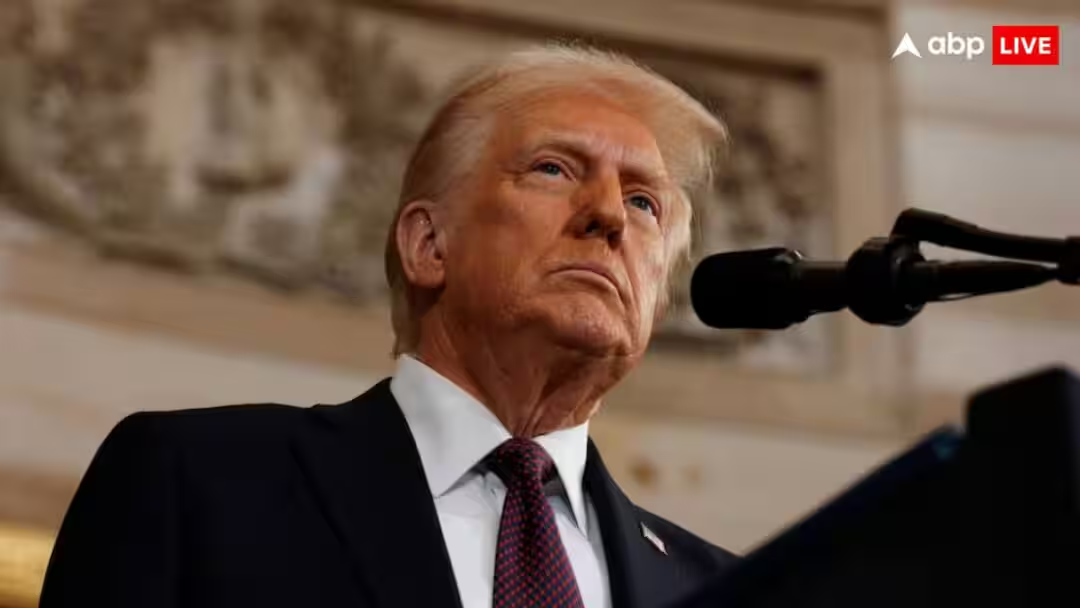
US President Donald Trump has indicated he is unlikely to approve Iran’s latest proposal aimed at ending the ongoing war. The proposal from Tehran includes reopening the Strait of Hormuz, a crucial global oil transit route, while postponing contentious issues related to Iran’s nuclear programme for future negotiations.
According to a report by CNN, Trump shared his reservations during a high-level meeting with national security officials on Monday. One official said the president is “not likely to accept the plan,” which was communicated to Washington in recent days.
The US has expressed apprehension that reopening the Strait without resolving concerns about Iran’s nuclear enrichment activities or its “stockpile of near-bomb-grade uranium” could weaken Washington’s negotiating position.
At the same time, it is being acknowledged that keeping the Strait restricted could prolong elevated global energy prices, contributing to rising fuel costs in the United States.
Uncertainty Over Next Steps
Following the meeting, it remained unclear how the US administration would proceed. Officials continue to assess the situation amid concerns about internal divisions within Iran’s leadership.
US authorities are uncertain who “retains ultimate decision-making power over a prospective deal,” complicating diplomatic engagement, CNN reported.
Trump has also expressed reluctance to resume military action, noting publicly that the US bombing campaign remains suspended after a ceasefire extension announced last week.
Despite ongoing tensions, the administration appears cautious about escalating the conflict while diplomatic channels remain open.
White House Stresses Diplomatic Sensitivity
The White House has refrained from commenting on the specifics of the negotiations. Assistant press secretary Olivia Wales emphasised the sensitivity of the talks, stating, “These are sensitive diplomatic discussions, and the US will not negotiate through the press.”
She added, “As the President has said, the United States holds the cards and will only make a deal that puts the American people first, never allowing Iran to have a nuclear weapon.”
Mixed Signals Within US Administration
While Trump has taken a firm stance, some officials have offered more measured reactions. US Secretary of State Marco Rubio described the proposal as “better than what we thought they were going to submit,” though he raised concerns about leadership clarity within Iran.
During internal discussions, Rubio questioned the authority of Iran’s leadership, asking, “Does he have the clerical credentials to actually act as supreme leader? Is he actually making the decisions or is there somebody standing in his stead…?”
Diplomatic Efforts Continue Amid Stalemate
Meanwhile, Iran has continued diplomatic outreach to key allies. Foreign Minister Abbas Araghchi travelled to Moscow for talks with Russian President Vladimir Putin, seeking support as tensions persist.
Araghchi criticised Washington’s approach, blaming it for stalled negotiations. He said “the US approaches caused the previous round of negotiations, despite progress, to fail to reach its goals because of the excessive demands.”
Despite ongoing backchannel diplomacy, a breakthrough remains elusive. The situation reflects a broader impasse, with both sides maintaining firm positions on critical issues including nuclear restrictions, sanctions, and regional security.
Breaking News: Heatwave grips North India, AC fires rise, cooling points set up in cities
(This is a breaking news story and is being updated. Please refresh for the latest updates.)