

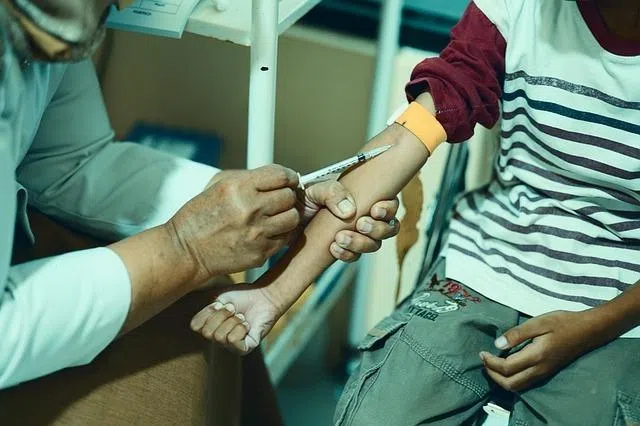
GENEVA – The United Nations on April 24 said a three-year effort to immunise children who missed routine vaccinations due to the Covid-19 crisis was on course to reach the 21 million target.
The pandemic, which swept around the world in 2020, severely strained health systems and disrupted vaccination campaigns, resulting in a resurgence of infectious diseases such as measles and polio.
The UN’s World Health Organization and the UN children’s agency UNICEF, plus Gavi, the Vaccine Alliance said in a joint statement that the so-called Big Catch-Up campaign “is on track to meet its target of catching up 21 million children”.
The vaccine drive concluded in March.
While final data is still being compiled, by the end of December 2025, the campaign had reached an estimated 18.3 million children aged one to five across 36 countries in Africa and Asia with more than 100 million doses of life-saving vaccines.
Of those children reached, an estimated 12.3 million had never received a vaccine dose before, while 15 million had never previously received a measles vaccine.
Besides reaching those children, the agencies said the drive had also improved immunisation programmes, making them better equipped to identify older children who were not on the system, having missed earlier doses.
“By protecting children who missed out on vaccinations because of disruptions to health services caused by Covid-19, the Big Catch-Up has helped to undo one of the pandemic’s major negative consequences,” said WHO chief Tedros Adhanom Ghebreyesus.
But not all is rosy.
Vaccines are facing a tide of misinformation and disinformation, the agencies said, while cuts in foreign aid spending were also taking their toll.
The statement said chronic gaps in routine immunisation were “plain to see”, with measles outbreaks rising in every region with around 11 million cases in 2024.
The surge is compounded by “declining vaccine confidence in some previously high-coverage communities”.
The WHO’s vaccines director Kate O’Brien told reporters that while the person parents trusted most on vaccination remained the health worker they interact with, “what is really troubling and a very high concern to all of us is that there has been evermore a politicisation of vaccines and of health”.
Gavi chief executive Sania Nishtar added that “we are up against a social media engine which has an incentive to promote disinformation, and I think that needs to be strategically tackled”.
“The social media algorithms promote hate, disinformation and lies. Put a good piece of information out there and you will have no traction,” she said.
UNICEF’s global chief of immunisation Ephrem Lemango said social media algorithms “tend to reward outrage over accuracy, and there is so much anti-vaccine content” that it has it own “economy behind it”.
“So we do need better content that is disseminated through these platforms,” he told a press conference.
The continued decline of foreign aid spending and sharp funding cuts to global health “have seriously affected delivery of immunisation services. This will likely reverse hard-earned progress”, he added. AFP