

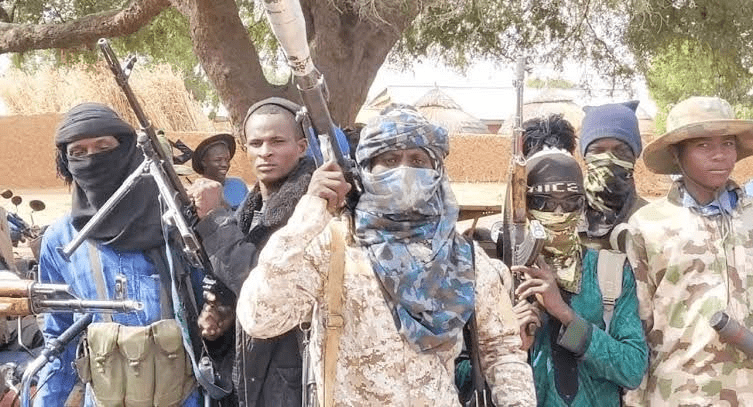
Victims Warehoused in Displacement Camps, but Killers ‘Rehabilitated’ say Experts
By Onibiyo Segun
Ilorin, Kwara State — Panic gripped Kwara communities this weekend after Fulani Ethnic Militia terrorists ravaging the North-Central of Nigeria abducted the Baale (community chief or local traditional leader) of Oloruntele, a small, predominantly Christian village in Ifelodun county, on Saturday, April 18, 2026, afternoon, just hours after another monarch was kidnapped in nearby Olayinka county.
Residents described the raid as swift, violent, and deeply unsettling.
Eyewitness Isaiah Adewale told TruthNigeria, “They stormed the Baale’s home around 3 p.m. He was taken in front of his family & guards. No one dared intervene. We are terrified.”
Another resident Fagboro Peter told TruthNigeria, “This is happening too often. Our leaders are no longer safe.”
The Oloruntele abduction came less than 24 hours after Fulani Ethnic Militia terrorists ravaging the North-Central of Nigeria raided the Olayinka palace in Ifelodun county at about 1:40 a.m., abducting a newly installed monarch, his wife, and another individual.
The overnight raid included heavy gunfire, leaving residents frozen with fear.
This follows a troubling surge of violence in Kwara documented by TruthNigeria.
In early April, terrorists killed five forest guards and kidnapped two in Nuku community near Woro, part of broader insecurity affecting Patigi, Edu, and Kaiama counties.
Residents said attackers arrived around 3 a.m., overwhelming defenders and fleeing into forest hideouts.
Over the past year, at least three monarchs have been kidnapped in Kwara South.
The Ojibara of Bayagan Ile was abducted in November 2025 and released 25 days later after ransom negotiations.
Similarly, the Oniwo of Afin was freed in February 2026 after a 34-day ordeal.
Security experts warn these attacks highlight both the audacity of the Fulani Ethnic Militia terrorists ravaging the North-Central of Nigeria and critical gaps in protection.
Major General Emmanuel Okoro, retired military officer based in Abuja, said, “Targeting traditional leaders undermines local authority and terrorizes communities.”
Okoro added: “Without immediate intelligence and rapid, decisive response units, these attacks will escalate.”
Dr. Aisha Balogun, terrorism expert at the University of Lagos, added, “These Fulanis exploit weak policing and local knowledge gaps. The pattern in Kwara mirrors similar attacks in Kogi, Niger, and the Northeast, where kidnappings fund operations and spread fear.”
In March, TruthNigeria reported bombings and church abductions in Kwara, linked to ISWAP and Boko Haram, showing terrorist activity is widening into the Middle Belt, including Oro-Ago and Woro.
Amid these attacks, federal authorities are trying rehabilitation. Recently, 744 former terrorists graduated from the Government’s De‑radicalisation, Rehabilitation and Reintegration programme under Operation Safe Corridor in Gombe, North-East Nigeria.
Officials say it’s not amnesty but ‘a structured pathway for psychosocial support and reintegration.’
Graduates came from Borno, Yobe, Kano, and importantly Kogi and Niger, reflecting terrorism’s broad reach.
However, Retired Air Commodore Darlington Abdullahi, security analyst and deradicalization consultant, condemned the program.
Abdullahi told TruthNigeria, “While their victims live in IDP camps, they (terrorists) get reintegrated into society.”
Residents say repeated kidnappings have left communities on edge.
“We cannot attend church services, meetings or festivals without worrying the Fulani Ethnic Militia terrorists ravaging the North-Central of Nigeria will strike,” said Isaiah Adewale, a resident of Oloruntele in Ifelodun county, requesting anonymity.
Authorities remain silent on both abductions, heightening fears that law enforcement is reactive instead of proactive.
Communities are demanding enhanced patrols, real-time intelligence, and swift deployment of rapid-response forces.
Experts warn the wave of kidnappings could worsen if unchecked.
“They are emboldened when attacks go unpunished,” Okoro said.
“The state government must act now. Many communities in and around Ifelodun county are empty. And the governor seems unbothered or lacks any idea how to secure them.”
The abductions reflect a troubling trend across northern and central Nigeria, with attacks reported in Sokoto, Niger, Kogi, and the Northeast.
Ransom often funds further operations by Fulani Ethnic Militia terrorists ravaging the North-Central of Nigeria, creating a vicious cycle.
For now, residents remain on edge, hoping for their leaders’ safe return while demanding stronger government action.
“Failure to protect traditional rulers and communities signals vulnerability that Fulani Ethnic Militia terrorists ravaging the North-Central of Nigeria are eager to exploit,” Dr. Balogun said.
Onibiyo Segun reports on terrorism and conflict for TruthNigeria.