

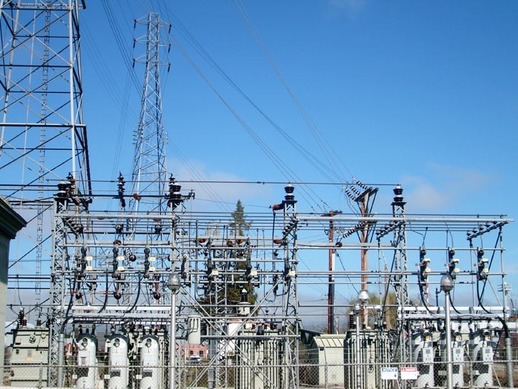
The Transmission Company of Nigeria has declared a force majeure on the Ikeja West–Osogbo 330kV transmission line after a severe rainstorm knocked down a critical tower, raising fresh concerns about the vulnerability of Nigeria’s power infrastructure to extreme weather.
Force majeure refers to an unforeseen event beyond one’s control, such as a storm or disaster, that prevents someone from fulfilling their obligations.
The development, which occurred on Thursday, April 16, 2026, affected one of the major transmission corridors responsible for evacuating bulk electricity across parts of the South-West.
The transmission company announced the development in a statement issued on Sunday and signed by its General Manager, Public Affairs, Ndidi Mbah.
The company said the transmission line tripped during the storm due to a fault traced to a specific section of the network.
“The Transmission Company of Nigeria wishes to inform the public that a force majeure has occurred on the Ikeja West–Osogbo 330kV transmission line following a severe rainstorm on Thursday, 16 April 2026,” the statement read.
It added, “The line tripped during the storm due to a fault, which was detected at approximately 14.9 kilometres from the Ikeja West (Ayobo) end of the transmission line.”
Also Read:
According to TCN, a detailed inspection by its maintenance team revealed that one of the transmission towers along the route suffered a structural failure.
“Further inspection by TCN maintenance crews revealed that Tower No. 515 had collapsed during the storm, with the structure giving way at its midsection. While TCN is mobilising materials and personnel for the re-erection of the fallen tower, Efforts are currently ongoing by its engineers to dismantle the affected tower,” the company disclosed.
The Ikeja West–Osogbo 330kV line is a strategic backbone in Nigeria’s national grid, linking Lagos, the country’s commercial hub, to other parts of the South-West and beyond. Any disruption along this route often has ripple effects on power supply, particularly in densely populated urban centres.
TCN said it has activated emergency response measures, including the mobilisation of materials and personnel to the site of the incident, to fast-track repairs and restore full transmission capacity.
“While TCN is mobilising materials and personnel for the re-erection of the fallen tower, efforts are currently ongoing by its engineers to dismantle the affected tower,” the statement added.
The company assured electricity consumers that steps are being taken to minimise the impact of the outage by relying on alternative transmission routes.
“We assure that we will work assiduously to restore flexibility and redundancy in that corridor as alternative line is still in service evacuating bulk power. Updates will be provided as work progresses,” it concluded.
By declaring force majeure, TCN is formally indicating that the disruption was caused by circumstances beyond its control, in this case, extreme weather conditions, making it temporarily unable to fulfil its full transmission obligations on that line.
Such declarations are not uncommon in Nigeria’s power sector, especially during periods of intense rainfall and storms that can weaken ageing infrastructure.
Nigeria’s transmission network has long struggled with capacity constraints, ageing infrastructure, and weather-related disruptions, despite ongoing upgrades.
The national grid, operated by TCN, evacuates power generated by generation companies to distribution companies. However, frequent system disturbances and line trips continue to hamper a stable electricity supply.
In recent years, stakeholders have raised concerns about the resilience of transmission infrastructure, particularly as climate variability increases the frequency of severe weather events.
The Ikeja West substation, one of the largest in the country, serves as a major hub for power distribution in Lagos and surrounding states, making any fault along its connected lines significant for both households and industries.
The latest incident adds to a growing list of grid challenges, highlighting the urgent need for investments in stronger, weather-resilient transmission infrastructure but the transmission company has assured on an alternative line.
Follow The Eagle Online Channel on WhatsApp
[wpadcenter_ad id=’745970′ align=’none’]