

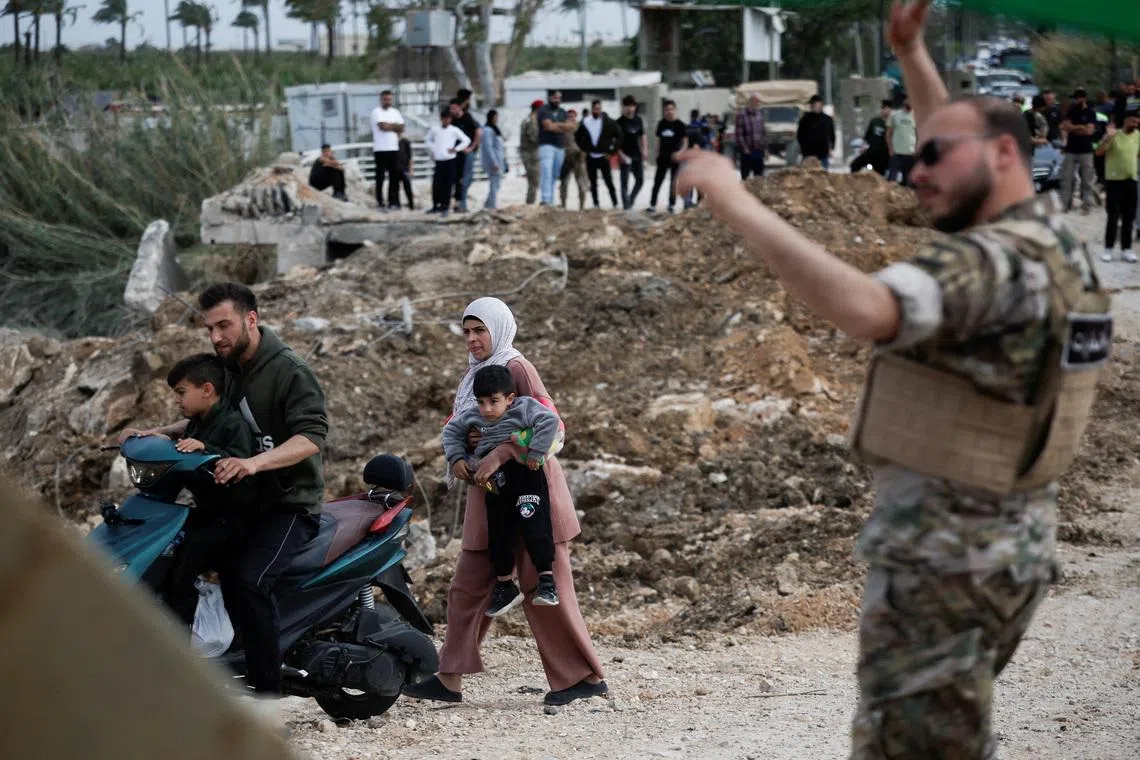
BEIRUT/QASMIYEH, Lebanon, April 17 – People uprooted by the war in Lebanon began returning home on Friday, checking whether their houses were still standing, though some did not plan to stay for fear a 10-day ceasefire in the conflict between Hezbollah and Israel could prove fragile.
Hills of rubble marked the spot where buildings once stood in the Hezbollah-controlled southern suburbs of Beirut, an area pummelled by Israel during more than six weeks of conflict that spiralled out of the war between the United States and Iran.
In Qasmiyeh in south Lebanon, cars were driving across a makeshift crossing over the Litani River, hastily erected after the ceasefire came into effect at midnight local time (2100 GMT). Israel destroyed all the bridges over the Litani during the war, blowing up the one at Qasmiyeh on Thursday.
“I inspected my home and praise God the building is still standing,” said Ali Hamza, who had just visited his house in the southern suburbs known as Dahiyeh.
But he said “people are scared to come and live, and it is impossible to live in these circumstances, and with these smells. A full return is difficult now, despite the hardship of displacement”.
U.S. President Donald Trump announced the ceasefire between the governments of Lebanon and Israel on Thursday. The Lebanese government has been sharply at odds with Hezbollah over its decision to enter the war, and has sought its peaceful disarmament for a year.
The Lebanese army reported violations of the ceasefire by Israel, including intermittent shelling of several southern Lebanese villages, and called on citizens to hold off on returning to southern villages and towns.
There was no immediate comment from the Israeli military.
In the largely destroyed southern city of Nabatieh, some returning residents defiantly said they would stay. Others said there was nothing to come back to.
“There’s destruction and it’s unliveable. Unliveable. We’re taking our things and leaving again,” said Fadel Badreddine, who came with his young son and wife. “May God grant us relief and end this whole thing permanently – not temporarily – so we can return to our homes and lands.”
ISRAEL TO MAINTAIN ‘SECURITY ZONE’
Hezbollah, a Shi’ite Muslim group founded by Iran’s Revolutionary Guards in 1982, opened fire in support of Tehran on March 2.
The war killed more than 2,100 people in Lebanon and forced some 1.2 million from their homes, according to Lebanese authorities, with the bulk of the displaced members of the Shi’ite community who also bore the brunt of a war in 2024.
Hezbollah attacks killed two Israeli civilians, while 13 Israeli soldiers were killed in Lebanon since March 2, Israel says. Hezbollah fired hundreds of rockets and drones at Israel during the war.
Israel’s campaign in Lebanon had emerged as a major obstacle to securing a peace deal sought by Trump to end the war on Iran.
Trump told reporters after the ceasefire was announced that Lebanon and Israel would work towards a longer-term deal, and said Lebanon had agreed to “take care of Hezbollah”.
Israeli Prime Minister Benjamin Netanyahu said he had not agreed to Hezbollah’s demand to withdraw forces that invaded southern Lebanon, and would maintain an extensive “security zone” up to the border with Syria.
Israel’s main demand remained that Hezbollah must be dismantled, he added.
Hezbollah said any ceasefire must not allow Israel freedom of movement within Lebanon. In a statement, the group said the presence of Israeli troops on Lebanese territory granted Lebanon and its people the “right to resist”.
Israeli forces have invaded areas of southern Lebanon, and had vowed to maintain control over territory extending all the way to the Litani River, which meets the Mediterranean some 30 km (20 miles) north of Israel’s border. Israel ordered residents out of the area south of the Litani during the war.
Israeli troops destroyed Lebanese villages in the area, saying their aim is to create a “buffer zone” to protect northern Israeli towns from Hezbollah attacks.
Trump said he would be inviting Netanyahu and Lebanese President Joseph Aoun to the White House for “meaningful talks” between the two countries, which have technically remained in a state of war since Israel was established in 1948. REUTERS