

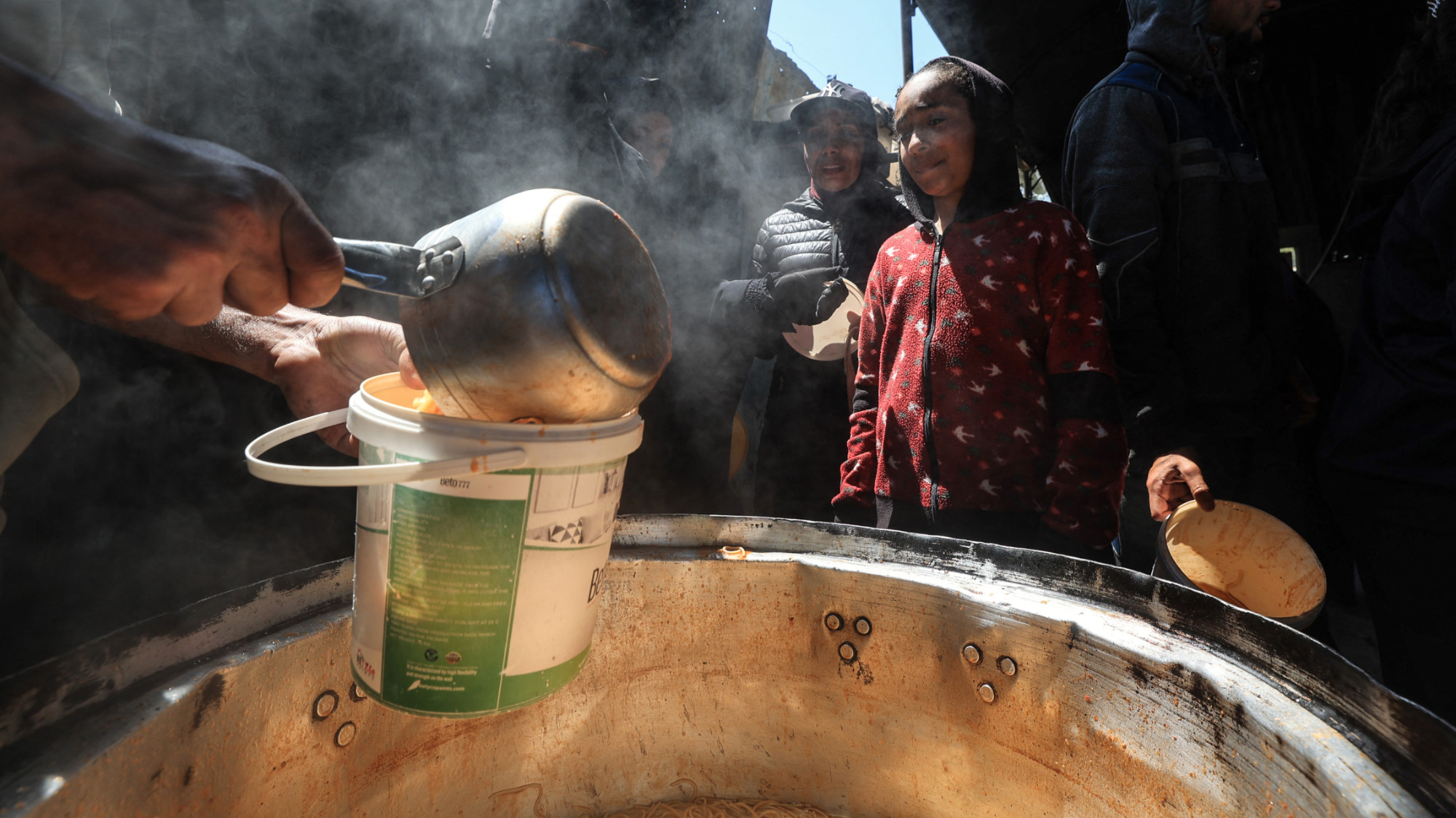
Gaza’s de facto authorities have criticised US Vice President JD Vance for “inaccurate and misleading” claims that more humanitarian aid is entering the Strip now than at any point in the past five years.
Speaking at a Turning Point USA (TPUSA) event on Tuesday, Vance said this has been achieved because “we have taken that situation seriously”.
Gaza’s Government Media Office condemned the remarks on Wednesday, saying they “bear no relation to reality” and “starkly contradict verified field data”.
The US brokered a ceasefire in October last year, aimed at ending the two-year genocide in which Israel starved 2.3 million Palestinians while bombing them daily.
The Israeli blockade led to famine being declared in parts of Gaza, with dozens reported to have died from malnutrition.
New MEE newsletter: Jerusalem Dispatch
Sign up to get the latest insights and analysis on
Israel-Palestine, alongside Turkey Unpacked and other MEE newsletters
The bombing killed over 72,000 people and wounded more than 170,000.
Under the agreement, Israel was required to lift restrictions on aid entry and allow up to 600 trucks per day carrying food, fuel, medical supplies, shelter materials and commercial goods.
Israel has not met those terms, and continues to impose tight limits on aid deliveries, leaving the humanitarian crisis largely unresolved.
The Government Media Office said the average number of trucks entering Gaza since October is around 227 per day – just 37 percent of the level agreed upon.
For example, it said, only 207 trucks entered on 9 April, including just 79 carrying humanitarian aid.
“Ignoring these facts constitutes serious misinformation and obscures a systematic reality of restricted supplies and enforced deprivation, as the Israeli occupation continues to fail to meet its humanitarian obligations,” the office said.
“Distorting facts or portraying a false reality will not change the severity of the humanitarian catastrophe in Gaza, nor absolve any party of its legal and moral responsibilities,” it added.
‘Heading towards famine’
UN data also indicates that Vance’s claim is inaccurate.
Before the genocide, between 2021 and 2023 up to 12,000 trucks per month – around 400 daily – entered Gaza, mostly carrying commercial goods.
Since then, numbers have dropped sharply, after former Israeli Defence Minister Yoav Gallant – who is wanted by the ICC for war crimes – said that there will be “no electricity, no food, no fuel” entering Gaza.
Some months during the genocide saw as few as 600 trucks in total, averaging around 20 per day.
The peak saw 5,670 trucks enter in one month, approximately 190 per day.
In November, weeks after the ceasefire, only 4,282 trucks entered, averaging 142 per day, according to UN data.
Gaza ‘heading towards famine’ as bread shortages deepen amid Israeli curbs
Read More »
Numbers have continued to decline since then: 3,513 trucks entered in January, 2,660 in February, 2,032 in March, and just 586 so far this month, as of Wednesday.
Amid the drop in aid, officials and residents have warned in recent weeks that food, fuel, medicine and shelter supplies are again reaching critically low levels.
Last week, Doctors Without Borders (MSF) said “Israel continues to deliberately obstruct aid”, as living conditions in Gaza remain dire.
The obstruction, it said, is “translating into entirely preventable deaths”.
“While the intensity of the conflict has decreased, the reality in Gaza remains catastrophic,” the organisation added.
Sabreen Abu Ouda, a 45-year-old resident of Gaza City, told Middle East Eye earlier this week that many people “fear we are heading towards famine”.
She and other residents said there have been severe shortages of bread and essential supplies, including food and fuel, in recent weeks.
Vegetable prices have surged amid scarcity, while eggs, chicken and meat have nearly disappeared from the market.