

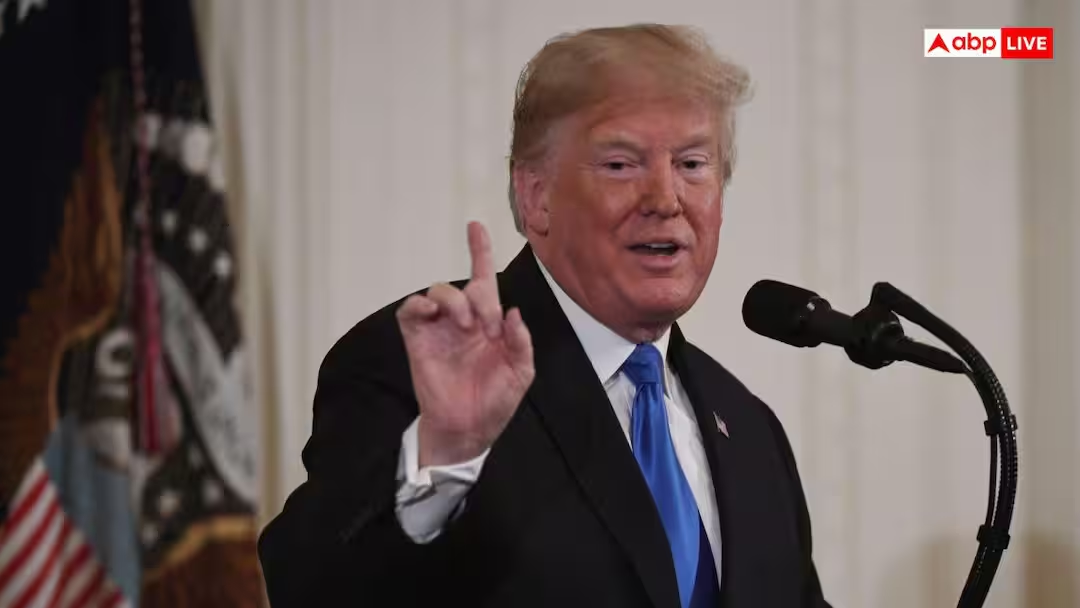
- Trump hints at renewed Iran talks amid naval blockade.
- US military claims swift shutdown of Iran’s maritime trade.
- Blockade strains ceasefire; negotiations may resume soon.
- Strait of Hormuz is focal point of ongoing crisis.
Trump On US Iran Talks: U.S. President Donald Trump has indicated that stalled negotiations with Iran could resume within days, even as tensions escalate following Washington’s decision to impose a naval blockade on Iranian ports.
Trump Hints At Fresh Diplomacy In Pakistan
Trump told the New York Post that it would be better to remain in Islamabad, since something might occur within the next two days, and that the United States was leaning toward heading there.
His remarks come after a weekend round of talks collapsed, raising uncertainty over the future of diplomatic efforts to end the ongoing conflict.
US Military Claims Swift Economic Shutdown
The U.S. military has asserted that its blockade has already dealt a severe blow to Iran’s economy. Within just 36 hours, American forces said they had effectively halted maritime trade to and from the country.
According to the United States Central Command, the operation has cut off key economic lifelines. Commander Adm. Centcom also reported that multiple merchant vessels had complied with orders to turn back, underscoring the reach of the operation.
Ceasefire Under Strain As Global Pressure Mounts
The escalation has cast doubt over the fragile two-week ceasefire announced earlier this month, which is set to expire soon. While Iran has yet to officially respond to Trump’s latest comments, António Guterres said it was “highly probable” that negotiations would resume.
Officials from the Gulf region, Pakistan and Iran have also suggested that delegations from both sides could return to Islamabad later this week, though no formal schedule has been confirmed.
Strait Of Hormuz At Centre Of Crisis
At the heart of the standoff is the Strait of Hormuz, a critical global route for oil and gas shipments. Iran has effectively shut down the passage since late February following U.S. and Israeli airstrikes.
In response, the U.S. has deployed more than a dozen warships and around 10,000 personnel to enforce the blockade, aiming to choke off Tehran’s revenue from oil exports and transit fees.
Conflicting Signals On Blockade Effectiveness
Despite U.S. claims of near-total control, independent data suggests the situation on the ground may be more complex. Ship-tracking analysis has indicated that several vessels linked to Iran, as well as some foreign ships, have continued to pass through the strait even after the blockade was imposed.
Markets React To Diplomatic Hopes
The prospect of renewed talks has had a calming effect on global markets, with oil prices easing below $100 per barrel. Investors appear to be cautiously optimistic that diplomacy could still prevent further escalation.
With the blockade intensifying pressure and backchannel diplomacy gaining momentum, the coming days could prove decisive in determining whether the crisis moves toward resolution or deeper confrontation.