

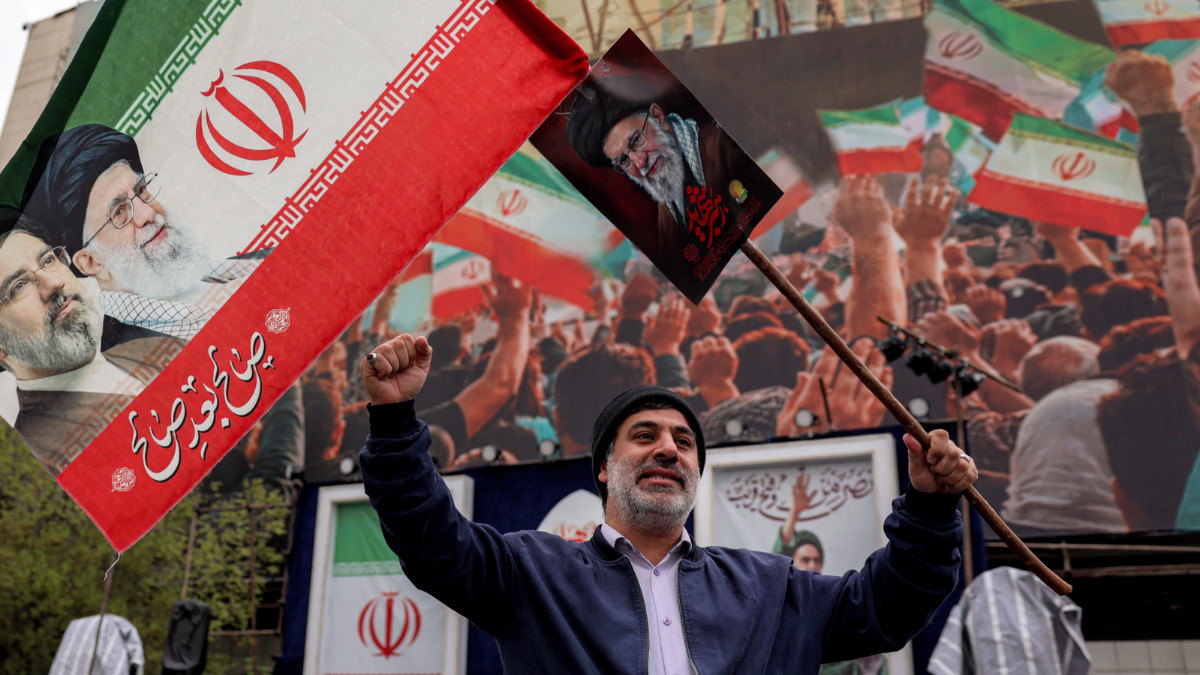
Iran has rejected a US proposal to end the war with the Islamic Republic, setting out its own conditions for peace, according to Iranian state media.
“Iran has responded negatively” to the American proposal, an unidentified official told Iran’s Press TV on Wednesday, referring to a 15-point ceasefire deal floated by the Trump administration and delivered to the Iranians by Pakistan.
“The end of the war will occur when Iran decides it should end, not when Trump envisions its conclusion,” the Iranian official added.
Tehran has five conditions for ending the US-Israeli war on Iran, according to Press TV.
Iran wants a complete halt to “aggression and assassinations” by the US and Israel, along with “concrete mechanisms” to ensure that the US does not resume attacking.
New MEE newsletter: Jerusalem Dispatch
Sign up to get the latest insights and analysis on
Israel-Palestine, alongside Turkey Unpacked and other MEE newsletters
Iran also wants war reparations and a formal recognition of its “natural, legal right” to control maritime activity in the Strait of Hormuz, the narrow waterway through which 20 percent of global energy supplies pass.
Iran also insists that any peace deal include military groups aligned with Tehran, which likely means an end to Israel’s invasion of Lebanon, where Hezbollah is fighting.
Iran’s rebuttal through state media comes as the Islamic Republic’s military also characterised the US proposal to end the war as out of step with battlefield developments.
“Our first and last word has always been, is, and will be this: someone like us will never come to terms with someone like you – not now, not ever,” the central headquarters of Iran’s military command said in a video on Wednesday.
“Do not call your defeat an agreement. The era of your promises has come to an end.”
Iran in driver’s seat
Turkey, Pakistan and Egypt have all been trying to mediate an end to the US-Israeli war on Iran, but analysts and diplomats say Tehran is very wary of the outreach.
The US attacked Iran twice, in June 2025 and again in February, while negotiations were taking place.
This time around, the Iranian official in his statement again questioned the sincerity of the US proposal by raising the two previous rounds of talks between the Iranians and the US, which ended with the US attacking Iran. The official said the US had no genuine intention of meaningful dialogue.

Trump’s stringent demands on Iran risk bogging down potential talks, sources say
Read More »
Iran’s conditions, the official said, are in addition to Tehran’s previous demands that were conveyed during its second round of negotiations with the US in Geneva, just days before the US and Israel launched their war on Iran.
US President Donald Trump said on Tuesday that his administration was engaged in negotiations after claiming the US had “won” the conflict and achieved “regime change”. He cited the killing of senior Iranian government officials and US military strikes as proof.
Trump’s public statements have been challenged by analysts who note that Iran has effectively taken control of the Strait of Hormuz and that hawkish military officials are on the rise in Tehran.
The former chief of Britain’s MI6 intelligence service said Iran has the upper hand in the war.
“The reality is the US underestimated the task, and I think as of about two weeks ago lost the initiative to Iran,” Sir Alex Younger, who ran the UK’s secret intelligence service from 2014 to 2020, told The Economist in a podcast interview.
Israel’s Channel 12 first reported the full 15 points of Trump’s proposal to end the war, which offers a total lifting of sanctions in return for Iran dismantling its nuclear programme. The plan also calls for eventual limits to Iran’s missile programme and abandoning its network of militia partners across the region.
Despite Trump’s claim of talks, on the ground, there was no let-up in the war, with Bahrain, Kuwait, Jordan, and Saudi Arabia all facing drone and missile fire, while Israel and the US continued to pummel Iran with strikes.
Iran also took aim at the USS Abraham Lincoln carrier group with cruise missiles. Iran said the strikes had “forced it to change its position”, warning of “powerful strikes” when the “hostile fleet” comes into range.
US ally Israel, meanwhile, said it had struck targets in Tehran as well as a submarine development facility in the central city of Isfahan.