

The former chief of Britain’s MI6 intelligence service has said Iran has the upper hand in its war with Israel and the US.
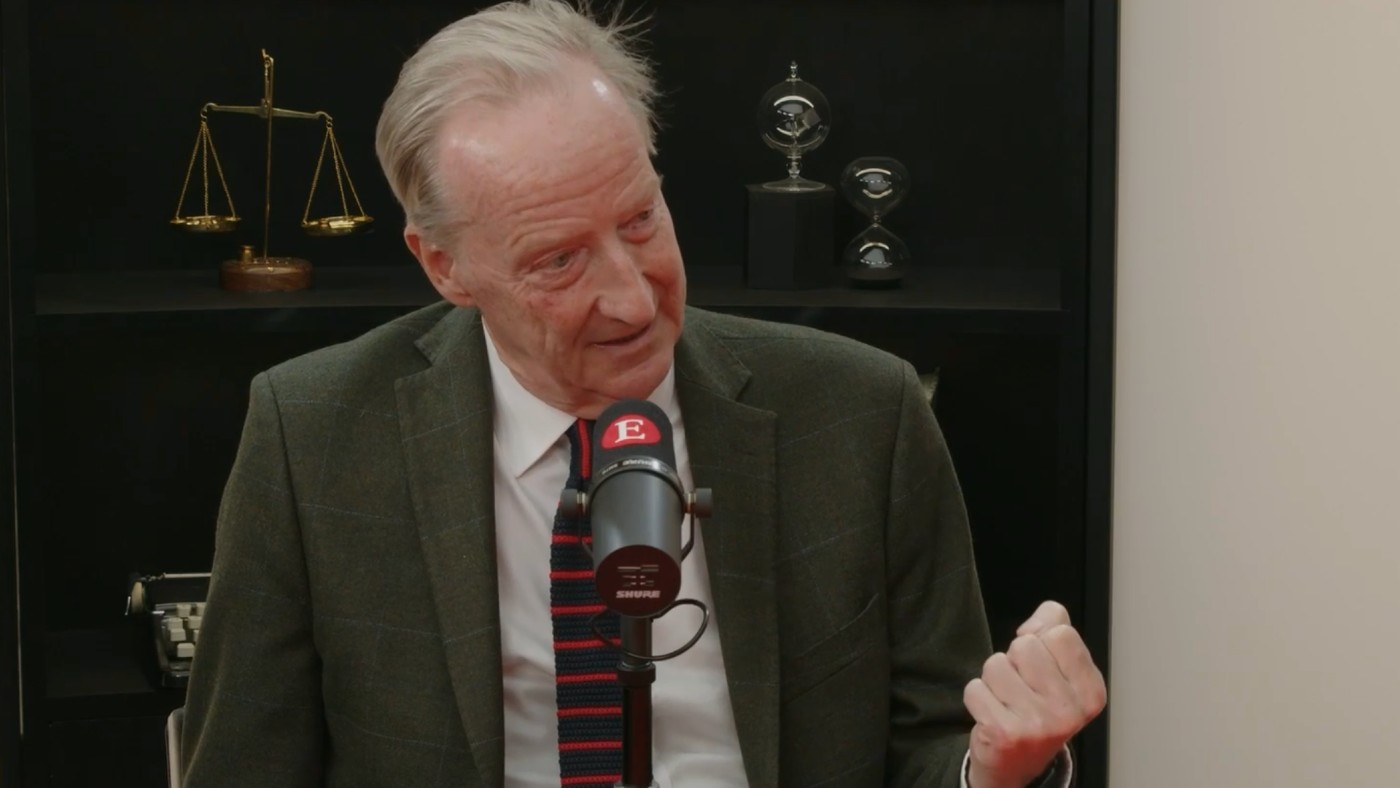
“The reality is the US underestimated the task and I think as of about two weeks ago lost the initiative to Iran,” Sir Alex Younger, who ran the UK’s Secret Intelligence Service from 2014 to 2020, told the Economist in a podcast interview.
“In practice, the Iranian regime has been more resilient than I think anyone would have expected,” Younger said.
“They took some good decisions – as early as last June – about dispersing their military capability and delegating the authority for the use of those weapons, which has given them significant extra resilience against this incredibly powerful air campaign.”
The UK’s former spy chief said that US Donald Trump “has said some stuff” that will have confirmed to Iran that “they’re in a civilisational war… they’re in a war of existence”.
New MEE newsletter: Jerusalem Dispatch
Sign up to get the latest insights and analysis on
Israel-Palestine, alongside Turkey Unpacked and other MEE newsletters
“Whereas America has embarked on a war of choice, and in those terms, that’s imbued Iran with more staying power than their US counterparts,” Younger said.
‘The reality is the US underestimated the task and I think as of about two weeks ago lost the initiative to Iran’
– Alex Younger, former MI6 chief
The US and Israel began their war on Iran on 28 February, striking targets across the country and killing key Iranian officials, including the former supreme leader Ali Khamanei and former security chief Ali Larijani.
But Iran has struck back at Gulf countries hosting US military bases and has maintained control of the Strait of Hormuz, the vital energy chokehold through which 20 percent of the world’s oil passes.
US senators have said that President Donald Trump’s administration has “no plan” for the war, that regime change is not one of its goals and that Iran was not about to develop a nuclear weapon, one of various excuses given by Trump for launching attacks.
Iran has ‘whip hand’
Younger said Iran had embarked on “horizontal escalation”, firing rockets at Gulf countries and putting pressure on the US that way.
“They’ve understood the significance of the energy war and held the straits at threat and globalised the conflict in a way that gives them some weapons. They’ve played a weak hand well,” the former British intelligence officer said.
Controlling the Strait of Hormuz had, Younger said, given Iran the “whip hand” in the war.
Israel’s Mossad promised it could ignite regime change in Iran, says report
Read More »
Younger told the Economist that as an MI6 officer who “faced the violence and brutality of the IRGC (Islamic Revolutionary Guard Corps)” for most of his career, he regretted concluding that Iran was winning the war.
He said that Iran’s response to a wave of popular protests in January had been “brutal” and “terrible”, claiming that 10,000 Iranians had been “machine gunned in the street” by the IRGC.
At the time, an Iranian official said that the deaths of at least 5,000 people in anti-government protests had been verified. Human rights groups have said the figure is at least 7,000.
The New York Times reported this week that promises made by Mossad, Israel’s external intelligence agency, about being able to instigate regime change in Iran had helped convince the US to go to war there.
Israeli Prime Minister Benjamin Netanyahu reportedly referred to the intelligence in conversations with Trump. But Younger said that when it came to the Hamas-led attack of 7 October 2023, intelligence warnings had been ignored.
“It was an intelligence failure by any standard,” he said. “The Netanyahu government basically made it pretty clear that it regarded as inconvenient any idea that Hamas was anything other than acquiescent.”