


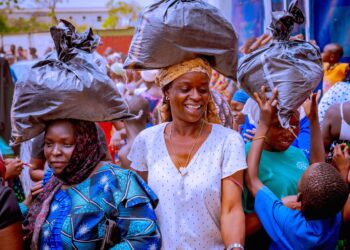
A bunch, the SOS Kids’s Villages Nigeria has raised the alarm that as of immediately, humanitarian assessments signifies that Nigeria hosts over 3.4 million internally displaced individuals (IDPs).
The determine is pushed by each insurgency within the North-East and rampant banditry within the North-west, with ladies and kids constituting practically 80 p.c of this susceptible inhabitants.
The nationwide director, Eghosa Erhumwunse, in a press assertion to commemorate the Worldwide Ladies’s Day, 2026, stated within the unstable settings, ladies face systemic publicity to Gender-Based mostly Violence (GBV), together with abduction, trafficking, and compelled marriage used as a tactic of struggle.
He stated the humanitarian assessments additionally point out that a minimum of one in three ladies in these zones expertise bodily or sexual violence, typically exacerbated by lack of gender-segregated sanitation and secure entry to water factors.
“Moreover, the collapse of native justice mechanisms and the lack of authorized documentation go away displaced ladies in a ‘safety hole,’ the place fragile methods translate immediately into the systemic violation of their elementary rights.
“Because the world marks Worldwide Ladies’s Day 2026 underneath the theme ‘Rights, Justice, Motion, For ALL Ladies and Ladies,’ we’re reminded that for these in Nigeria’s most unstable areas, safety stays far beneath acceptable requirements.
“Progress towards gender equality can not be symbolic; it have to be structural. Rights with out enforcement are merely guarantees on paper, justice with out accessibility, particularly for the displaced and rural poor, is a type of exclusion and motion with out accountability leaves probably the most susceptible to navigate fragile methods.
“True equality requires transferring past rhetoric to the sturdy financing and policing of the frameworks meant to guard them.
“For ladies and women residing in humanitarian, conflict-affected, and disaster-prone communities in Nigeria, these truths are lived realities. Emergencies intensify present inequalities.
“Displacement disrupts livelihoods, fractures social safety methods, and will increase publicity to violence.”